


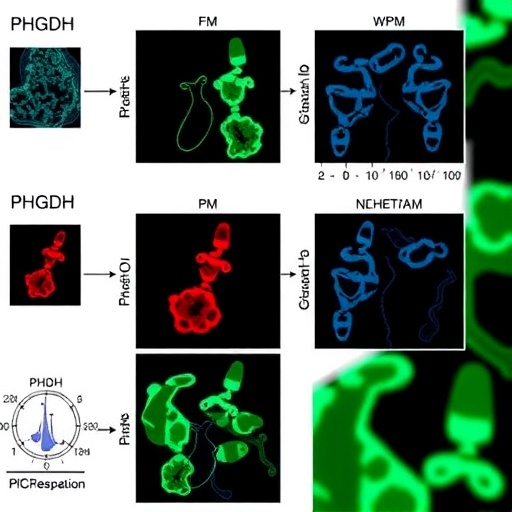
An unexpected metabolic vulnerability may offer a new way to outmaneuver one of the most aggressive forms of thyroid cancer. In a study published in Cell Death Discovery, researchers S.Y. Kim and M.H. You report that blocking the enzyme phosphoglycerate dehydrogenase, or PHGDH, can overcome resistance to dabrafenib in BRAF V600E anaplastic thyroid carcinoma. Their findings point to a biological escape route used by cancer cells: when targeted treatment shuts down a dominant growth signal, resistant cells can reorganize their metabolism and draw energy and building materials from alternative sources. Interrupting that metabolic detour may restore the effectiveness of a drug that cancer had learned to evade.
Anaplastic thyroid carcinoma, or ATC, is rare but exceptionally aggressive. Unlike many differentiated thyroid cancers, ATC can grow rapidly, invade nearby structures, and spread before treatment has had time to take effect. The BRAF V600E mutation is one of the most important genetic alterations in a subset of these tumors. It changes the BRAF protein so that it remains abnormally active, driving the MAPK signaling pathway, a molecular chain that regulates proliferation, survival, and cellular behavior. Dabrafenib is designed to inhibit mutant BRAF, cutting off this signal at a critical point. Yet cancer cells are not passive targets. Under therapeutic pressure, they can adapt, rewire signaling networks, and alter the way they process nutrients.
The central insight of the new work is that drug resistance is not solely a matter of changing receptors or acquiring additional mutations. It can also involve a shift in the cell’s internal economy. Cancer cells require a continuous supply of ATP for energy, reducing equivalents to control chemical reactions, and carbon-based molecules for constructing DNA, proteins, membranes, and other cellular components. Glucose is a major source of these materials, but its carbon can be redirected into multiple biochemical pathways. PHGDH sits at the entrance to one such branch: the serine synthesis pathway. It diverts the glycolytic intermediate 3-phosphoglycerate away from energy production and toward the generation of serine and related metabolites.
Serine is more than a simple amino acid. It contributes to the production of glycine, nucleotides, phospholipids, and glutathione, an important antioxidant system. Through these connections, the serine synthesis pathway can influence how cells replicate their genomes, build new membranes, and withstand oxidative stress. PHGDH also participates in the cell’s management of redox balance, helping shape the availability of molecules required for maintaining chemical stability during rapid growth. In tumors exposed to a BRAF inhibitor, these functions may become particularly valuable. If dabrafenib suppresses the signaling program that normally supports proliferation, a resistant cell may compensate by strengthening metabolic pathways that preserve survival and biosynthetic capacity.
Kim and You’s study identifies PHGDH inhibition as a means of disrupting that compensation. The reported effect is described as metabolic rewiring: rather than simply adding another brake to the same signaling pathway, PHGDH inhibition changes the flow of nutrients through the cancer cell. This distinction matters because resistant tumors often survive by routing around a blocked pathway. A second drug that targets the same route may have limited impact if the cancer has already activated a parallel mechanism. By interfering with serine-related metabolism, however, PHGDH inhibition may remove the raw materials or redox support that resistant BRAF-mutant cells require to remain viable under dabrafenib treatment.
The approach also illustrates why combination therapies are increasingly being designed around the relationship between signaling and metabolism. Oncogenic BRAF signaling can alter glucose uptake, mitochondrial activity, amino-acid use, and the expression of metabolic enzymes. At the same time, metabolic changes can feed back into signaling by modifying the cellular energy state and the chemical environment in which proteins operate. A tumor treated with dabrafenib may therefore not be understood as a static collection of mutated cells. It is a dynamic system responding to stress. The combination of BRAF blockade and PHGDH inhibition aims to attack both the growth command and the adaptive fuel network that can help cancer cells survive its suppression.
From a technical perspective, the strategy may produce several layers of stress at once. Restricting PHGDH activity can reduce the ability of cells to generate serine through glucose-derived intermediates. That shortage may affect nucleotide synthesis, limiting the materials needed for DNA replication and repair. It may also weaken phospholipid production, which is essential for expanding cellular membranes during division. At the same time, reduced support for glutathione production could leave tumor cells more exposed to reactive oxygen species. These chemically reactive molecules arise naturally during metabolism and can increase when cells are under therapeutic pressure. A cancer cell that can no longer buffer oxidative damage may cross a threshold leading to growth arrest or cell death.
The findings are especially notable because dabrafenib resistance remains a major obstacle even when a tumor carries a mutation that appears directly druggable. Targeted therapies can produce striking responses, but those responses may be temporary. Some resistant cells reactivate MAPK signaling through alterations elsewhere in the pathway, while others engage receptor tyrosine kinases, change cell identity, or enter a slower-growing state that tolerates treatment. Metabolic rewiring adds another dimension to this problem. It suggests that the cells surviving therapy may not merely be genetically different; they may also be physiologically different, using nutrients in a way that makes them less dependent on the pathway originally targeted.
The study’s implications extend beyond thyroid cancer, although its immediate focus is BRAF V600E anaplastic thyroid carcinoma. PHGDH is overexpressed or relied upon in several cancer contexts, and the serine synthesis pathway has attracted attention as a potential therapeutic target. Still, an experimental result in a cancer model does not automatically establish a safe or effective treatment for patients. Serine metabolism is also important in normal tissues, and the therapeutic challenge will be to determine whether PHGDH can be inhibited strongly enough to affect resistant tumor cells without causing unacceptable toxicity. Future work will need to clarify which tumors are most dependent on PHGDH, identify biomarkers that predict response, and establish the appropriate dose, timing, and sequence for combining a PHGDH inhibitor with dabrafenib.
The broader message is that cancer resistance may be defeated by targeting not only what tumors signal, but also how they survive. In BRAF V600E anaplastic thyroid carcinoma, the work by Kim and You positions PHGDH as a metabolic pressure point that becomes important when dabrafenib pushes cancer cells into an adaptive state. If these findings are confirmed in additional models and ultimately in clinical studies, the combination could help convert a resistant tumor’s survival strategy into a liability. The research offers a vivid example of modern oncology’s expanding battlefield: the fight is no longer confined to mutated genes and signaling proteins, but includes the intricate metabolic networks that keep malignant cells alive.
Cite Scienmag News
Nathaniel Bowman. (August 15, 2026). Blocking PHGDH overcomes dabrafenib resistance through metabolic rewiring in thyroid cancer. Scienmag. https://scienmag.com/blocking-phgdh-overcomes-dabrafenib-resistance-through-metabolic-rewiring-in-thyroid-cancer/
Nathaniel Bowman. "Blocking PHGDH overcomes dabrafenib resistance through metabolic rewiring in thyroid cancer." Scienmag, 15 August 2026, https://scienmag.com/blocking-phgdh-overcomes-dabrafenib-resistance-through-metabolic-rewiring-in-thyroid-cancer/. Accessed 3 September 2026.
Nathaniel Bowman. "Blocking PHGDH overcomes dabrafenib resistance through metabolic rewiring in thyroid cancer." Scienmag. August 15, 2026. https://scienmag.com/blocking-phgdh-overcomes-dabrafenib-resistance-through-metabolic-rewiring-in-thyroid-cancer/


