


Researchers at Cincinnati Children’s Hospital have unveiled groundbreaking insights into the origins of chronic pain associated with neurofibromatosis type 1 (NF1), a hereditary disorder predominantly characterized by the development of tumors along peripheral nerves. Traditionally, pain in NF1 has been attributed solely to tumor presence; however, this latest study challenges that assumption by demonstrating that painful symptoms may actually manifest well before any tumor formation, driven by aberrant biochemical signaling in nerve-supporting cells known as Schwann cells.
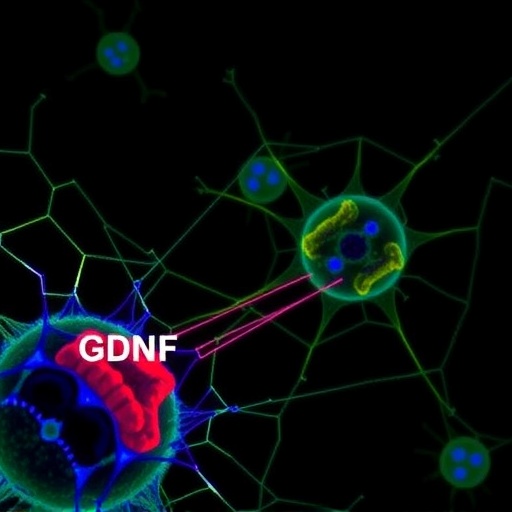
This innovative research delves into the molecular mechanisms underlying non-tumor-related pain in NF1, focusing on the overproduction of glial cell line–derived neurotrophic factor (GDNF). GDNF is a potent protein known for its role in neuronal survival and pain modulation. The team’s findings reveal that Schwann cells, which genetically lack functioning NF1, become a primary source of excessive GDNF secretion. This excess interacts specifically with GFRα1 receptors located on nociceptive nerve fibers, mechanistically enhancing pain perception through increased mechanical hypersensitivity.
The study employed a genetically engineered mouse model where the NF1 gene was selectively deleted in Schwann cells. This approach allowed researchers to isolate the contributions of Schwann cell dysfunction to pain independently of tumor development. Remarkably, mice lacking NF1 in these cells showed elevated GDNF levels accompanied by heightened pain responses, thereby confirming a direct causal link. It is a paradigm shift in understanding the neural basis of NF1-associated pain that has traditionally been neglected in clinical pain management strategies.
A key therapeutic implication of these findings hinges on the MAPK (mitogen-activated protein kinase) signaling pathway, which regulates GDNF expression. The researchers demonstrated that pharmacological inhibition of MAPK signaling through the use of mirdametinib, a MEK inhibitor already approved for treating select NF1-related tumors, effectively reduced GDNF levels. This molecular intervention led to a significant attenuation of pain-like behaviors in the mouse model, signposting a dual-benefit approach where one drug may simultaneously target tumors and alleviate pain.
The MEK inhibitor’s role in modulating Schwann cell behavior underscores a new dimension in pain therapeutics: targeting cellular signaling cascades upstream of painful stimuli rather than masking the symptoms. Such an approach enables precise molecular targeting, offering hope for improved pain management without the side effects commonly associated with conventional analgesics. This innovative strategy also opens avenues to explore earlier intervention to hinder the progression of chronic pain in NF1 patients before tumors proliferate.
Neurofibromatosis type 1 affects roughly one in every 3,000 individuals worldwide, manifesting through a diverse clinical spectrum including café-au-lait skin pigmentation, cognitive impairments, skeletal abnormalities, plexiform neurofibromas, and persistent pain. Despite the prevalence of tumor-related symptoms, non-tumor pain has been a poorly understood and undertreated aspect of NF1. The elucidation of Schwann cell-derived signaling as a critical pain driver thus fills a crucial knowledge gap and could pave the way for new diagnostic markers as well as targeted treatments.
By uncovering that Schwann cells themselves can incite pain independently of any tumor burden, this study enhances our understanding of the cellular and molecular etiology of NF1 pain syndromes. It highlights the complex neurobiology underlying chronic pain disorders and redefines the role of peripheral glial cells in pain modulation. These results may also have broader implications for other neuropathic pain conditions where glial cell dysfunction is suspected.
The research team’s multidisciplinary approach integrated genetic engineering, behavioral phenotyping, and molecular biology techniques to produce a comprehensive assessment of pain genesis in NF1. Their rigorous experimentation and data analysis elucidate how loss of NF1 function in Schwann cells triggers MAPK-dependent GDNF release, which in turn sensitizes nociceptive neurons via the GFRα1 receptor. This finely tuned interplay contributes to pathological mechanical hypersensitivity, providing a clear molecular target for pharmaceutical intervention.
Future investigations are needed to translate these preclinical findings into human therapies and to verify the safety and efficacy of MEK inhibitors in treating NF1-related pain. Clinical trials assessing whether early MAPK pathway intervention can mitigate pain and improve quality of life for NF1 patients are crucial next steps. If successful, these efforts could revolutionize pain management strategies and shift clinical practice towards mechanism-based therapeutics in genetic pain syndromes.
Moreover, this study spotlights the broader significance of Schwann cells not merely as passive nerve supporters but as active modulators of sensory neuron function and pain transmission. Their pathological secretory profile in NF1 opens new research lines on how glial cells contribute to neuropathic pain and other neurological disorders. Unlocking these pathways holds potential for novel drug discovery beyond neurofibromatosis.
In conclusion, the Cincinnati Children’s team has fundamentally advanced the scientific narrative surrounding NF1-related pain by identifying a tumor-independent, Schwann cell-mediated pain mechanism. Their findings emphasize GDNF signaling via the MAPK pathway as a pivotal driver of chronic pain and propose that existing MEK inhibitors might serve a dual therapeutic role. This innovative work not only enhances our molecular understanding of NF1 pathology but also ignites optimism for more effective, targeted pain relief options for patients suffering from this complex genetic disorder.
News Publication Date:
26-May-2026
Web References:
https://www.science.org/doi/10.1126/scisignal.aee5174
References:
Raut, N. G. R., Jankowski, M. P., et al. (2026). MAPK-dependent release of GDNF from Schwann cells mediates tumor-independent pain in neurofibromatosis 1. Science Signaling. DOI:10.1126/scisignal.aee5174
Cite Scienmag News
Ophelia Keating. (May 26, 2026). Blocking GDNF Production in Schwann Cells Could Alleviate Pain in NF1. Scienmag. https://scienmag.com/blocking-gdnf-production-in-schwann-cells-could-alleviate-pain-in-nf1/
Ophelia Keating. "Blocking GDNF Production in Schwann Cells Could Alleviate Pain in NF1." Scienmag, 26 May 2026, https://scienmag.com/blocking-gdnf-production-in-schwann-cells-could-alleviate-pain-in-nf1/. Accessed 3 September 2026.
Ophelia Keating. "Blocking GDNF Production in Schwann Cells Could Alleviate Pain in NF1." Scienmag. May 26, 2026. https://scienmag.com/blocking-gdnf-production-in-schwann-cells-could-alleviate-pain-in-nf1/


