

Monday, July 13, 2026
Science
No Result
View All Result
  • Login
  • HOME
  • SCIENCE NEWS
  • CONTACT US
  • HOME
  • SCIENCE NEWS
  • CONTACT US
No Result
View All Result
Scienmag
No Result
View All Result
Home Science News Technology and Engineering

Biosensor Quickly Identifies Nanoplastics in Water Samples

July 13, 2026
in Technology and Engineering
Reading Time: 2 mins read
0
Biosensor Quickly Identifies Nanoplastics in Water Samples

Biosensor Quickly Identifies Nanoplastics in Water Samples

65
SHARES
587
VIEWS
Share on FacebookShare on Twitter
ADVERTISEMENT

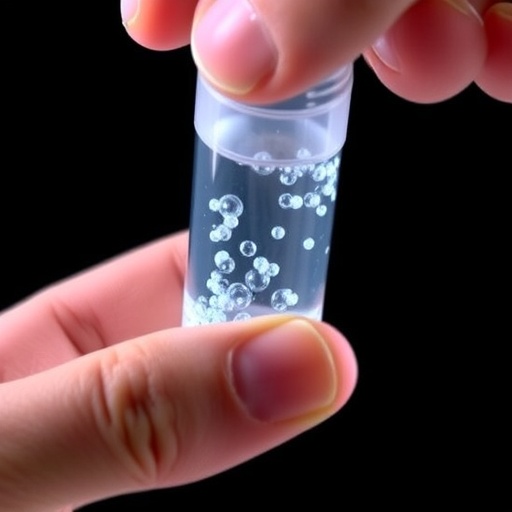
Scientists at the Institute of Science Tokyo have pioneered a cutting-edge biosensor that rapidly detects nanoplastics, specifically polystyrene nanoparticles (PS-NPs), in environmental water samples. This breakthrough addresses the critical need for simpler, faster detection methods for nanoscale plastic pollutants, which have become an increasing concern due to their pervasive presence in ecosystems and potential health risks to humans.

Nanoplastics, defined as plastic particles under 1,000 nanometers in size, result from the breakdown of larger plastic debris. Their minute scale makes traditional detection techniques, reliant on microscopy or spectroscopy, both time-consuming and cost-prohibitive. The newly developed biosensor overcomes these challenges by employing surface plasmon resonance (SPR) combined with a highly selective polystyrene-binding peptide immobilized on a gold film.

The underlying mechanism involves an optical sensing process wherein laser light excites collective electron oscillations (surface plasmons) at the interface of a gold-coated sensor. Binding of polystyrene nanoparticles to the peptide-functionalized surface alters the local refractive index, causing measurable shifts in the SPR signal. This label-free detection method yields real-time data with minimal sample preparation.

Testing revealed the biosensor’s ability to detect PS-NPs as small as 50 nm within 20 minutes in model freshwater environments. The system demonstrated a low detection limit of 1.3 micrograms per milliliter and was validated using environmental water samples from aquariums and natural ponds spiked with nanoparticles. These results underscore the sensor’s practical applicability for environmental monitoring.

Key to the sensor’s specificity is the use of a polyethylene glycol (PEG) linker that immobilizes the polystyrene-binding peptide onto the gold film. This molecular design minimizes non-specific bindings, enhancing sensitivity and accuracy. The straightforward sample processing and rapid turnaround mark a substantial improvement over conventional methods that often require sophisticated instruments and laborious preparations.

As nanoplastics continue to accumulate due to ongoing plastic degradation, the capacity to efficiently monitor their presence becomes crucial. This biosensor represents a transformative tool for researchers and environmental agencies, facilitating routine nanoplastic surveillance and advancing our understanding of nanoparticle distribution, behavior, and ecological impact.

The work, led by Associate Professor Mana Toma and Assistant Professor Shuo Cheng, will be published in the September 2026 issue of Biosensors and Bioelectronics. Their innovation not only sets a new standard in nanoplastic detection but also exemplifies the integration of nanotechnology and environmental science to tackle emerging pollution challenges.

Subject of Research: Not applicable
Article Title: Surface plasmon resonance biosensor with plastic-binding peptide for nanoplastic detection in environmental water
News Publication Date: 15-Sep-2026
References: https://doi.org/10.1016/j.bios.2026.118748
Image Credits: Institute of Science Tokyo

Keywords

Nanoplastics, biosensor, surface plasmon resonance, polystyrene nanoparticles, environmental monitoring, water pollution, label-free detection, nanotechnology

Tags: environmentally friendly plastic pollution monitoringenvironmentally sensitive nanoplastics sensorsgold film biosensor for environmental analysisinnovative water pollution biosensor technologylabel-free nanoplastics detection methodNanoplastics detection biosensorpolystyrene nanoparticle detectionportable water quality testing for nanoplasticsrapid water nanoplastics testingreal-time nanoscale plastic detectionsurface plasmon resonance nanoplastics sensorultrafast detection of microplastics and nanoplastics
Share26Tweet16
Previous Post

Epigenetic Therapy Offers Hope for Treatment-Resistant AML Patients

Next Post

Mapping lncRNAs in mRNA Networks Reveals Insights into Autism

Related Posts

Screen Use to Calm Children: Benefits and Risks Explored
Technology and Engineering

Screen Use to Calm Children: Benefits and Risks Explored

July 13, 2026
New electrochemical device captures CO2 from air to fight climate change
Technology and Engineering

New electrochemical device captures CO2 from air to fight climate change

July 13, 2026
Hanyang University Develops Light-Powered Random Number Generator for Image Security
Technology and Engineering

Hanyang University Develops Light-Powered Random Number Generator for Image Security

July 13, 2026
Perovskite-Organic Tandem Solar Cells Enhanced by Photo-Transformable Stabilizer
Medicine

Perovskite-Organic Tandem Solar Cells Enhanced by Photo-Transformable Stabilizer

July 13, 2026
Genes Operate According to Exact Switching Rules
Technology and Engineering

Genes Operate According to Exact Switching Rules

July 13, 2026
Advancing Polyamide Desalination Membranes with Interfacial Rheology Techniques
Technology and Engineering

Advancing Polyamide Desalination Membranes with Interfacial Rheology Techniques

July 13, 2026
Next Post
Mapping lncRNAs in mRNA Networks Reveals Insights into Autism

Mapping lncRNAs in mRNA Networks Reveals Insights into Autism

  • Mothers who receive childcare support from maternal grandparents show more

    Mothers who receive childcare support from maternal grandparents show more parental warmth, finds NTU Singapore study

    27656 shares
    Share 11059 Tweet 6912
  • University of Seville Breaks 120-Year-Old Mystery, Revises a Key Einstein Concept

    1061 shares
    Share 424 Tweet 265
  • Bee body mass, pathogens and local climate influence heat tolerance

    682 shares
    Share 273 Tweet 171
  • Researchers record first-ever images and data of a shark experiencing a boat strike

    546 shares
    Share 218 Tweet 137
  • Groundbreaking Clinical Trial Reveals Lubiprostone Enhances Kidney Function

    531 shares
    Share 212 Tweet 133
Science

Embark on a thrilling journey of discovery with Scienmag.com—your ultimate source for cutting-edge breakthroughs. Immerse yourself in a world where curiosity knows no limits and tomorrow’s possibilities become today’s reality!

RECENT NEWS

  • New AI Model Aids Water Management Amid Worsening National Drought
  • UTA Introduces New Doctor of Social Work Program
  • New Statistical Test Evaluates Effectiveness of Personalization Strategies
  • New Technique Protects Children from Harmful AI-Generated Content

Categories

  • Agriculture
  • Anthropology
  • Archaeology
  • Athmospheric
  • Biology
  • Biotechnology
  • Blog
  • Bussines
  • Cancer
  • Chemistry
  • Climate
  • Earth Science
  • Editorial Policy
  • Marine
  • Mathematics
  • Medicine
  • Pediatry
  • Policy
  • Psychology & Psychiatry
  • Science Education
  • Social Science
  • Space
  • Technology and Engineering

Subscribe to Blog via Email

Enter your email address to subscribe to this blog and receive notifications of new posts by email.

Join 5,146 other subscribers

© 2025 Scienmag - Science Magazine

Welcome Back!

Login to your account below

Forgotten Password?

Retrieve your password

Please enter your username or email address to reset your password.

Log In
No Result
View All Result
  • HOME
  • SCIENCE NEWS
  • CONTACT US

© 2025 Scienmag - Science Magazine

Discover more from Science

Subscribe now to keep reading and get access to the full archive.

Continue reading
