
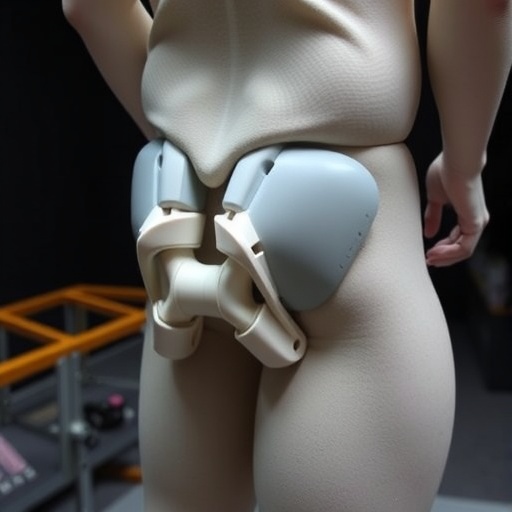
In a groundbreaking study published in the Journal of Artificial Organs, researchers have developed an innovative approach to understanding human physiology, particularly the complex process of defecation. This study highlights bio-inspired circular soft actuators designed to replicate the mechanics of the human rectum during this essential bodily function. The interdisciplinary team behind this research, including accomplished scientists such as Z. Mao, S. Suzuki, and A. Wiranata, aims to bridge the gap between biological systems and robotic technologies.
This research addresses a critical need in both medical science and robotics. Beyond the biological implications, understanding the dynamics of defecation can lead to better treatment offerings for patients suffering from gastrointestinal disorders. These disorders can be debilitating, significantly impacting individuals’ quality of life. Therefore, simulating these processes with precision can enhance medical training and device development.
The unique soft actuators developed in this study are notable for their flexibility and ability to adapt to various stresses. Unlike traditional rigid robotics, these soft actuators can mimic the subtle and intricate muscle movements of the human rectum. This mimicry is essential for simulating real-world conditions during medical assessments and treatments. The ability of these soft actuators to bio-adapt offers a sustainable approach to creating medical devices that require less invasive procedures.
One of the standout features of the actuators is their bio-inspired design. By modeling these devices on the natural function of the rectum, the researchers can create highly accurate simulations. Humans possess a complex layer of sphincter muscles that manage bowel control, and replicating this functionality may offer new insights into mechanistic pathways that govern this biological process. This not only aids medical understanding but also enhances the logistics of developing effective treatment modalities.
Furthermore, the researchers employed advanced materials science techniques to cultivate soft actuators responsive to varying pressure levels. The soft actuators’ response to pressure reflects the human body’s natural tendency to react in similar circumstances, thereby enhancing the realism of simulations. This adaptability could lead to significant breakthroughs in how gastrointestinal issues are understood and treated.
In addition to their practical applications in medical fields, these soft actuators could revolutionize robotics, particularly in creating more human-like machines capable of sensitive tasks. The incorporation of bio-inspired mechanics opens a myriad of opportunities for developers, providing robots with the potential to operate safely around humans. Areas like elder care, rehabilitation, and assistive technologies could benefit greatly from these advancements, providing comfort and improving users’ experiences.
The scientists emphasized the importance of collaboration between fields. The convergence of biology, engineering, and design principles has equipped the research team to tackle longstanding challenges in understanding bodily functions. This interdisciplinary nexus is crucial as it could set a precedent for future innovations, not only in gastrointestinal applications but throughout the landscape of soft robotics.
The findings from this study could invite a ripple effect across various sectors. Medical institutions may adopt these actuators for educational purposes, allowing students and practitioners to observe and understand the nuances of human anatomy effectively. Educators could utilize these devices to simulate real-life scenarios, which can improve diagnostic skills and procedural techniques without putting patients at risk.
Meanwhile, the implications of this technology extend to the manufacturing sector, where industries are striving to integrate more adaptive and intelligent systems. The actuators’ ability to react and adjust to environmental stimuli transfers seamlessly into manufacturing processes requiring automation, customization, and efficiency. Companies looking to enhance their robotics capabilities will benefit from insights gleaned from this innovative research.
Moreover, the implications for healthcare innovation cannot be understated. This technology may enhance treatments for patients suffering from chronic disorders or rehabilitative situations arising from surgery or other health interventions. By providing realistic simulations, practitioners could prepare and tailor their approaches based on individual needs. This personalized medicine model could advance significantly as a result of these developments.
As investigations continue, it is clear that the bio-inspired circular soft actuators represent not only a leap forward in understanding human physiological processes but also a shining example of how science can transcend traditional boundaries. This work exemplifies the potential for technology to mirror biological systems, paving the way for advancements that improve medical care, robotic assistance, and beyond.
As awareness of these innovations grows, discussions around the challenges of development, ethics in robotic design, and patient care will undoubtedly arise. Encouraging a dialogue surrounding the implications of such technology can ensure that the evolution of medical and robotic practices aligns with ethical standards and prioritizes patient welfare.
The journey of this scientific endeavor is just beginning, with future research promising further exploration into refining these actuators. This development marks a notable chapter within the ever-advancing narrative of how technology empowers healthcare and robotics. Clearly, the bridge between bio-engineering and robotics is expanding, and the scientific community eagerly anticipates the next set of discoveries to emerge from this synthesis.
Mao, Z., Suzuki, S., Wiranata, A. et al. Bio-inspired circular soft actuators for simulating defecation process of human rectum.
J Artif Organs 28, 252–261 (2025). https://doi.org/10.1007/s10047-024-01477-5
Cite Scienmag News
Ophelia Keating. (August 30, 2025). Biomimetic Soft Actuators Mimic Human Defecation. Scienmag. https://scienmag.com/biomimetic-soft-actuators-mimic-human-defecation/
Ophelia Keating. "Biomimetic Soft Actuators Mimic Human Defecation." Scienmag, 30 August 2025, https://scienmag.com/biomimetic-soft-actuators-mimic-human-defecation/. Accessed 2 November 2026.
Ophelia Keating. "Biomimetic Soft Actuators Mimic Human Defecation." Scienmag. August 30, 2025. https://scienmag.com/biomimetic-soft-actuators-mimic-human-defecation/