


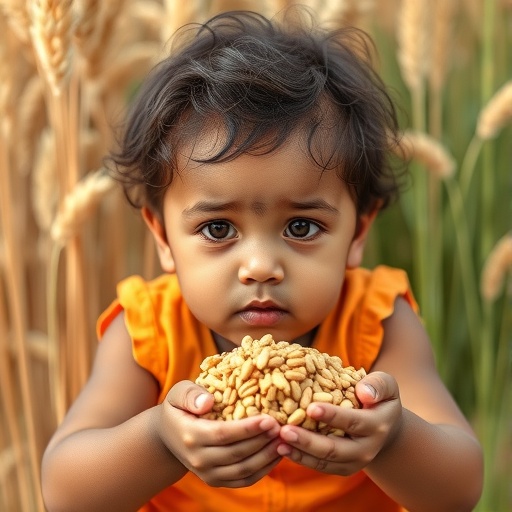
Iron deficiency affects about one in four people worldwide, with young children among those at greatest risk. In early life, inadequate iron can impair brain development, weaken immune function and contribute to anemia. Iron supplements remain an effective treatment, but they can also produce gastrointestinal side effects and alter the balance of microbes living in the gut. Now, a randomized trial in India suggests that an agricultural solution may improve iron intake without triggering the same disruption associated with conventional supplementation.
Researchers at Cornell University’s Joan Klein Jacobs Center for Precision Nutrition and Health studied children who consumed pearl millet naturally enriched with iron and zinc. After nine months, the children did not show the adverse effects commonly associated with increased iron intake, while their gut microbiomes displayed distinct changes in microbial activity. Several of those changes were linked to pathogen defense, antioxidant metabolism and a potentially healthier intestinal environment.
The study, published in Nature Communications, is one of the first investigations into how a biofortified crop can influence the human gut microbiome. Biofortification increases the nutritional value of crops through plant breeding or related agricultural methods, allowing people to consume more micronutrients through familiar foods rather than through pills or fortified products distributed separately from the food supply.
For the trial, researchers worked with plant breeders to develop a pearl millet variety containing nearly three times as much iron as standard millet, along with increased zinc. The crop was produced through traditional cross-breeding rather than genetic engineering. Pearl millet is already an important staple in parts of South Asia and Africa, making it a practical vehicle for delivering additional micronutrients to communities where iron deficiency is widespread.
The intervention enrolled 223 children between 12 and 18 months old in Mumbai, India. Participants received complementary foods prepared with either the iron- and zinc-biofortified millet or a comparison millet over a nine-month period. Complementary feeding is the stage when infants begin eating foods alongside breast milk or formula, a period in which nutritional deficiencies can emerge rapidly because children have high requirements for iron and other essential nutrients.
The researchers analyzed the children’s gut microbiota, the community of bacteria and other microorganisms inhabiting the digestive tract. Rather than focusing only on which species were present, the study also examined microbial genes and biochemical pathways that were active. This functional approach can reveal how a diet changes microbial behavior, including the compounds microbes produce and the metabolic processes they use.
Children who consumed the biofortified millet showed increased activity in pathways associated with protection against invading organisms. These pathways included the production of natural antibiotic-like compounds, which may help beneficial microorganisms compete with pathogens. The children also showed changes in pathways involved in antioxidant metabolism, a network of reactions that can help regulate oxidative stress and support the integrity of the gut environment.
At the same time, markers associated with potentially harmful bacteria were lower by the end of the study. The findings are important because previous research on iron supplements has suggested that unabsorbed iron can remain in the intestine, where it may become available to undesirable microbes. Supplementation has also been linked in some settings to diarrhea, constipation, dark stools and shifts in microbial communities that favor pathogens. The new results do not prove that biofortified millet prevents all such effects, but they indicate that delivering iron within a whole food may interact differently with the gut.
“Our goal was to move away from one-size-fits-all supplementation strategies and explore food-based approaches that can support population health while allowing more personalized nutritional interventions,” said Saurabh Mehta, founding director of the Jacobs Center and the study’s principal investigator. Because biofortified crops can be cultivated, prepared and eaten much like conventional varieties, they may require less specialized distribution infrastructure and less repeated individual adherence than supplement programs.
The millet-based foods and recipes used in the trial were developed with SNDT Women’s University in India and distributed across 20 sites in partnership with the Centre for the Study of Social Change, a Mumbai-based nongovernmental organization. The researchers say the findings support further studies examining whether microbiome changes translate into measurable improvements in iron status, anemia, growth, immune function or resistance to gastrointestinal infection. Biofortification is not a universal replacement for medical treatment, but the trial suggests that improving the nutritional quality of everyday staple foods could address micronutrient deficiency while preserving, and perhaps reshaping, the microbial ecosystem that helps maintain human health.
News Publication Date: 30-Jul-2026
Web References: https://www.nature.com/articles/s41467-026-75674-6; https://news.cornell.edu/stories/2026/07/humble-grain-big-question-could-supercharged-millet-help-childrens-gut-health
References: Nature Communications, DOI: 10.1038/s41467-026-75674-6
Cite Scienmag News
Daisy Hatcher. (August 5, 2026). Biofortified millet boosts toddler nutrition without supplement side effects. Scienmag. https://scienmag.com/biofortified-millet-boosts-toddler-nutrition-without-supplement-side-effects/
Daisy Hatcher. "Biofortified millet boosts toddler nutrition without supplement side effects." Scienmag, 5 August 2026, https://scienmag.com/biofortified-millet-boosts-toddler-nutrition-without-supplement-side-effects/. Accessed 3 September 2026.
Daisy Hatcher. "Biofortified millet boosts toddler nutrition without supplement side effects." Scienmag. August 5, 2026. https://scienmag.com/biofortified-millet-boosts-toddler-nutrition-without-supplement-side-effects/


