


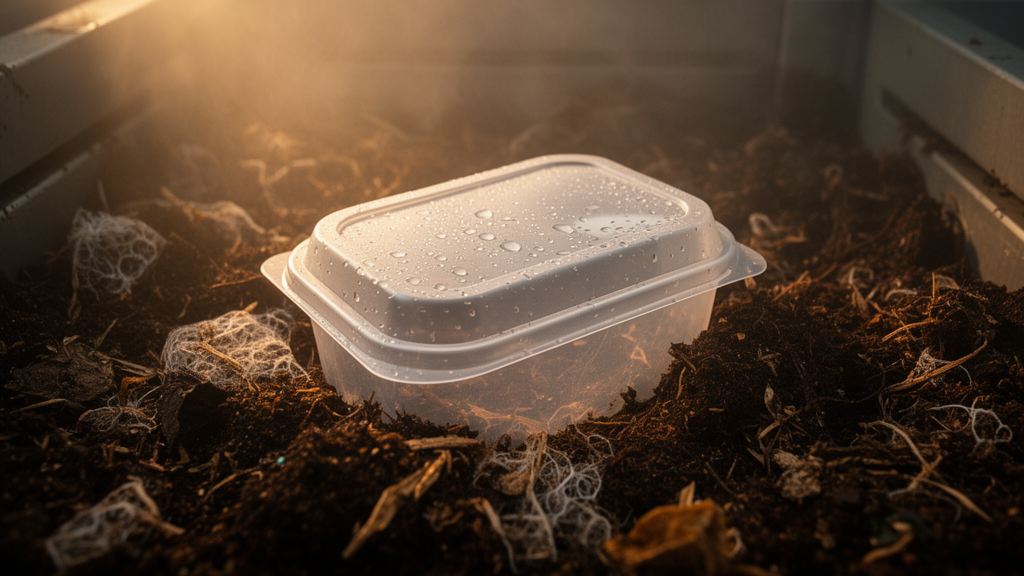
Biodegradable plastics are increasingly viewed as practical alternatives to conventional petroleum-derived materials, yet a new review published in Applied Biological Chemistry clarifies that their environmental breakdown is not automatic. The study, led by Selim Ashoor and colleagues, examines three widely used biodegradable polyesters: poly(butylene adipate-co-terephthalate) (PBAT), polylactic acid (PLA), and polybutylene succinate (PBS). The central finding is that these materials do not simply disappear under ordinary environmental exposure. Instead, their degradation is strictly condition-dependent, requiring specific combinations of temperature, moisture, nutrient availability, and microbial activity to proceed effectively. This distinction is critical for understanding why these plastics may persist in soil, freshwater, or seawater despite being labeled as biodegradable.
The review highlights that the global production of these specific biodegradable polyesters reached approximately 1.1 million tons in 2024, with estimates suggesting this figure could rise to 2.6 million tons by 2029. Major producers include LG Chem in Korea, Novamont in Italy, BASF in Germany, and Mitsubishi Chemical in Japan. While these polymers are valued for their biocompatibility and processability, their chemical structure dictates their fate in the environment. All three materials contain hydrolysable ester bonds, which serve as targets for microbial enzymes. However, the presence of these bonds alone does not guarantee rapid or complete degradation once the materials are released into the wild.
PBAT is an aliphatic-aromatic copolyester composed of adipic acid, terephthalic acid, and 1,4-butanediol. Its aromatic components provide mechanical strength, while its aliphatic components contribute to flexibility and biodegradability. The density of PBAT ranges from 1.16 to 1.30 g/cm³, with a melting temperature between 110 and 125 °C. These properties make it suitable for food packaging, mulch films, and organic waste bags. However, the degradation of PBAT is heavily influenced by incubation temperature and medium composition. Thermophilic actinobacteria, such as Thermobifida fusca, have shown strong degradation activity under controlled conditions, whereas many mesophilic isolates perform significantly lower.
In laboratory settings, specific strains have demonstrated high efficiency under optimized conditions. For instance, T. fusca DSM 43,793 degraded 94 wt% of PBAT after 21 days at 55 °C in liquid culture. More recently, the strain T. fusca FXJ-1 achieved 84 wt% degradation of pure PBAT films in just 5 days at the same temperature. In contrast, soil-derived fungal isolates like Purpureocillium lilacinum and Aspergillus pseudoflectus showed only 15–41 wt% film degradation under mesophilic conditions. This disparity underscores that degradation reported in optimized laboratory or managed treatment systems cannot be directly extrapolated to uncontrolled environmental exposure.
PLA is an aliphatic polyester derived from lactic acid, which can be produced through microbial fermentation of renewable resources. It is distinguished by its transparency, strength, and biocompatibility, with a density ranging from 1.21 to 1.25 g/cm³ and a melting temperature of 150 to 162 °C. The stereochemical composition of PLA plays a crucial role in its degradability. Early studies identified soil-derived actinobacteria, such as Amycolatopsis sp. HT-32, as capable of degrading PLA, with about 60 wt% of film degradation observed after 14 days at 30 °C. However, the process is often slow and incomplete without specific inducers.
A key factor in PLA degradation is the presence of proteinaceous inducers like gelatin. Research by Jarerat and Tokiwa demonstrated that the fungal strain Tritirachium album ATCC 22,563 showed no film degradation in preliminary experiments but achieved 76 wt% degradation after 14 days when 0.1% gelatin was added to the medium. This result highlights that enzyme induction is vital for PLA biodegradation. Since such inducers may not be readily available in ordinary soil or aquatic environments, the practical biodegradation of PLA remains a challenge. The review notes that high PLA degradation is frequently obtained under gelatin-containing culture conditions, involving microorganisms such as Saccharothrix waywayandensis and Kibdelosporangium aridum.
PBS, an aliphatic polyester made from succinic acid and 1,4-butanediol, exhibits broader microbial accessibility compared to PBAT and PLA. It has a density of 1.23 to 1.26 g/cm³ and a melting temperature of 109 to 115 °C. Fungal isolates have shown substantial degradation capabilities; for example, Aspergillus fumigatus NKCM 1706 degraded 80 wt% of PBS film after 30 days at 30 °C, while Bionectria ochroleuca BFM-X1 achieved 98 wt% degradation in 14 days at 28 °C. Bacterial degradation of PBS also varies, with defined consortia often outperforming individual strains. An artificial consortium of Bacillus sp. NR4 and Bacillus sp. JY35 achieved 77 wt% film degradation, whereas the single strain Terribacillus sp. JY49 reached only 31 wt% after 10 days.
The mechanism of degradation involves extracellular enzymatic hydrolysis followed by the uptake and metabolism of low-molecular-weight products. Microorganisms secrete hydrolases, including lipases, esterases, cutinases, and proteases, which attack the ester bonds in the polymer backbone. These enzymes release oligomers, dimers, and monomers that can then enter microbial cells. Under aerobic conditions, these products are mineralized into carbon dioxide and water, while anaerobic degradation may produce methane. For PLA, depolymerization yields lactate, which converts to pyruvate and enters central carbon metabolism. PBS hydrolysis produces succinate and 1,4-butanediol, with succinate entering the tricarboxylic acid cycle directly.
Enzymatic hydrolysis is polymer-specific, with different enzyme classes showing varying efficiencies. For PBAT, cutinases have proven effective, with engineered variants capable of completely decomposing films within 24 to 48 hours under optimized conditions. The AaCut10 cutinase from Alternaria alternata FB1 achieved 82% depolymerization within 24 hours at 37 °C. For PLA, serine protease-type depolymerases are central, though lipases and cutinases also contribute under suitable conditions. PBS degradation is mainly linked to lipase- or cutinase-mediated surface hydrolysis, with studies showing that lipase PS produces 4-hydroxybutyl succinate as a major product through an exo-type mechanism.
The review emphasizes that the biodegradability of these plastics is far more complex than the simple presence of hydrolyzable ester bonds suggests. Conditions that promote degradation in compost, sludge, or wastewater treatment may not be reproduced in open environments. Therefore, PBAT, PLA, and PBS should be regarded as condition-dependent biodegradable polyesters rather than materials that naturally disappear under ordinary exposure. This perspective shifts the focus from whether these plastics are biodegradable to under which specific conditions their degradation becomes effective.
Future research directions focus on connecting polymer depolymerization with microbial metabolism and product formation. Advances in protein structure prediction and enzyme engineering can support the development of hydrolases that convert these polyesters into monomers more efficiently. Simultaneously, synthetic biology and metabolic engineering can be used to construct microorganisms that assimilate polymer-derived products and convert them into value-added compounds. Such systems may be implemented as consolidated bioprocesses that integrate polymer hydrolysis with product utilization, offering a more realistic framework for managing biodegradable plastic waste.
In conclusion, while PBAT, PLA, and PBS are promising alternatives to conventional plastics, their environmental fate is governed by a complex interplay of polymer structure, microbial function, and environmental conditions. The review underscores the need for controlled treatment routes and the development of upcycling-oriented biodegradation strategies. By understanding the condition-dependent nature of these materials, researchers can better design systems that ensure effective degradation and the potential conversion of plastic waste into useful resources.
Beyond standard film weight evaluations, isotope tracing has provided clearer insights into long-term polymer fate in terrestrial systems. In soil laboratory incubations using carbon-13-labeled polybutylene succinate, researchers continuously tracked polymer-derived carbon dioxide and observed that 65 percent of the added labeled carbon was mineralized over 425 days with a closed carbon mass balance. Kinetic analyses and monomer mineralization tests indicated that extracellular hydrolytic cleavage represents the rate-limiting step controlling overall biodegradation. Complementing these findings, an engineered cutinase from Paraphoma chrysanthemicola caused surface erosion and 50 percent weight loss of polybutylene succinate films after 60 hours while yielding succinate derivatives, and the serine protease from Laceyella sacchari LP175 also demonstrated film degradation under controlled conditions.
Metabolic and protein engineering approaches are also expanding microbial capabilities on polyester substrates. An engineered strain of Pseudomonas putida KT2440 expressing a triacylglycerol lipase enhanced PBAT degradation while increasing the cellular consumption of its aliphatic monomer constituents, adipic acid and 1,4-butanediol. On the enzyme engineering front, remodeling the substrate-binding cavity in the cutinase variant TfCut-DM Q132Y reduced the time required for complete PBAT decomposition to within 24 hours. Among natural mesophiles, the yeast Cryptococcus sp. MTCC 5455 achieved complete PBAT film degradation within nine days at 25 degrees Celsius in liquid culture. For PLA, heterologous expression of the Cryptococcus sp. S-2 cutinase gene CLE1 in Saccharomyces cerevisiae conferred hydrolytic activity against the polyester, even though film degradation remained incomplete.
Connecting enzymatic depolymerization to specific intracellular pathways provides a realistic biochemical framework for converting waste polyesters into value-added compounds. Depolymerization of PBAT yields terephthalate, adipate, and 1,4-butanediol; adipate enters central metabolism through beta-oxidation, whereas terephthalate is channeled into central carbon routes through protocatechuate and the beta-ketoadipate pathway. In PBS breakdown, succinate integrates directly into the tricarboxylic acid cycle, while 1,4-butanediol is metabolized via 4-hydroxybutyrate- or succinate-dependent routes. Synthetic biology aims to unite these catabolic routes with engineered microorganisms that secrete or display hydrolases, establishing consolidated bioprocesses that simultaneously hydrolyze polyesters and valorize their constituent monomers.
Subject of Research: Condition-dependent microbial and enzymatic degradation of PBAT, PLA, and PBS
Article Title: Condition-dependent microbial and enzymatic degradation of PBAT, PLA, and PBS
Article References: Ashoor, S., Seong, H. J., Dao, O. T., Khan, O., Khan, Y., & Jang, Y.-S. (2026). Condition-dependent microbial and enzymatic degradation of PBAT, PLA, and PBS. Applied Biological Chemistry, 69(1), Article 44. https://doi.org/10.1186/s13765-026-01114-0
Image Credits: AI Generated
DOI: 10.1186/s13765-026-01114-0
Keywords: Condition-dependent, microbial, enzymatic, degradation, PBAT, scientific research
Cite Scienmag News
Bethany Barker. (November 12, 2026). Biodegradable Plastics Need Specific Conditions to Degrade. Scienmag. https://scienmag.com/biodegradable-plastics-need-specific-conditions-to-degrade/
Bethany Barker. "Biodegradable Plastics Need Specific Conditions to Degrade." Scienmag, 12 November 2026, https://scienmag.com/biodegradable-plastics-need-specific-conditions-to-degrade/. Accessed 22 November 2026.
Bethany Barker. "Biodegradable Plastics Need Specific Conditions to Degrade." Scienmag. November 12, 2026. https://scienmag.com/biodegradable-plastics-need-specific-conditions-to-degrade/




