

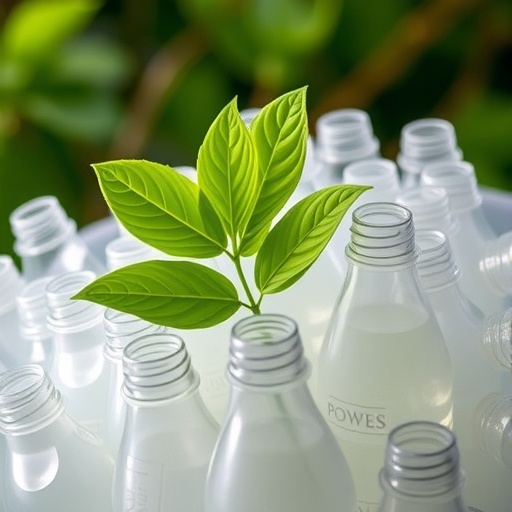
In recent years, the global push toward sustainability has spurred innovations aiming to replace conventional fossil fuel-derived plastics with bio-based alternatives. The adoption of bio-based plastic packaging has emerged as a prominent solution in tackling the environmental crisis caused by plastic pollution and climate change. However, new research published in Nature Communications by Erradhouani, Coma, Sonnemann, and colleagues in 2026 brings to light the complex and often contradictory trade-offs that accompany the transition to bio-based plastics, particularly concerning climate impacts and biodiversity conservation. This breakthrough study challenges simplistic narratives about bio-based materials as a universal environmental panacea, revealing a nuanced landscape where gains in one area may provoke losses in another.
The study meticulously evaluates the life cycle impacts of bio-based plastic packaging, integrating climate change metrics with biodiversity assessments. The research applies an advanced cradle-to-grave life cycle assessment (LCA) framework complemented by biodiversity impact modeling, allowing for a comprehensive understanding of environmental repercussions. Unlike traditional LCAs focused mostly on greenhouse gas emissions and energy use, this approach embeds biodiversity as a critical endpoint, recognizing ecosystems’ multifunctional roles beyond carbon storage alone. The authors highlight that while bio-based plastics generally show lower carbon footprints compared to petrochemical counterparts, their ecological footprint, particularly on biodiversity, remains underexplored and potentially significant.
Central to their findings is the revelation that large-scale biomass cultivation for bio-based plastic feedstocks exerts considerable pressure on natural habitats. The demand for agricultural residues, dedicated energy crops, or forest biomass can induce land-use changes including deforestation, habitat fragmentation, and soil degradation. Particularly concerning is the conversion of biodiverse landscapes into monoculture plantations optimized for feedstock yield, undermining the habitats of countless species and disrupting ecosystem functions essential to planetary health. This trade-off questions the sustainability of expanding bio-based plastic markets without robust land management policies and careful sourcing strategies.
The authors stress the complexity of balancing climate mitigation efforts with biodiversity conservation. While bio-based plastics offer a pathway to reduce fossil fuel dependency and associated greenhouse gas emissions, the encroachment upon natural ecosystems risks releasing stored carbon and diminishing biodiversity resilience. The study delineates scenarios showing that prioritizing carbon savings alone could inadvertently exacerbate biodiversity loss, generating a false sense of environmental progress. Such insights underscore the necessity of integrated assessment frameworks that simultaneously evaluate multiple environmental indicators to guide sustainable materials innovation.
Moreover, the paper explores how regional variations in biomass feedstock production affect the severity of climate-biodiversity trade-offs. In tropical regions rich in endemic species, the expansion of biomass plantations poses higher risks to biodiversity compared to temperate zones with less species richness. Conversely, temperate regions might offer more opportunities for sustainable biomass cultivation if managed appropriately. This geographic nuance calls for location-specific strategies that factor in ecological sensitivities rather than generic one-size-fits-all approaches to bio-based plastic supply chains.
Another critical dimension the research addresses is the role of circular economy principles in mitigating adverse impacts. Incorporating reuse, recycling, and composting within bio-based plastic systems can reduce the demand for virgin biomass feedstocks, thus alleviating pressure on land and ecosystems. However, current recycling infrastructure and consumer behaviors present practical barriers to achieving circularity at scale. The study recommends accelerated development of biodegradable bio-polymers compatible with existing waste management systems, incentivizing closed-loop designs that minimize environmental trade-offs throughout product lifecycles.
The investigation also delves into the technological advancements required to enhance the sustainability profile of bio-based plastics. Innovations in genetic engineering of feedstock crops to increase yield per hectare, reduce water and fertilizer inputs, and improve pest resistance could lower the environmental burdens of biomass production. Simultaneously, breakthroughs in bio-refinery processes that maximize feedstock conversion efficiency and reduce energy consumption are vital to ensure climate benefits materialize in practice. The authors call for intensified interdisciplinary research linking agronomy, biotechnology, material science, and ecological modeling.
Importantly, the social and economic dimensions of transitioning to bio-based plastics receive attention as well. The researchers argue that equitable land tenure, community engagement, and fair labor practices must accompany bio-based packaging expansion to avoid adverse social impacts and conflicts over resource access. Inclusion of local stakeholders in decision-making can foster adaptive management practices that respect indigenous knowledge and place-based conservation values. Sustainable bio-based innovation thus transcends technical challenges, requiring holistic governance frameworks integrating environmental, social, and economic objectives.
The paper’s comprehensive assessment underscores the urgent need for policymakers to adopt nuanced approaches when promoting bio-based plastics as climate solutions. It advocates for regulatory mechanisms that incentivize sustainable feedstock sourcing, restrict harmful land-use changes, and enforce transparency in supply chains. Certification schemes incorporating biodiversity criteria alongside carbon metrics are proposed as tools to differentiate genuinely sustainable bio-based products from those with hidden environmental costs. Without rigorous oversight, the transition risks substituting one environmental crisis for another.
From a consumer perspective, the findings inspire critical reflection on purchasing behaviors and product expectations. The research encourages consumers to look beyond marketing claims of biodegradability or “green” sourcing, urging demand for traceability and sustainability certifications. Awareness campaigns educating the public on the multifaceted impacts of packaging choices can empower informed decisions, driving markets toward genuinely sustainable alternatives. Collectively, consumer action coupled with industry and policy innovation can catalyze a systemic shift towards packaging solutions that harmonize climate benefits with biodiversity preservation.
The study further explores emerging bio-based plastic feedstocks that might alleviate some pressure points associated with land-intensive crops. Utilization of agricultural residues, algae, or microbial fermentation products offers promising avenues requiring less land and water input while potentially enhancing circularity. However, these technologies remain in nascent stages and face scale-up and economic feasibility challenges. The authors emphasize the importance of diversified feedstock portfolios combined with adaptive management to mitigate risks of monoculture reliance and promote resilience within supply chains.
In addition, the research analyzes the temporal dimension of climate and biodiversity impacts. Some trade-offs manifest immediately, such as habitat loss from land conversion, while carbon sequestration benefits accrue over longer periods. The timing mismatch complicates impact assessments and policy choices, necessitating dynamic modeling capable of capturing temporal lags and feedbacks. Integrating ecological succession processes and carbon flux studies enhances predictive accuracy, supporting decision-making that anticipates long-term sustainability outcomes rather than short-term gains.
The study also contextualizes the bio-based plastic transition within the broader framework of the planetary boundaries concept. It highlights that addressing climate change cannot be decoupled from safeguarding biodiversity, ecosystem services, and land-system integrity. Crossing thresholds in any of these domains jeopardizes Earth’s resilience and human well-being. Therefore, material innovation strategies must explicitly align with planetary boundaries to ensure holistic environmental stewardship. The authors call for collaborative global efforts integrating science, policy, and industry to navigate these complex interdependencies.
In conclusion, the research by Erradhouani et al. presents a critical, evidence-based reassessment of bio-based plastics’ environmental credentials. It rejects simplistic solutions and emphasizes that sustainable transitions require recognizing and managing inherent trade-offs between climate mitigation and biodiversity conservation. The path forward demands integrated lifecycle thinking, innovative technologies, circular economy adoption, equitable governance, and conscious consumer engagement. This pioneering study lays the groundwork for transforming bio-based plastic packaging from a well-intentioned substitute into a truly sustainable material solution that honors Earth’s intricate ecological tapestry.
As the world accelerates toward net-zero targets and bioeconomy development, the lessons elucidated in this research offer invaluable guidance. They remind stakeholders that sustainability is profoundly interdisciplinary and context-dependent. Striving for climate benefits should not eclipse biodiversity imperatives but rather complement them in a harmonized vision of planetary stewardship. Only through such balanced, transparent, and adaptive strategies can the promise of bio-based plastics be realized without compromising the natural systems vital to life on Earth.
Subject of Research: Environmental impacts of bio-based plastic packaging with a focus on climate change and biodiversity trade-offs.
Article Title: Transition to bio-based plastic packaging reveals complex climate–biodiversity trade-offs.
Article References: Erradhouani, B., Coma, V., Sonnemann, G. et al. Transition to bio-based plastic packaging reveals complex climate–biodiversity trade-offs. Nat Commun (2026). https://doi.org/10.1038/s41467-026-69016-9
Image Credits: AI Generated


