

Friday, November 20, 2026
Science
No Result
View All Result
  • Login
  • HOME
  • SCIENCE NEWS
  • CONTACT US
  • HOME
  • SCIENCE NEWS
  • CONTACT US
No Result
View All Result
Scienmag
No Result
View All Result
Home Science News Biology

Bile duct microbiome differs in structure between benign and malignant obstruction

October 29, 2026
in Biology
Morgan Morrow
By Morgan Morrow Scienmag Editorial Profile - Bacteriology
Reading Time: 3 mins read
0
Bile duct microbiome differs in structure between benign and malignant obstruction

Bile duct microbiome differs in structure between benign and malignant obstruction

65
SHARES
587
VIEWS
Share on FacebookShare on Twitter
ADVERTISEMENT

Researchers have mapped the microbial communities living in bile from patients with blocked bile ducts, comparing people whose obstruction was caused by benign disease with those whose blockage was caused by cancer. The study, published in the journal Gut Pathogens, used whole-genome shotgun sequencing on bile samples collected during endoscopic retrograde cholangiopancreatography.

The study included 48 oncological patients, evenly split between the two conditions: 24 with benign biliary obstruction and 24 with malignant biliary obstruction.

One of the study’s central findings was what the two groups did not differ in. When the team calculated standard measures of microbial diversity, including the Simpson, Shannon and richness indices, no significant differences emerged between benign and malignant obstruction. In other words, the sheer variety of species in the bile was broadly similar whether the blockage was cancerous or not.

The composition told a more nuanced story. Thirty-four microbial genera were shared between the two patient groups, but each group also carried genera that were absent from the other. That pattern suggests that while a core biliary community is common to obstructed bile ducts regardless of cause, particular microbes may associate with benign versus malignant disease.

To look beyond simple lists of organisms, the researchers applied principal component analysis, which grouped the samples into four microbial clusters in both the benign and malignant groups. This clustering indicates that biliary communities fall into a small number of recurring configurations rather than varying continuously from patient to patient.

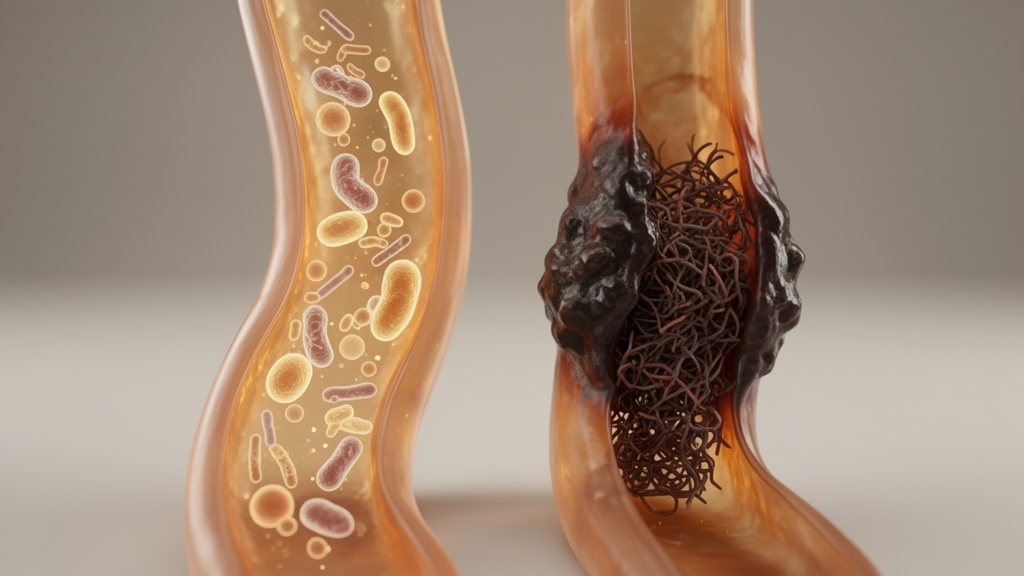
The most striking difference appeared when the researchers examined the topology of the microbial networks, that is, how the detected genera relate to one another. In the malignant group, by contrast, the network showed a more highly connected community, with a denser web of relationships among its members.

The authors suggest that identifying the topological characteristics of these microbial communities might offer a new insight into host-microbiota interactions in biliary disease.

The motivation behind the work lies in the role the microbiota plays in bile acid metabolism and in inflammation. Persistent inflammation in the hepatobiliary system is thought to contribute to tumorigenesis, and shifts in the composition and structure of the biliary microbial community may help drive the onset and progression of severe clinical conditions. Characterising these communities, the authors argue, may improve understanding of their role in hepatobiliary disease.

The study is an observational comparison in a single group of oncological patients, and the published version is an early, peer-reviewed accepted manuscript that remains subject to further edits.

Subject of Research: Biliary microbiome differences between benign and malignant bile duct obstruction

Article Title: The biliary microbiome in obstructive disease: a shotgun metagenomic comparison of benign and malignant conditions

Article References: Gatti, G., Binda, C., Dirani, G., Zannoli, S., Colosimo, C., Ingletto, L., Montanari, M. S., Marzucco, A., Arfilli, V., Schiavone, P., Gibiino, G., Perini, B., Coluccio, C., Grumiro, L., Dionisi, L., Guerra, M., Brandolini, M., De Pascali, A. M., Scagliarini, A., … Cricca, M. (2026). The biliary microbiome in obstructive disease: a shotgun metagenomic comparison of benign and malignant conditions. Gut Pathogens. https://doi.org/10.1186/s13099-026-00893-7

Image Credits: AI Generated

DOI: 10.1186/s13099-026-00893-7

Keywords: biliary microbiome, bile duct obstruction, shotgun metagenomics, microbial diversity, microbial networks, cholangiopancreatography, hepatobiliary disease, bile acid metabolism, Enterobacteriaceae, cancer, biliary, microbiome

Cite Scienmag News

Morgan Morrow. (October 29, 2026). Bile duct microbiome differs in structure between benign and malignant obstruction. Scienmag. https://scienmag.com/bile-duct-microbiome-differs-in-structure-between-benign-and-malignant-obstruction/

Morgan Morrow. "Bile duct microbiome differs in structure between benign and malignant obstruction." Scienmag, 29 October 2026, https://scienmag.com/bile-duct-microbiome-differs-in-structure-between-benign-and-malignant-obstruction/. Accessed 20 November 2026.

Morgan Morrow. "Bile duct microbiome differs in structure between benign and malignant obstruction." Scienmag. October 29, 2026. https://scienmag.com/bile-duct-microbiome-differs-in-structure-between-benign-and-malignant-obstruction/

Tags: association of specific microbes with biliary cancerbenign versus malignant biliary obstructionbile acid metabolismbile duct microbiome analysisbile duct obstructionbiliarybiliary microbiomecancercholangiopancreatographycore biliary microbiotaendoscopic retrograde cholangiopancreatography microbiome studyEnterobacteriaceaegut pathogens and biliary microbial profileshepatobiliary diseasemicrobial community diversity in bilemicrobial composition in obstructed bile ductsmicrobial diversitymicrobial diversity indices in bilemicrobial genus differences in biliary diseasesmicrobial networksmicrobiomemicrobiome-based differentiation of benign and malignant biliary conditionsshotgun metagenomicswhole-genome shotgun sequencing in bile samples
Share26Tweet16
Previous Post

MOF-Derived Metal Oxides Emerge as Versatile Sensing Materials for Detecting Volatile Organic Compounds

Next Post

Chronic D-serine at 200 mg/kg shows kidney toxicity signs in Parkinson’s disease rats

Related Posts

Porcine Rotavirus Groups Differ Across Polish Commercial and Family Pig Farms
Biology

Porcine Rotavirus Groups Differ Across Polish Commercial and Family Pig Farms

November 20, 2026
Rewetting Lowland Fen Peatlands May Substantially Reduce Wild Pollinator Potential Abundance
Biology

Rewetting Lowland Fen Peatlands May Substantially Reduce Wild Pollinator Potential Abundance

November 20, 2026
Engineered Bacterial Vesicles Deliver Triple Receptor Agonist to Improve Metabolic Regulation
Biology

Engineered Bacterial Vesicles Deliver Triple Receptor Agonist to Improve Metabolic Regulation

November 20, 2026
Fishers’ Local Ecological Knowledge Maps Mullet Migrations Across Northeastern Brazilian Reserves
Biology

Fishers’ Local Ecological Knowledge Maps Mullet Migrations Across Northeastern Brazilian Reserves

November 20, 2026
Male Bumblebees Help Incubate Developing Brood and Accelerate Nest Growth
Biology

Male Bumblebees Help Incubate Developing Brood and Accelerate Nest Growth

November 20, 2026
Eurasian Woodcocks in Northwestern Türkiye Host Diverse Helminth Parasite Communities
Biology

Eurasian Woodcocks in Northwestern Türkiye Host Diverse Helminth Parasite Communities

November 20, 2026
Next Post
Chronic D-serine at 200 mg/kg shows kidney toxicity signs in Parkinson’s disease rats

Chronic D-serine at 200 mg/kg shows kidney toxicity signs in Parkinson's disease rats

  • Mothers who receive childcare support from maternal grandparents show more optimized

    Mothers who receive childcare support from maternal grandparents show more parental warmth, finds NTU Singapore study

    27656 shares
    Share 11059 Tweet 6912
  • University of Seville Breaks 120-Year-Old Mystery, Revises a Key Einstein Concept

    1061 shares
    Share 424 Tweet 265
  • Bee body mass, pathogens and local climate influence heat tolerance

    682 shares
    Share 273 Tweet 171
  • Researchers record first-ever images and data of a shark experiencing a boat strike

    546 shares
    Share 218 Tweet 137
  • Groundbreaking Clinical Trial Reveals Lubiprostone Enhances Kidney Function

    531 shares
    Share 212 Tweet 133
Science

Embark on a thrilling journey of discovery with Scienmag.com—your ultimate source for cutting-edge breakthroughs. Immerse yourself in a world where curiosity knows no limits and tomorrow’s possibilities become today’s reality!

RECENT NEWS

  • Elevated HOXA10 Expression Associates With Reduced Platinum Resistance in Ovarian Cancer
  • TikTok study finds LLMs match fine-tuned models for conspiracy detection
  • Multi-Platform Study Links Human Mitochondrial DNA Methylation Signals to Technical Artifacts
  • Standardized Bedding Evaluation Framework Identifies Key Indicators for Broiler Preventative Health

Categories

  • Agriculture
  • Anthropology
  • Archaeology
  • Athmospheric
  • Biology
  • Biotechnology
  • Blog
  • Bussines
  • Cancer
  • Chemistry
  • Climate
  • Earth Science
  • Editorial Policy
  • Marine
  • Mathematics
  • Medicine
  • Pediatry
  • Policy
  • Psychology & Psychiatry
  • Science Education
  • Science News
  • Social Science
  • Space
  • Technology and Engineering

Subscribe to Blog via Email

Enter your email address to subscribe to this blog and receive notifications of new posts by email.

Join 5,151 other subscribers

© 2026 Scienmag - Science Magazine

Welcome Back!

Login to your account below

Forgotten Password?

Retrieve your password

Please enter your username or email address to reset your password.

Log In
No Result
View All Result
  • HOME
  • SCIENCE NEWS
  • CONTACT US

© 2026 Scienmag - Science Magazine

Discover more from Science

Subscribe now to keep reading and get access to the full archive.

Continue reading

