


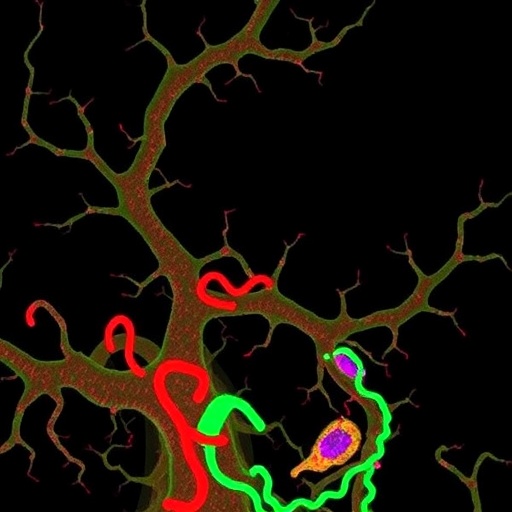
In a groundbreaking study set to redefine our understanding of Hirschsprung disease (HSCR) and its devastating complication, Hirschsprung-Associated Enterocolitis (HAEC), researchers have moved beyond the classical explanation centered on aganglionosis to identify crucial molecular signatures involving BCL-2 and Laminin. This innovative work opens new avenues for therapeutic intervention and diagnostic precision in a complex pediatric condition that has long challenged clinicians and scientists alike.
Hirschsprung disease, a congenital disorder characterized by the absence of enteric ganglia along distal segments of the colon, has traditionally been ascribed primarily to this aganglionosis. The lack of neurons in these bowel segments results in impaired motility, causing chronic constipation, bowel obstruction, and life-threatening complications. Until now, the precise mechanisms underpinning the pathogenesis of both HSCR and the often fatal HAEC remained incompletely understood, limiting the development of targeted therapies.
The study spearheaded by Tragesser and Sodhi harnesses advanced molecular profiling techniques to examine previously uncharted molecular pathways involved in HSCR pathology. Central to their discovery is the altered expression pattern of BCL-2, a key anti-apoptotic protein, alongside dynamic changes in Laminin, a crucial basement membrane glycoprotein involved in cell adhesion and tissue architecture. Their findings demonstrate that these two factors serve not only as biomarkers but also as active players shaping the disease landscape beyond mere neuronal absence.
BCL-2’s role in regulating cell survival emerges as a pivotal mechanism influencing enteric nervous system integrity and the intestinal microenvironment. The research details how dysregulated BCL-2 expression correlates with impaired cellular homeostasis, exacerbating neural deficits and contributing to the intestinal mucosal vulnerability seen in HSCR. This anti-apoptotic protein’s aberrant activity may be instrumental in facilitating inflammatory cascades characteristic of HAEC.
Equally compelling is the identification of Laminin alterations. Laminin’s critical function in supporting the structural framework of the intestinal basement membrane implicates it in maintaining epithelial barrier function and neuronal interactions. Disruption in Laminin expression or distribution compromises cellular signaling and tissue resilience, potentially facilitating bacterial translocation and inflammation, hallmark features of HAEC pathogenesis.
By moving beyond the traditional conceptualization of Hirschsprung disease as a purely neurodevelopmental condition defined by aganglionosis, the research sets a new paradigm emphasizing molecular microenvironment contributions. This could explain why some patients with similar degrees of aganglionosis experience vastly different clinical trajectories, particularly regarding HAEC susceptibility. The molecular signatures uncovered might underpin the heterogeneity seen clinically.
Methodologically, the study employed a combination of immunohistochemical analyses, gene expression profiling, and advanced imaging techniques on intestinal tissue samples from affected neonates versus controls. This multi-layered approach allowed the authors to correlate molecular data with histopathological changes, thereby providing robust evidence for the implicated pathways. Their meticulous validation ensures the reliability and reproducibility of these findings across diverse patient cohorts.
The implications of this research extend into clinical practice. The identification of BCL-2 and Laminin signatures opens the door for developing diagnostic biomarkers capable of stratifying patients according to their risk for HAEC development. Earlier recognition could allow prompt, tailored interventions potentially reducing morbidity and mortality. Furthermore, these molecular targets hold promise for novel therapeutic strategies aimed at mitigating disease progression by modulating cell survival pathways and extracellular matrix integrity.
Translationally, the work advocates for a conceptual shift towards integrated molecular phenotyping in HSCR management. Rather than focusing solely on surgical correction of affected bowel segments, multidisciplinary strategies incorporating molecular diagnostics and targeted adjunct therapies could revolutionize outcomes. This comprehensive approach acknowledges HSCR as a multifactorial disease with interplay between neuronal, cellular, and matrix components.
The study also raises intriguing questions about the role of the extracellular matrix and apoptosis in other neurointestinal disorders. The interplay between BCL-2 and Laminin may have broader relevance, offering a mechanistic template applicable to conditions marked by disrupted neuro-epithelial homeostasis. Future research could explore these pathways across varied gastrointestinal neuropathies, extending the impact of these findings.
Moreover, the elucidation of these molecular signatures provides a potential platform for the development of novel drug compounds designed to restore Laminin function or modulate BCL-2 activity. Such targeted pharmacological interventions could complement surgical approaches, especially in patients where surgery alone does not prevent recurrent HAEC episodes, improving long-term quality of life.
The authors emphasize the necessity for continued research aimed at unraveling the intricate signaling networks interacting with BCL-2 and Laminin within the enteric milieu. Understanding how these pathways integrate with immune responses and microbial factors may further clarify HAEC pathogenesis, setting the stage for comprehensive intervention strategies encompassing immunomodulation.
In sum, this seminal contribution to pediatric gastrointestinal research transcends the existing framework of Hirschsprung disease etiology by illuminating key molecular actors beyond aganglionosis. BCL-2 and Laminin signatures not only deepen our biological understanding but also pave the way for transforming disease management. As these insights gain traction, they hold immense promise for improving outcomes in affected neonates and potentially revolutionizing approaches to other related neurogastrointestinal disorders.
With the global incidence of Hirschsprung disease remaining significant and HAEC continuing as a major morbidity and mortality driver, translating these findings into clinical practice could mark a watershed moment in pediatric surgery and gastroenterology. The study’s innovative molecular perspective underscored by rigorous experimentation stands as a testament to the power of integrating developmental biology, molecular pathology, and clinical insight to address perplexing medical challenges.
As we look to the future, the convergence of molecular diagnostics, precision medicine, and novel therapeutic development exemplified by this research heralds a new era in treating congenital enteric neuropathies. The elucidation of disease-specific molecular fingerprints such as BCL-2 and Laminin signatures represents a crucial step forward, lighting the path toward personalized care that combines genetic, molecular, and clinical data to optimize patient outcomes.
In conclusion, the pioneering work of Tragesser and Sodhi reshapes the Hirschsprung disease narrative by charting a comprehensive molecular territory beyond the deficits in neuronal innervation. BCL-2 and Laminin emerge as vital components intertwined in the complex pathogenesis of HSCR and its enterocolitis complication, offering novel diagnostic markers and therapeutic targets. This research not only advances scientific knowledge but also inspires hope for enhanced precision in managing one of the most challenging pediatric gastrointestinal diseases.
Cite Scienmag News
Denise Maddox. (September 30, 2025). BCL-2, Laminin Reveal Hirschsprung Disease Mechanisms. Scienmag. https://scienmag.com/bcl-2-laminin-reveal-hirschsprung-disease-mechanisms/
Denise Maddox. "BCL-2, Laminin Reveal Hirschsprung Disease Mechanisms." Scienmag, 30 September 2025, https://scienmag.com/bcl-2-laminin-reveal-hirschsprung-disease-mechanisms/. Accessed 4 September 2026.
Denise Maddox. "BCL-2, Laminin Reveal Hirschsprung Disease Mechanisms." Scienmag. September 30, 2025. https://scienmag.com/bcl-2-laminin-reveal-hirschsprung-disease-mechanisms/


