


Electric vehicles are dangerous, they wreck the environment, and they are useless in the outback. These claims, and many like them, are circulating widely among Australian consumers, and according to new research from the University of Technology Sydney, they are not simply isolated misunderstandings. They form durable, socially reinforced belief systems that could complicate Australia’s transition away from internal combustion engines. The study, published in the journal Energy Research & Social Science, draws on in-depth interviews with 122 Australian consumers and offers one of the most detailed portraits yet of how electric vehicle misinformation takes root, spreads and survives in everyday conversation.
The research team, led by Professor Ross Gordon of the UTS Business School, a Professor of Behaviour and Social Change, set out to understand not just what sceptical Australians believe about EVs, but how those beliefs are shared, interpreted and validated within their social worlds. The findings suggest that misinformation about electric cars behaves less like a series of factual errors and more like a community asset: a body of shared stories that people exchange through trusted networks, both online and offline. The researchers describe this phenomenon with a new concept, EV misinformation communities, which captures how loose, informal networks of people can collectively sustain and legitimise anti-EV narratives without any formal organisation or fixed membership.
A central insight of the study is that many of these myths grow from what Professor Gordon calls a kernel of truth. Battery fires, charging access, limited driving range and the environmental footprint of manufacturing are all legitimate subjects of scrutiny. The problem arises when a genuine limitation, an isolated incident or an unresolved concern is stripped of context, generalised to all electric vehicles, or recruited to support broader claims about the technology that are not consistent with the best available evidence. A kernel of truth, the researchers argue, can make misinformation far more credible and persuasive than an obviously fabricated claim, because it gives the listener something concrete to anchor their doubts to.
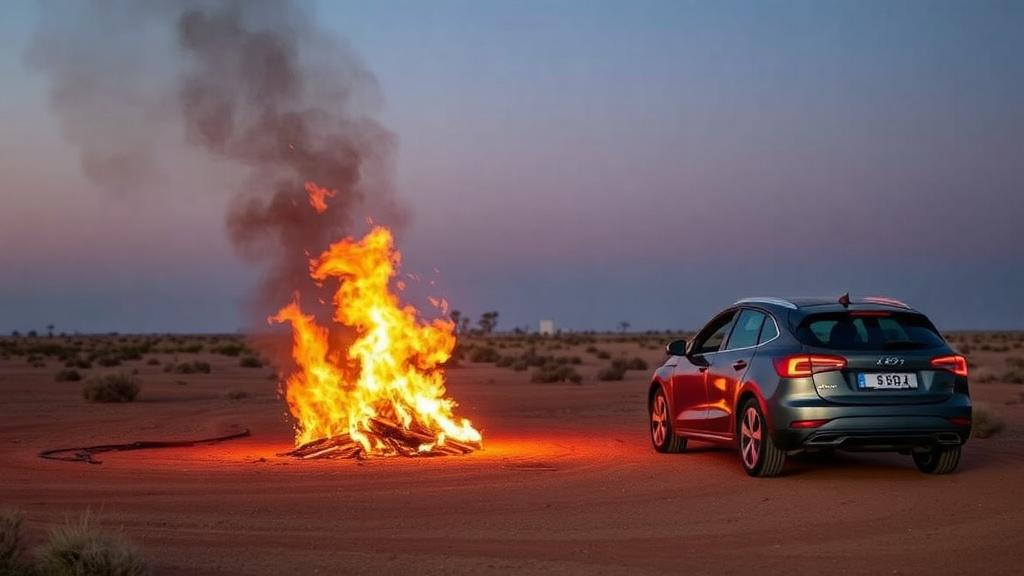
The interviews reveal how this dynamic plays out in practice. Participants repeated claims about the frequency and risk of EV battery fires, with one expressing fear of a car bursting into flames in the front yard. Others described electric vehicle manufacturing as raping and pillaging the earth, characterised EV drivers as people who cannot drive or are often in accidents, and worried that the absence of engine noise was going to lead to a lot of people getting run over. These are not the polished arguments of organised campaigns; they are colloquial, emotionally charged stories that circulate through social media feeds, family conversations and workplace banter, often beginning as jokes or memes that are later taken seriously.
Professor Gordon notes that some of this material originates as disinformation, meaning false or misleading content deliberately created and spread to deceive or disrupt. Once it enters circulation, however, it becomes misinformation when ordinary people encounter it and share it without any intent to deceive. This distinction matters for anyone trying to counter false claims, because it means the people repeating an anti-EV story are often sincere, socially embedded messengers rather than bad actors. Correcting them with facts alone can feel like an attack on their community or identity, and may even entrench the belief further.
The mechanics of validation are where the study breaks new ground. The researchers found that claims encountered on social media frequently became common currency for discussing EV safety in face-to-face interactions, creating a feedback loop between digital and physical social spaces. Repetition through trusted relationships and familiar media makes the claims appear credible, reinforcing concerns, fears of change and distrust of government and market actors. For some participants, these stories offered something more valuable than accuracy: reassurance. Believing that electric vehicles are dangerous, impractical or environmentally harmful provided an alternative to the message that the transition to EVs is inevitable, making hesitation or continued reliance on familiar petrol and diesel vehicles feel entirely reasonable.
This reassurance function helps explain why EV misinformation has proven so sticky in Australia specifically. Although electric vehicle uptake is increasing globally, adoption remains uneven across countries and consumer groups, and Australia has been comparatively slow to embrace the technology. Vast driving distances, genuine questions about regional charging infrastructure and a long national love affair with large combustion-engine vehicles all provide fertile ground for narratives portraying EVs as poorly suited to Australian lifestyles. The misinformation does not emerge in a vacuum; it attaches itself to real anxieties about cost, control, convenience and identity, and then amplifies them into sweeping claims about the technology as a whole.
The policy implications of the research are significant. The authors argue that addressing EV misinformation will require far more than fact-checking or simply providing additional information to sceptics. Because the false claims are sustained by social trust and emotional reassurance, corrections delivered through official channels may bounce off entirely. Instead, Professor Gordon says, policymakers and industry need to address people’s underlying concerns about cost, control, trust, fairness and lifestyle. They should also work through trusted messengers and networks, and give Australians opportunities to have positive, real-world experiences with electric vehicles, whether through test drives, community demonstrations or exposure to EV-owning peers whose lived experience contradicts the circulating myths.
Building that trust, the researchers contend, will require credible information delivered alongside practical responses to genuine barriers, including affordability, vehicle choice and charging access, particularly in rural and regional areas where range anxiety and infrastructure gaps are most acute. A fair and inclusive transition, they argue, must also create alternative sources of trust, validation and reassurance around electric vehicles. In other words, the answer to an misinformation community is not a lecture but a counter-community: networks of trusted voices and authentic experiences that can offer sceptics an equally credible social home for their doubts to be resolved rather than reinforced.
The study arrives at a critical moment for Australia’s decarbonisation agenda. Transport is a major and growing source of the nation’s greenhouse gas emissions, and the pace of EV adoption directly affects efforts to mitigate climate change and reduce the health impacts of air pollution. If misinformation continues to shape perceptions, judgements and purchasing decisions, even well-designed incentives and infrastructure investments may underperform. By mapping the social and cultural processes through which EV myths are shared and validated, the UTS team has provided policymakers, industry and communicators with a more realistic picture of the challenge: the battle over electric vehicles in Australia is being fought not in technical reports but in front yards, group chats and kitchen-table conversations, one repeated story at a time.
Subject of Research: Electric vehicle misinformation and consumer beliefs in Australia
Article Title: The electric car myths Australians can’t shake
Article References: The electric car myths Australians can’t shake. (n.d.). Original publication
Image Credits: AI Generated
DOI: Not provided
Keywords: electric vehicles, misinformation, disinformation, University of Technology Sydney, consumer behaviour, Australia, battery fires, charging infrastructure, climate change, Energy Research & Social Science, social networks, EV adoption
Cite Scienmag News
Faith Mcneil. (October 2, 2026). Battery fires and outback fears: the EV myths Australians refuse to give up. Scienmag. https://scienmag.com/battery-fires-and-outback-fears-the-ev-myths-australians-refuse-to-give-up/
Faith Mcneil. "Battery fires and outback fears: the EV myths Australians refuse to give up." Scienmag, 2 October 2026, https://scienmag.com/battery-fires-and-outback-fears-the-ev-myths-australians-refuse-to-give-up/. Accessed 5 October 2026.
Faith Mcneil. "Battery fires and outback fears: the EV myths Australians refuse to give up." Scienmag. October 2, 2026. https://scienmag.com/battery-fires-and-outback-fears-the-ev-myths-australians-refuse-to-give-up/


