


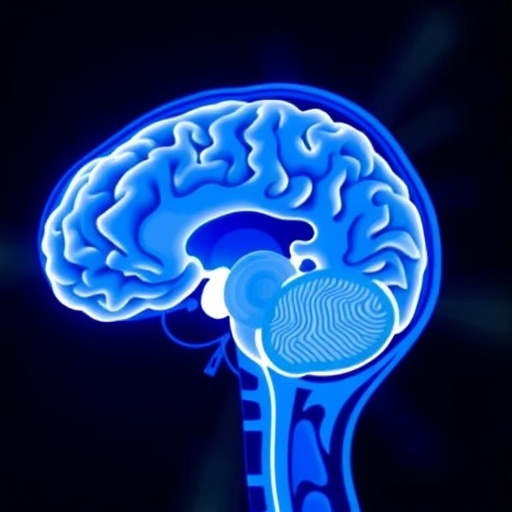
In the relentless quest to conquer treatment-resistant depression (TRD), a groundbreaking clinical trial has delved into the nuanced world of personalized brain stimulation therapies, opening new horizons both in neuroscience and patient-centered care. The BRIGhTMIND trial examines how magnetic resonance imaging (MRI) can be harnessed to tailor transcranial magnetic stimulation (TMS), offering a beacon of hope for patients unresponsive to conventional antidepressants. As the scientific community races to refine mental health treatments, this study illuminates not only the therapeutic promise of MRI-targeted TMS but also the intricate human factors influencing patient participation in cutting-edge research.
Depression, particularly when it defies standard treatments, presents a daunting clinical challenge. TRD affects a significant subset of patients globally, evoking profound suffering and elevated healthcare burdens. Transcranial magnetic stimulation, a non-invasive neurostimulation technique, has emerged as a formidable alternative, employing electromagnetic pulses to modulate neural circuits implicated in mood regulation. However, the variability in patients’ responses has driven investigators to explore how personalizing stimulation targets via MRI could enhance efficacy. The BRIGhTMIND trial stands at this intersection of individualized therapy and rigorous experimental design.
Central to the trial’s innovation is the use of advanced MRI scans to pinpoint precise brain regions involved in each patient’s depressive symptoms. By analyzing neuroanatomical and functional markers, clinicians customize the TMS delivery site, diverging from traditional “one-size-fits-all” protocols. This precision approach aims to optimize neuroplastic changes and therapeutic outcomes, acknowledging the heterogeneity of depression’s neural underpinnings. The trial contrasts two different MRI-targeted TMS methods, refining both the science of brain modulation and clinical feasibility.
Yet, beyond the technological marvels, the BRIGhTMIND team recognized a pivotal factor often overshadowed in clinical research—the patient experience. Recruiting and retaining participants with TRD pose formidable challenges given the complexity and severity of their condition. The trial incorporated qualitative methodologies, conducting in-depth interviews to unearth what motivates or discourages individuals from engaging with such demanding interventions. This patient-centric lens yields invaluable insights that transcend mere clinical endpoints, enriching the narrative of how experimental therapies are perceived and endured.
Interviews with nineteen participants, comprising those who completed the full treatment regimen and a smaller group who withdrew before randomization, revealed a tapestry of facilitators and barriers. “Hope” emerged as a dominant facilitator—patients were driven by the prospect of relief from debilitating symptoms through novel interventions. The human element also played a crucial role; empathetic research staff who communicated effectively and built rapport fostered trust and sustained engagement. Participants expressed genuine interest in pioneering treatments and altruistic desires to contribute to scientific progress, amplifying their commitment.
Conversely, substantial obstacles shadowed the path to participation. Concerns about the demanding nature of TMS sessions, involving twenty treatment visits, weighed heavily on some individuals. Practical issues related to time commitment and apprehension about the procedure’s sensations or effects emerged as deterrents. These challenges underscore the necessity for clinical trials to balance scientific rigor with patient-centered flexibility, ensuring that protocols accommodate the realities of participant lives and mental health vulnerabilities. The trial’s findings advocate for expanded treatment hours beyond traditional office schedules and user-friendly stimulation paradigms.
Strikingly, the study highlights the critical role of clinicians and researchers as facilitators—not only administering the protocol but also managing expectations and demystifying the treatment. By transparently explaining potential benefits, limitations, and what the process entails, staff alleviated fears and promoted informed consent. Continuous daily contact fostered a therapeutic alliance that mitigated the isolation often accompanying depression. This relational dynamic suggests that successful neuropsychiatric trials hinge as much on compassionate communication as on technological sophistication.
From a broader perspective, the BRIGhTMIND trial confronts the enduring tension between innovation and accessibility in mental health treatments. Personalized MRI-targeted TMS epitomizes precision medicine’s promise but also exemplifies hurdles in translating advanced interventions from bench to bedside. The qualitative findings act as a compass, guiding researchers and clinicians in tailoring trial designs and therapeutic delivery models that resonate with patient needs and lifestyles. Such integration of patient voices is pivotal for bolstering recruitment, adherence, and ultimately, clinical impact.
Technically, personalized TMS involves elaborate neuroimaging analyses to identify individual-specific cortical targets exhibiting aberrant activity linked to depressive syndromes. Functional MRI (fMRI) and structural MRI data converge to guide the magnetic coil’s positioning, optimizing stimulation parameters. This stepwise refinement contrasts with traditional methods targeting fixed landmarks like the dorsolateral prefrontal cortex. The BRIGhTMIND trial’s comparison of two tailored protocols provides empirical clarity on which strategy yields superior symptom amelioration, promising to refine standards of care.
Moreover, the trial’s methodology underscores the importance of mixed methods research in psychiatric investigations. The integration of quantitative clinical outcomes with qualitative experiential data enriches understanding and fosters translational relevance. By involving patients and public contributors in co-producing thematic analyses, the research embodies contemporary best practices in participatory science. This collaboration ensures that findings are grounded in lived realities, enhancing authenticity and applicability beyond academic circles.
Importantly, the trial’s registration with ISRCTN and compliance with ethical frameworks denote stringent adherence to research governance. The article situates its contribution within a wider scientific dialogue aiming to unravel biological and psychosocial complexities of TRD. The engagement with emerging neuromodulation technologies not only addresses unmet clinical needs but also challenges prevailing paradigms of psychiatric treatment, ushering in a new era of personalized brain therapies.
Looking ahead, the study advocates for ongoing innovation in protocol flexibility, including delivery of TMS sessions outside conventional hours and refinement of stimulation regimens for maximal acceptability. Such adaptations can dismantle participation barriers, thereby democratizing access to advanced neurotherapeutics. The findings emphasize that technological advances alone are insufficient; a holistic approach encompassing patient education, emotional support, and logistical accommodations is paramount for successful implementation.
In conclusion, the BRIGhTMIND trial represents a seminal stride in marrying neuroimaging precision with patient-centered clinical research in treatment-resistant depression. By unraveling the psychological and practical determinants of research participation alongside therapeutic efficacy, the study paves a dual path toward optimized care and enhanced scientific rigor. This integrated framework resonates as a beacon for future neuropsychiatric trials, where human experience and high technology converge to transform mental health outcomes.
Cite Scienmag News
Glenn Wilkins. (August 2, 2025). Barriers and Boosts in Personalized MRI-Guided TMS Trial. Scienmag. https://scienmag.com/barriers-and-boosts-in-personalized-mri-guided-tms-trial/
Glenn Wilkins. "Barriers and Boosts in Personalized MRI-Guided TMS Trial." Scienmag, 2 August 2025, https://scienmag.com/barriers-and-boosts-in-personalized-mri-guided-tms-trial/. Accessed 4 September 2026.
Glenn Wilkins. "Barriers and Boosts in Personalized MRI-Guided TMS Trial." Scienmag. August 2, 2025. https://scienmag.com/barriers-and-boosts-in-personalized-mri-guided-tms-trial/


