


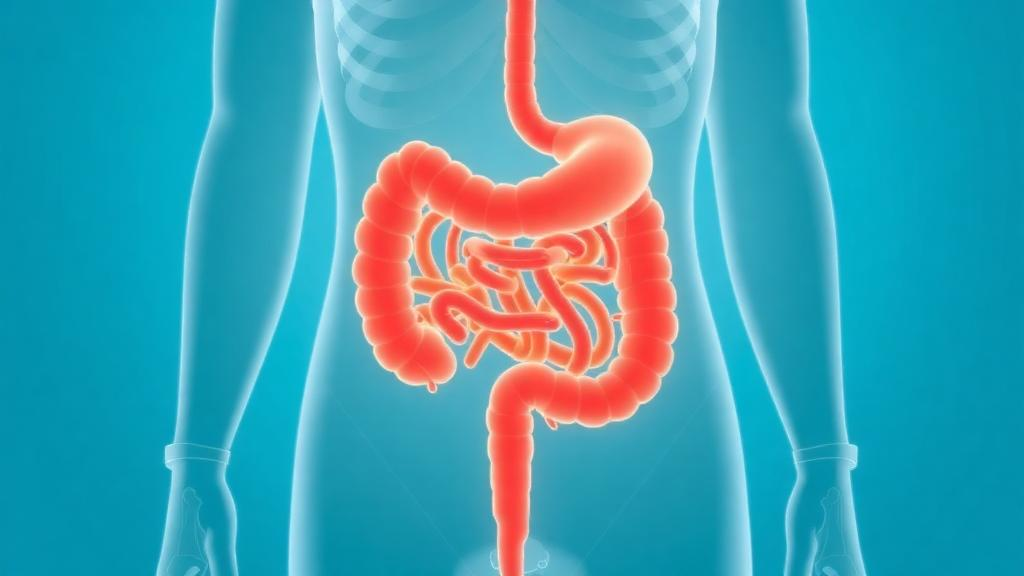
For millions of people with hypothyroidism, a single daily pill of levothyroxine stands in for a thyroid gland that no longer does its job. The drug is among the most prescribed medications in the world, and its dosing is famously finicky: too little leaves patients fatigued and foggy, too much strains the heart and bones. Now a new prospective cohort study suggests that one of the fastest-growing surgical procedures on the planet, bariatric surgery, can quietly upend that delicate balance, forcing many patients to take more of the hormone even as their bodies absorb it more efficiently.
The research, published in BMC Endocrine Disorders, followed 79 patients with hypothyroidism undergoing either Roux-en-Y gastric bypass or sleeve gastrectomy, the two most common bariatric operations worldwide. Researchers from Mansoura University in Egypt and collaborating institutions in Saudi Arabia and Sudan tracked the participants at three time points: before surgery, three months after, and six months after. At each visit they measured body weight, blood sugar, thyroid hormone levels, the daily levothyroxine dose each patient required, and, unusually for studies of this kind, the actual pharmacokinetics of the drug, captured as the area under the curve of free thyroxine concentration during the six hours following an oral dose.
The metabolic results were dramatic and, in many respects, expected. Six months after surgery, average body mass index had fallen from 44.5 to 32.1 kilograms per square meter in the gastric bypass group and from 42.9 to 33.0 in the sleeve gastrectomy group. Fasting blood sugar dropped in parallel, from 114.8 to 92.4 milligrams per deciliter after bypass and from 109.9 to 96.1 after sleeve gastrectomy, with both changes statistically robust even after correction for multiple comparisons. These figures confirm what decades of bariatric literature have established: within months, these operations deliver profound improvements in weight and glucose metabolism that diet and medication alone rarely achieve.
What happened to thyroid hormone management was less predictable. Patients in both groups needed significantly more levothyroxine after surgery, with the effect strongest when the dose was expressed per kilogram of body weight, a metric that matters because heavier patients typically require proportionally more hormone. In absolute terms, the bypass group’s average daily requirement climbed from 137.5 to 158.2 micrograms, a statistically significant increase, while the sleeve group rose from 133.3 to 144.8 micrograms, a trend that fell just short of conventional significance. The weight-adjusted dose increases were significant in both surgical groups, underscoring that the change is not simply an artifact of patients losing mass.
The pharmacokinetic measurements add a genuinely surprising twist. Rather than absorbing less drug after their digestive tracts were surgically rearranged, patients absorbed more. The six-hour area under the curve for free thyroxine rose by an average of 330 units in the bypass group and 185 units in the sleeve group, both statistically significant increases. This finding runs counter to the intuitive assumption that rerouting or shrinking the stomach would impair drug uptake. Instead, the data suggest that the post-bariatric gut becomes a more efficient gateway for levothyroxine, even as the body’s overall demand for the hormone climbs, likely reflecting shifts in tissue sensitivity, hormone metabolism, and the loss of metabolically active fat mass.
The study’s most novel contribution lies in the gut microbiome. Stool sequencing revealed that microbial diversity, measured by the Shannon index, increased significantly over the six months in the bypass group, a shift consistent with the broader literature showing that bariatric surgery restructures the intestinal ecosystem. Among the individual species, one stood out: Akkermansia muciniphila, a mucus-dwelling bacterium that has become something of a celebrity in metabolic research, doubled in relative abundance from 1.20 percent to 2.40 percent of the gut community, with the enrichment most pronounced after gastric bypass. The change survived false discovery rate correction, as did the major shifts in metabolic parameters and weight-adjusted levothyroxine dosing.
Akkermansia muciniphila has attracted intense scientific interest because it thrives on the mucus layer lining the gut and is consistently associated with leanness and metabolic health in both animal models and human cohorts. Its expansion after bariatric surgery has been reported before, but linking it directly to thyroid drug handling is new territory. In this study, patient-level analysis showed a modest positive association between the rise in Akkermansia abundance and the increase in free thyroxine exposure after multivariable adjustment. The authors are careful to frame this as exploratory and hypothesis-generating rather than causal, and most other microbiome-hormone associations they tested did not reach statistical significance. Still, the observation opens a plausible mechanistic avenue: a microbiome that thins the mucus layer, alters gut transit, or modifies bile acid signaling could conceivably change how much of an oral thyroid hormone dose reaches the bloodstream.
The clinical implications are immediate and practical. Hypothyroid patients represent a meaningful fraction of the bariatric surgery population, since obesity, autoimmune thyroid disease, and metabolic dysfunction frequently travel together. Current guidance generally calls for thyroid function monitoring after surgery, but the specifics of when and how aggressively to adjust doses remain loosely defined. This study suggests that the early postoperative period, the first six months, is a window of active pharmacokinetic change, not merely a period of gradual weight loss. Patients whose doses are calibrated before surgery may drift out of balance as their absorption and requirements shift in opposite directions, and the weight-adjusted dose, rather than the absolute dose, may be the more reliable yardstick for clinicians tracking these changes.
There are, of course, limits to how far the findings can be generalized. The study enrolled 79 patients at a single center, and although a prospective design with repeated measures and mixed-effects modeling lends it considerable strength, the sample size constrains the precision of subgroup analyses and the microbiome associations in particular. The six-month follow-up captures the steepest phase of post-bariatric change but not the long-term trajectory, and it remains unknown whether levothyroxine requirements stabilize, continue to rise, or eventually fall as weight loss plateaus. The modest association between Akkermansia and hormone exposure will need replication in larger and more diverse cohorts before it can inform practice, and the study cannot disentangle whether the bacterium influences drug absorption or simply co-varies with the same surgical and dietary forces.
Even with those caveats, the work is a compelling example of a broader shift in pharmacology: the recognition that the gut microbiome is not a passive bystander in drug therapy but an active participant that can modulate how medications behave. Levothyroxine joins a growing list of drugs, from metformin to immune checkpoint inhibitors, whose effects are now known to intersect with the trillions of microbes inhabiting the intestine. As bariatric surgery continues to expand globally, and as microbiome science matures from description toward mechanism, studies like this one point toward a future in which the prescription pad accounts not only for a patient’s weight and kidney function but for the specific ecological community living in their gut. For now, the message for patients and clinicians is simpler: after bariatric surgery, thyroid hormone needs change, absorption changes, and close, individualized monitoring is not optional but essential.
Subject of Research: Effects of bariatric surgery on levothyroxine dosing, pharmacokinetics, and gut microbiome composition in hypothyroid patients
Article Title: Levothyroxine dose requirements, oral bioavailability and gut microbiome enterotype dynamics during the early post-bariatric period: a single-centre, prospective, cohort study
Article References: El-Sehrawy, A. A. M. A., Gameil, M. A., Nakib, A. M. E., Aseeri, A. A., Alanazi, M. A., Alharbi, S. S., Taki-Eldin, A., Maashi, M. S., ELmazny, G. M., Almansour, H., Abdalla, R., & Kandil, I. (2026). Levothyroxine dose requirements, oral bioavailability and gut microbiome enterotype dynamics during the early post-bariatric period: a single-centre, prospective, cohort study. BMC Endocrine Disorders. https://doi.org/10.1186/s12902-026-02599-y
Image Credits: AI Generated
DOI: 10.1186/s12902-026-02599-y
Keywords: bariatric surgery, levothyroxine, hypothyroidism, gut microbiome, Akkermansia muciniphila, pharmacokinetics, Roux-en-Y gastric bypass, sleeve gastrectomy, thyroid hormone, metabolic surgery, FT4 absorption, endocrinology
Cite Scienmag News
Ophelia Keating. (October 13, 2026). Bariatric Surgery Reshapes Thyroid Drug Needs and the Gut Microbiome. Scienmag. https://scienmag.com/bariatric-surgery-reshapes-thyroid-drug-needs-and-the-gut-microbiome/
Ophelia Keating. "Bariatric Surgery Reshapes Thyroid Drug Needs and the Gut Microbiome." Scienmag, 13 October 2026, https://scienmag.com/bariatric-surgery-reshapes-thyroid-drug-needs-and-the-gut-microbiome/. Accessed 13 October 2026.
Ophelia Keating. "Bariatric Surgery Reshapes Thyroid Drug Needs and the Gut Microbiome." Scienmag. October 13, 2026. https://scienmag.com/bariatric-surgery-reshapes-thyroid-drug-needs-and-the-gut-microbiome/


