


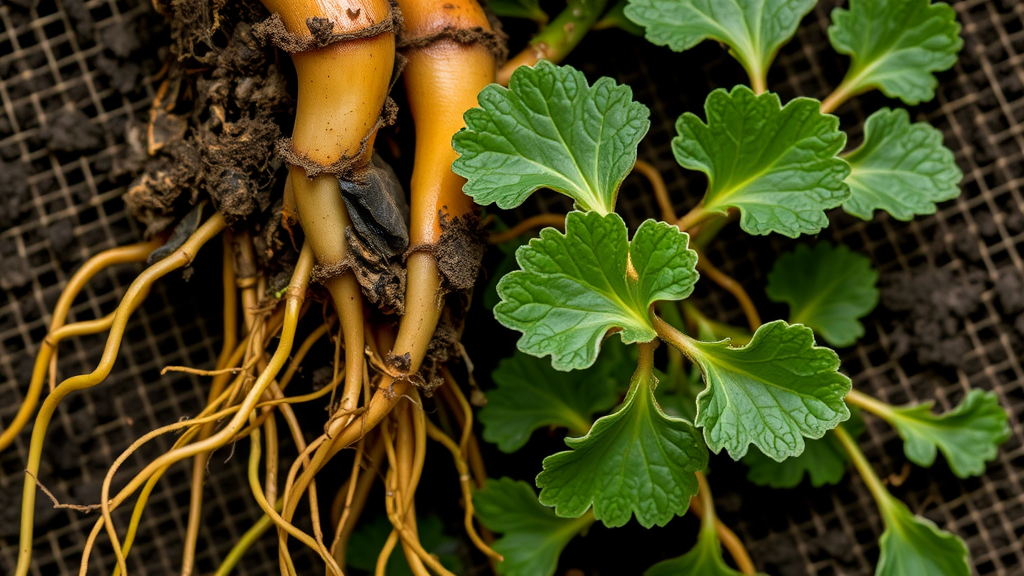
Beneath every healthy plant lies one of the most consequential hiring decisions in biology. Each day, a root pushing through soil is surrounded by billions of bacteria, yet only a select fraction is invited to colonize the root surface and become part of the plant’s microbiome. For decades, scientists have tried to understand the rules of this recruitment, and the answers have remained frustratingly inconsistent: the same plant species grown in different soils assembles different bacterial communities, and closely related hosts can carry strikingly different microbial passengers. A new study published in Nature Microbiology now offers a unifying explanation, showing that what matters most is not which bacterial species are present in the soil, but what those bacteria can actually do.
The research, led by Gijs Selten, Florian Lamouche, Ronnie de Jonge and Simona Radutoiu, together with colleagues across the Netherlands, Denmark and beyond, took a deliberately systems-level approach. Rather than observing natural communities where countless uncontrolled variables blur the picture, the team turned to synthetic community experiments, or SynComs, in which plants are grown under controlled conditions and inoculated with defined collections of bacterial isolates. These isolate collections had been cultured from the roots of three very different plants: the small flowering mustard Arabidopsis thaliana, the cereal crop barley, and the legume Lotus japonicus, all grown in soil. By recombining these bacteria in different combinations and letting plants choose their partners, the researchers could watch microbial assembly happen in near-real time, with every participant known by name and by genome.
The scale of the underlying resource is itself remarkable. The team worked with hundreds of bacterial isolates, 447 from Arabidopsis, 364 from barley and 177 from Lotus, each sequenced and functionally annotated so that the researchers could ask not just who was present, but what genetic toolkit each bacterium carried. Genomes were annotated using established pipelines, including PROKKA and eggNOG-mapper, allowing every gene to be assigned to functional categories known as KEGG orthologs, or KOs. This transformed the question of microbiome assembly from a matter of taxonomy into a matter of capability: instead of asking which genera thrived on roots, the team could ask which functions were being selected.
The first major finding concerns how differently each host plays the recruitment game. In Arabidopsis and barley, the composition of the root microbiota was shaped primarily by the inoculum, meaning the identity of the bacterial mixture supplied to the soil strongly determined which bacteria ended up on the roots. Lotus, by contrast, behaved in a fundamentally different way. Its root environment favoured fewer isolates, but those it selected were markedly more functionally diverse, a pattern the authors liken to a ‘Swiss army knife’ strategy. Rather than assembling a large and varied workforce, Lotus appears to pick a compact team of generalists, each carrying a broad repertoire of functions. Consistent with this, isolates cultured from Lotus roots were significantly more functionally diverse than those from Arabidopsis grown in comparable soil, a difference confirmed statistically with a Kolmogorov-Smirnov test yielding an extremely small p-value.
Yet beneath this host-to-host variability, a deeper regularity emerged. When the researchers compared the functional content of the root microbiomes across all three plants, they found that despite taxonomic differences, the communities encoded overlapping sets of functions. In other words, different plants, and even different starting inocula, converged on similar functional solutions. The team formalized this with a genome-to-function framework that is function-centric, taxonomically inclusive and host-context aware, and through it they identified 266 functions that were consistently enriched in root microbiomes compared with the initial soil inocula. This set of 266 KOs constitutes what the authors describe as a functional backbone, a core signature of plant-associated bacteria that persists regardless of which host or which bacterial pool is involved.
The significance of this functional backbone extends beyond the greenhouse. When the researchers examined how the 266 enriched functions are distributed across the wider bacterial world, using a published genome database that categorizes bacteria as soil-dwelling, non-plant-associated or plant-associated, the distributions differed dramatically between groups. Plant-associated bacteria carried these functions far more often than their non-plant-associated relatives, and the overlap between the functions identified in this study and those previously linked to plant adaptation was highly significant by binomial test. This suggests that the 266 functions are not artifacts of the experimental system but reflect genuine evolutionary adaptation to life in the root environment, shaped over long timescales of plant-microbe coexistence.
Within bacterial families, a subtler principle was at work. Across major taxa, isolates that possessed broad but distinct functional repertoires relative to their close relatives were consistently more abundant on roots. In experiments with seven independently assembled 200-member synthetic communities inoculated on Arabidopsis, the researchers found significant loglinear correlations between the intra-familial functional diversity of an isolate, measured as the number of unique KOs in its genome, and its relative abundance in the root microbiome. In plain terms, when two bacteria from the same family compete for a place on a root, the one offering functions its relatives lack tends to win. Root colonization, in this view, rewards complementarity rather than redundancy: the plant’s microbiome assembles like a jigsaw in which each successful piece adds something new.
The study also uncovered host-specific functional signatures with clear mechanistic interest. In Arabidopsis, a subset of enriched functions clustered around the bch/chl gene cluster involved in bacteriochlorophyllide biosynthesis, and these genes were contributed by a variety of bacterial families rather than a single lineage. In barley, enrichment centred on exoV and exoZ, two genes involved in succinoglycan biosynthesis, an exopolysaccharide long associated with rhizobial interactions. Meanwhile, the dominant colonizers themselves told two different stories: nodulating Mesorhizobium strains dominated Lotus root communities in a host-dependent manner, whereas the barley-collection isolate Rhizobacter sp. P2_G4 dominated communities derived from its home inoculum regardless of which host it encountered, illustrating that both host selection and inoculum effects leave legible fingerprints on the final community.
For agriculture, the implications are potentially transformative. Bioinoculants, beneficial bacteria applied to crops to boost growth or disease resistance, notoriously fail when moved from the lab to the field, and one leading explanation has been that the rules governing root colonization were simply too context-dependent to predict. This study reframes that problem. If plants select bacteria primarily on the basis of functional capacity, then inoculant design should focus less on taxonomic identity and more on delivering the functions that roots consistently enrich, particularly when those functions complement what is already present in the local soil community. The authors’ framework, being function-centric, taxonomically inclusive and host-context aware, offers exactly the kind of predictive scaffold that microbiome engineering has lacked, and Aarhus University has already filed a patent application on the use of these findings for improved root competence in bacteria.
There are, of course, limits to what controlled reconstitution experiments can capture. Natural soils teem with protozoa, fungi, viruses and fluctuating physical conditions that no synthetic community fully reproduces, and the 266-function backbone, while robust across three hosts and multiple inocula, will need validation in field settings and across a wider range of plant species. Nevertheless, the conceptual advance is clear and consequential. The root microbiome, this work suggests, is not a lottery of whoever happens to be nearby, nor a fixed guest list of co-evolved species, but a functional marketplace in which plants reward bacteria bearing the right tools. Understanding that marketplace brings scientists a decisive step closer to deliberately staffing the roots of crops with microbial communities that enhance nutrition, resilience and yield, turning one of biology’s quietest selection processes into an instrument of agricultural design.
Subject of Research: Functional determinants of bacterial recruitment into plant root microbiota
Article Title: Functional capacities drive recruitment of bacteria into plant root microbiota
Article References: Selten, G., Lamouche, F., Gómez-Repollés, A., López, J. L., Zhang, X.-M., Smart, C., Blahovska, Z., Zarate Camargo, G., Kelly, S., de Jonge, R., & Radutoiu, S. (2026). Functional capacities drive recruitment of bacteria into plant root microbiota. Nature Microbiology. https://doi.org/10.1038/s41564-026-02493-2
Image Credits: AI Generated
DOI: 10.1038/s41564-026-02493-2
Keywords: plant microbiome, root microbiota, synthetic communities, bacterial functions, Arabidopsis thaliana, barley, Lotus japonicus, microbiome engineering, KEGG orthologs, functional redundancy, bioinoculants, microbial ecology
Cite Scienmag News
Morgan Morrow. (September 20, 2026). Bacterial Functions, Not Species Names, Decide Who Wins a Place on Plant Roots. Scienmag. https://scienmag.com/bacterial-functions-not-species-names-decide-who-wins-a-place-on-plant-roots/
Morgan Morrow. "Bacterial Functions, Not Species Names, Decide Who Wins a Place on Plant Roots." Scienmag, 20 September 2026, https://scienmag.com/bacterial-functions-not-species-names-decide-who-wins-a-place-on-plant-roots/. Accessed 4 October 2026.
Morgan Morrow. "Bacterial Functions, Not Species Names, Decide Who Wins a Place on Plant Roots." Scienmag. September 20, 2026. https://scienmag.com/bacterial-functions-not-species-names-decide-who-wins-a-place-on-plant-roots/


