Tuesday, November 3, 2026
Science
No Result
View All Result
  • Login
  • HOME
  • SCIENCE NEWS
  • CONTACT US
  • HOME
  • SCIENCE NEWS
  • CONTACT US
No Result
View All Result
Scienmag
No Result
View All Result
Home Science News Space

Axion dark energy passes a dynamical stability test

October 29, 2026
in Space
Grant Pearson
By Grant Pearson Scienmag Editorial Profile - Observational Astronomy
Reading Time: 2 mins read
0
Axion dark energy passes a dynamical stability test

Axion dark energy passes a dynamical stability test

65
SHARES
587
VIEWS
Share on FacebookShare on Twitter
ADVERTISEMENT

A theoretical study published in General Relativity and Gravitation examines whether an axion dark energy model can reliably drive the observed accelerated expansion of the Universe, and the authors report that it can. The work, by Ankan Mukherjee and Nandan Roy, appears in Volume 58 of the journal as article number 125.

Such potentials are attractive to cosmologists because they can naturally drive late-time cosmic acceleration and can produce rich dynamical behaviour, including oscillations in the dark-energy equation-of-state parameter. But the authors stress that this viability hinges on one crucial requirement: the existence of stable cosmological solutions.

To test that requirement, the researchers reformulated the background evolution equations of the model as an autonomous dynamical system.

Within this framework, the team identified fixed points corresponding to three cosmic epochs: a radiation-dominated era, a matter-dominated era, and a dark-energy-dominated era. Using both analytical and numerical techniques, they analysed the stability of these fixed points within the observationally allowed region of the model’s parameter space.

The radiation-dominated and matter-dominated phases emerge naturally as saddle points, meaning the Universe passes through them rather than remaining trapped, which ensures a standard sequence of cosmological evolution. The late-time dark-energy-dominated solution, by contrast, acts as a stable attractor: regardless of how the Universe’s initial conditions are set, the evolution is drawn toward a state of accelerated expansion.

That attractor behaviour is what the authors highlight as the central result, because it guarantees the robustness of cosmic acceleration against variations in initial conditions. In practical terms, a wide range of plausible starting states for the Universe would still end up in the observed accelerating phase, rather than requiring fine-tuning.

The study is a theoretical and dynamical analysis of a specific model rather than a direct observational test, and its conclusions apply within the observationally allowed parameter region the authors considered. Even so, the team argues that the overall picture establishes the axion dark energy model as a dynamically consistent and observationally viable candidate for explaining the late-time accelerated expansion of the Universe.

Subject of Research: Dynamical stability analysis of an axion dark energy model as a candidate for late-time cosmic acceleration

Article Title: Stability analysis of axion dark energy model

Article References: Mukherjee, A., & Roy, N. (2026). Stability analysis of axion dark energy model. General Relativity and Gravitation, 58(10), Article 125. https://doi.org/10.1007/s10714-026-03626-y

Image Credits: AI Generated

DOI: 10.1007/s10714-026-03626-y

Keywords: dark energy, axion, cosmic acceleration, dynamical systems, fixed points, stability analysis, pseudo-Nambu-Goldstone bosons, equation of state, cosmology, attractor, Stability, analysis

Cite Scienmag News

Grant Pearson. (October 29, 2026). Axion dark energy passes a dynamical stability test. Scienmag. https://scienmag.com/axion-dark-energy-passes-a-dynamical-stability-test/

Grant Pearson. "Axion dark energy passes a dynamical stability test." Scienmag, 29 October 2026, https://scienmag.com/axion-dark-energy-passes-a-dynamical-stability-test/. Accessed 3 November 2026.

Grant Pearson. "Axion dark energy passes a dynamical stability test." Scienmag. October 29, 2026. https://scienmag.com/axion-dark-energy-passes-a-dynamical-stability-test/

Tags: analysisattractorautonomous dynamical system analysisaxionAxion dark energy model stabilitycosmic accelerationcosmological evolution phasescosmologydark energydark energy equation-of-state oscillationsdark energy stability criteriadynamical systemsdynamical systems in cosmologyequation of statefixed pointsfixed points in cosmological modelslate-time cosmic accelerationmatter-dominated era stabilityobservational constraints on dark energypseudo-Nambu-Goldstone bosonsradiation to dark energy transitionstabilitystability analysisstable cosmological solutions
Share26Tweet16
Previous Post

Lab-grown tumour assembloids reveal why kidney cancers respond differently to immunotherapy

Next Post

Intermediate Annealing at 450 °C Cuts Resistance of Spray-Pyrolyzed Bilayer ZnO Films

Related Posts

Physicists Pin Down the Hidden Voltage Source Behind Geomagnetically Induced Currents
Space

Physicists Pin Down the Hidden Voltage Source Behind Geomagnetically Induced Currents

October 30, 2026
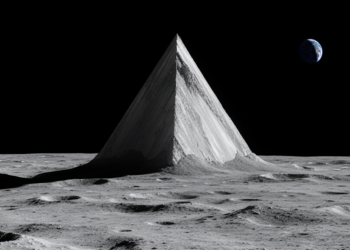
Moon’s mightiest mountain revealed as a three-sided pyramid taller than Everest’s base-to-peak height
Space

Moon’s mightiest mountain revealed as a three-sided pyramid taller than Everest’s base-to-peak height

October 30, 2026
CubeSat Deorbit Method Targets Re-Entry Longitude by Accounting for Earth’s Rotation
Space

CubeSat Deorbit Method Targets Re-Entry Longitude by Accounting for Earth’s Rotation

October 30, 2026
SETI Institute Adds Three Artists-in-Residence Probing Life, Intelligence and Consciousness
Space

SETI Institute Adds Three Artists-in-Residence Probing Life, Intelligence and Consciousness

October 30, 2026
Genetic Algorithm Tracks Relay of Three Dissipation Channels in Warm Higgs Inflation
Space

Genetic Algorithm Tracks Relay of Three Dissipation Channels in Warm Higgs Inflation

October 30, 2026
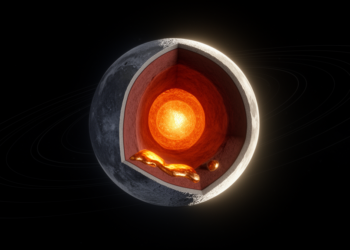
Tidal forces may have concentrated deep lunar heat near the core-mantle boundary, model suggests
Space

Tidal forces may have concentrated deep lunar heat near the core-mantle boundary, model suggests

October 30, 2026
Next Post
Intermediate Annealing at 450 °C Cuts Resistance of Spray-Pyrolyzed Bilayer ZnO Films

Intermediate Annealing at 450 °C Cuts Resistance of Spray-Pyrolyzed Bilayer ZnO Films

  • Mothers who receive childcare support from maternal grandparents show more optimized

    Mothers who receive childcare support from maternal grandparents show more parental warmth, finds NTU Singapore study

    27656 shares
    Share 11059 Tweet 6912
  • University of Seville Breaks 120-Year-Old Mystery, Revises a Key Einstein Concept

    1061 shares
    Share 424 Tweet 265
  • Bee body mass, pathogens and local climate influence heat tolerance

    682 shares
    Share 273 Tweet 171
  • Researchers record first-ever images and data of a shark experiencing a boat strike

    546 shares
    Share 218 Tweet 137
  • Groundbreaking Clinical Trial Reveals Lubiprostone Enhances Kidney Function

    531 shares
    Share 212 Tweet 133
Science

Embark on a thrilling journey of discovery with Scienmag.com—your ultimate source for cutting-edge breakthroughs. Immerse yourself in a world where curiosity knows no limits and tomorrow’s possibilities become today’s reality!

RECENT NEWS

  • Trademarks Meet Patents in New Method to Spot Technology Opportunities
  • Reddit self-declarations offer auditable labels for demographic inference
  • Scots pine needles map trace element pollution in Polish industrial town
  • Dual-blockchain scheme secures vehicle handovers without pre-shared keys

Categories

  • Agriculture
  • Anthropology
  • Archaeology
  • Athmospheric
  • Biology
  • Biotechnology
  • Blog
  • Bussines
  • Cancer
  • Chemistry
  • Climate
  • Earth Science
  • Editorial Policy
  • Marine
  • Mathematics
  • Medicine
  • Pediatry
  • Policy
  • Psychology & Psychiatry
  • Science Education
  • Science News
  • Social Science
  • Space
  • Technology and Engineering

Subscribe to Blog via Email

Enter your email address to subscribe to this blog and receive notifications of new posts by email.

Join 5,150 other subscribers

© 2025 Scienmag - Science Magazine

Welcome Back!

Login to your account below

Forgotten Password?

Retrieve your password

Please enter your username or email address to reset your password.

Log In
No Result
View All Result
  • HOME
  • SCIENCE NEWS
  • CONTACT US

© 2025 Scienmag - Science Magazine

Discover more from Science

Subscribe now to keep reading and get access to the full archive.

Continue reading