


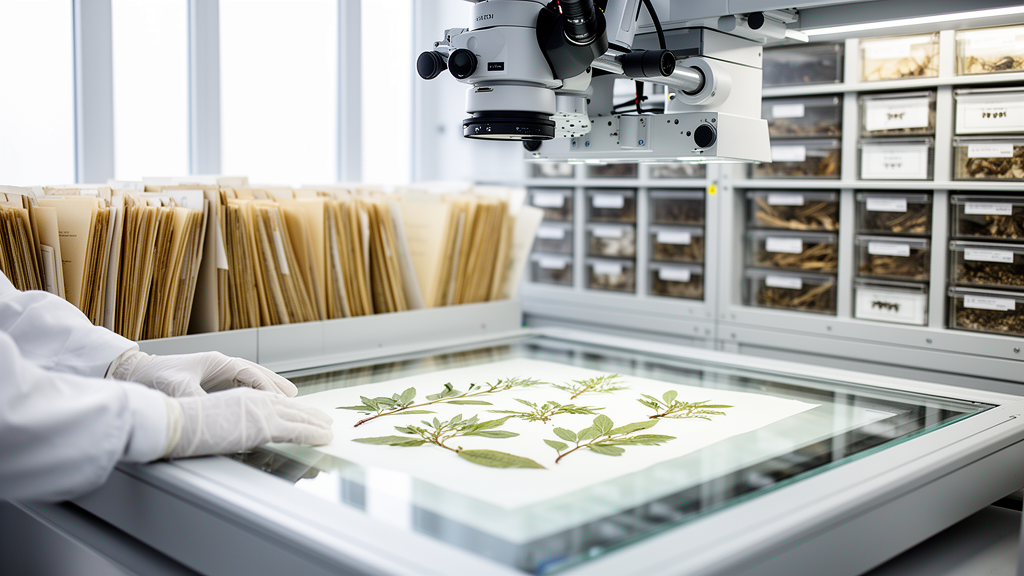
Austria is quietly attempting something that could reshape how Europe studies biodiversity, climate change, and the history of life itself. Fourteen museums, universities, and scientific institutions have joined forces under the Open Scientific Collections Austria (OSCA) consortium, a cooperative effort to digitally unlock more than 56 million natural history specimens—objects gathered from every continent and ocean, and even from space. A new paper published in Natural History Collections and Museomics describes how the consortium evolved from a loose network of curators into a working national data infrastructure, and why its success matters far beyond Austria’s borders.
The scale of the challenge is staggering. Natural history collections document Earth’s biological and geological diversity and serve as essential resources for research on global challenges such as climate change, biodiversity loss, sustainable food production, and ecosystem conservation. Yet despite two decades of rapid growth in digital biodiversity data mobilization, much of the information held in museums and research institutions remains largely inaccessible. Digitization—converting physical specimens and their associated metadata into electronic formats that can be stored, accessed, analyzed, and shared—typically begins with recording metadata, followed by high-resolution imaging of specimens, labels, and documentation. Data are usually gathered under Darwin Core and ABCD standards and made publicly available through platforms like the Global Biodiversity Information Facility (GBIF). But the process is constrained by limited funding, lack of personnel training, restrictive governance structures, and limited technical resources. A major part of the world’s natural science collections is still not digitized at all.
Austria’s holdings are a case in point. The country preserves a unique heritage of over 56 million natural history specimens, some dating back to the eighteenth and nineteenth centuries, others comprising modern specimens. In addition to major museums and universities, smaller local museums and even monasteries house biological, paleontological, geological-mineralogical, or archaeological collections. An inventory carried out among the twelve founding OSCA institutions in 2021 revealed that only around 15 million objects—roughly 28 percent—were digitally inventoried, and images were available for fewer than 700,000 objects, about 1 percent. The majority of these objects lack any digital record, making them invisible to both scientists and the public. Several other Austrian collections were not even included in the survey, meaning the true total is higher still.
OSCA’s origins trace back to 2006, when a group of Austrian curators initiated digitization efforts, building on their involvement in publishing biodiversity data through GBIF Austria. A nationwide survey of collections followed, gathering information on specimen numbers, existing digital records, and a preliminary cost estimate for complete digitization. In 2008, twelve institutions established the Austrian Digitization Initiative of Natural Science Collections (ODINS), which aimed to coordinate digitization, apply internationally recognized standards, and raise awareness among funding bodies. Although the goal of financing full digitization was not achieved, collaboration and the exchange of expertise among collection managers continued and intensified. Later, through the Natural History Museum Vienna’s involvement in European networks such as the Consortium of European Taxonomic Facilities (CETAF) and the DiSSCo Prepare project—a preparatory phase for the Distributed System of Scientific Collections Research Infrastructure—regular meetings shared international developments with the Austrian community. These culminated in OSCA’s formation in 2021, initially with twelve founding members, now fourteen.
The consortium’s membership spans the entire country and an enormous disciplinary range. The Natural History Museum Vienna alone houses nearly 30 million objects, from anthropology and botany to geology, mineralogy, paleontology, prehistory, and zoology, available to more than 60 scientists. The Oberösterreichische Landes-Kultur GmbH in Linz holds the second-largest natural history collections in Austria, with thirteen scientists curating more than 15 million objects—including 6.5 million molluscs and 5.5 million insects—and running the ZOBODAT database, which contains over 6.9 million datasets and makes it Austria’s top provider for GBIF. The University of Graz herbarium (GZU) is one of Europe’s most important botanical collections, with approximately 1.2 million specimens and around 10,000 type specimens, including a lichen collection of at least 220,000 specimens of particular international importance. The University of Vienna herbarium houses roughly 1.5 million botanical specimens, while the Tyrolean State Museums hold an estimated 3.5 million specimens, with BioOffice records now exceeding 3 million zoological and 1.7 million botanical datasets.
In 2025, two significant additions strengthened the network. GeoSphere Austria, the national service for geology, geophysics, climatology, and meteorology, joined with one of the country’s most significant geological and paleontological collections—approximately 160,000 entries and an estimated one million individual fossils spanning the Cambrian to the Quaternary, including around 26,000 type specimens. The collection also houses 7,500 mineral samples, 25,000 rock samples, and 441 drill cores representing 16 kilometers of core material, much of it described by prominent Austrian geologists such as Franz von Hauer and Melchior Neumayr. BOKU University joined the same year. The history of GeoSphere’s collection underscores why digitization matters: during World War II, bombing damaged parts of it and buried some specimens, and while volunteers and soldiers saved much of the collection, some items were lost permanently—a reminder that physical scientific knowledge faces real risks.
Technically, OSCA is building a centralized data pipeline designed around the FAIR principles—Findable, Accessible, Interoperable, and Reusable. The cornerstone is the OSCA Data Cache, a PostgreSQL database that will serve as the authoritative repository for aggregated biodiversity information. The system accepts specimen data in Excel format conforming to Darwin Core, along with associated image files. Raw data are parsed, validated against schema requirements, and subjected to quality assurance protocols, while uploaded images are processed through an IIIF (International Image Interoperability Framework) server that extracts metadata to integrate with specimen records. Each record is assigned a persistent identifier (PID) to ensure long-term discoverability and citation. The system exposes a flexible API supporting both REST and GraphQL protocols, enabling efficient data distribution to multiple endpoints—including the OSCA portal, DiSSCo, and Kulturpool—through specialized connectors such as Darwin Core Archives, Open Digital Specimen (openDS), and the Europeana Data Model.
The data flow architecture makes Austrian institutions the DiSSCo node for Austria. Participating institutions supply their data in Darwin Core format to the OSCA Cache, which facilitates regular distribution to both the OSCA portal and DiSSCo, though only records related to preserved specimens are transmitted to the European infrastructure. In parallel, institutions also publish directly to GBIF, and data flow through an existing aggregator at the Oberösterreichische Landes-Kultur GmbH to GBIF Austria and the Biodiversity Atlas Austria. The OSCA portal already enables integrated searches across OSCA data as well as DiSSCo, Europeana, GBIF, and GeoCase, with connectivity to other databases such as DNA sequence records in the Barcode of Life Database (BOLD) through stable links. Artificial intelligence methods are accelerating the process, particularly Handwritten Text Recognition (HTR), which transcribes handwritten historical notes into searchable digital text using tools like Transkribus, making previously inaccessible information available to researchers and the public.
The cooperative model rests on a Memorandum of Understanding signed by all founding institutions in 2022 and extended in 2024. The MoU sets out objectives including establishing a digital inventory and catalogue of Austrian natural science collections, developing them as research infrastructure respecting legal ownership, enhancing their global visibility, implementing standards to improve interoperability, creating 2D and 3D digital images, and linking specimen data with metadata, automated taxonomic and geographic backbones, and research data such as genetic and distribution data. The coordination unit, hosted at the Natural History Museum Vienna and funded by the Federal Ministry for Women, Science and Research with two full-time equivalents for one year and one FTE for an additional four years, leads the consortium’s work. Decisions and information flow take place in weekly meetings attended by technical and scientific representatives, complemented by an annual in-person gathering. A five-year funding period started in 2025, enabling Austria’s participation in DiSSCo and OSCA’s continuation as a national support and coordination structure.
OSCA’s value proposition extends to institutions that have not yet established international data publication workflows, providing a reliable framework to publish digital specimen data with high quality, standardization, and long-term preservation. One of the consortium’s core strengths lies in forming a heterogeneous network—from large federal museums to smaller, specialized collections—across both biological and earth sciences. By providing training workshops, documentation, and technical assistance, OSCA lowers the threshold for participation and fosters a collaborative data culture. Future developments will focus on simplifying data submission, including a user-friendly interface for contributors with limited technical capacity, and streamlining integration with DiSSCo through the OSCA Cache. Even though there is still a long way to go until Austria’s natural science collections are completely digitized and accessible, the readiness of OSCA institutions has increased markedly through knowledge sharing and the construction of a centralized data pipeline. Austria is advancing toward its goal of digitally opening its collections—making them visible, accessible, and usable for interdisciplinary research with significant scientific, societal, and economic relevance.
Subject of Research: Development of the Open Scientific Collections Austria consortium, its 14 member institutions, cooperative model, and FAIR-compliant national data infrastructure for digitizing natural science collections
Article Title: Open Scientific Collections Austria ( OSCA )—from concept to workflows
Article References: Korth, F., Rainer, H., Bara, C.-D., Begic, N., Bses, N., Bilovitz, P., Bräuchler, C., Di Franco, D., Durmaz, A., Eberwein, R. K., Engelberger, S., Festi, D., Friebe, J. G., Götzl, M., Groffman, D., Herburger, A., Kaufmann, P., Kwitt, S., Kustatscher, E., … Vohland, K. (2025). Open Scientific Collections Austria (OSCA)—from concept to workflows. Natural History Collections and Museomics, 2, 1-21. https://doi.org/10.3897/nhcm.2.169440
Image Credits: AI Generated
Keywords: OSCA, natural history collections, digitization, FAIR principles, DiSSCo, biodiversity data, Darwin Core, GBIF, persistent identifiers, Austria, Open, Scientific
Cite Scienmag News
Margaret Porter. (October 18, 2026). Austria Unites 14 Institutions to Digitize 56 Million Natural History Specimens. Scienmag. https://scienmag.com/austria-unites-14-institutions-to-digitize-56-million-natural-history-specimens/
Margaret Porter. "Austria Unites 14 Institutions to Digitize 56 Million Natural History Specimens." Scienmag, 18 October 2026, https://scienmag.com/austria-unites-14-institutions-to-digitize-56-million-natural-history-specimens/. Accessed 18 October 2026.
Margaret Porter. "Austria Unites 14 Institutions to Digitize 56 Million Natural History Specimens." Scienmag. October 18, 2026. https://scienmag.com/austria-unites-14-institutions-to-digitize-56-million-natural-history-specimens/


