

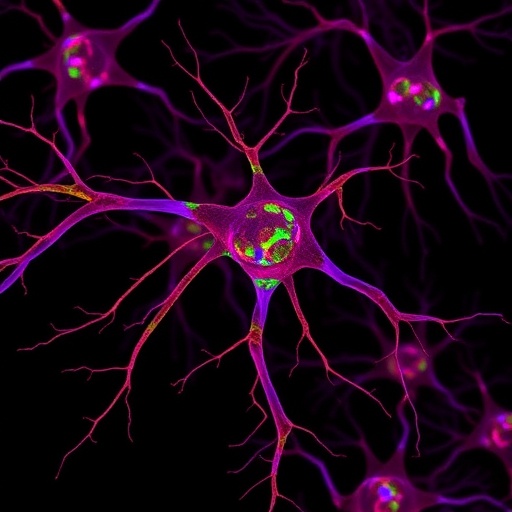
In a groundbreaking study poised to reshape our understanding of Alzheimer’s disease, researchers have unveiled a critical link between astrocyte-related proteins and the pathological hallmark of this devastating neurodegenerative disorder. The study, recently published in Translational Psychiatry, investigates the intricate molecular associations involving the YWHAG gene and elucidates how these astrocyte proteins potentiate both Alzheimer’s pathology and its diagnostic precision. This major advance offers a new vantage point for deciphering the mechanisms underlying cognitive decline and opens promising avenues for early detection.
Alzheimer’s disease has long been notorious for its elusive etiology, where amyloid-beta plaques and neurofibrillary tangles dominate neuropathological discussions. However, mounting evidence now suggests that glial cells, particularly astrocytes, play a pivotal role far beyond their traditional supportive functions. The involvement of astrocytes in modulating synaptic integrity, neuroinflammation, and cellular homeostasis implicates them as active players in neurodegenerative cascades. Zhang and colleagues harnessed this perspective to probe the molecular interplay between astrocytic proteins and YWHAG, a gene that encodes the 14-3-3γ protein, known for its regulatory role in signal transduction and cell survival pathways.
YWHAG has been sporadically linked with Alzheimer’s, but its biological significance remained poorly characterized in this context until now. By deploying advanced proteomic and transcriptomic methodologies, the research team identified that multiple astrocyte-related proteins serve not only as mediators but also as amplifiers of YWHAG’s pathological association. Their findings reveal that astrocyte-derived proteins interact directly with 14-3-3γ, modulating its function and contributing to synaptic dysfunction and neuronal vulnerability—classic features of Alzheimer’s neurodegeneration.
The mechanistic link operates through complex signaling networks, where astrocyte proteins regulate phosphorylation events controlled by 14-3-3γ, impacting tau hyperphosphorylation, a critical pathological hallmark. Aberrant tau phosphorylation leads to the formation of neurofibrillary tangles, which disrupt neuronal transport systems and precipitate cell death. This molecular convergence spotlights a previously underappreciated axis within the astrocytic-neuronal interface, redefining our comprehension of Alzheimer’s pathobiology as a cell-type interaction-dependent syndrome rather than a purely neuronal ailment.
A particularly compelling aspect of the study lies in the diagnostic implications of these findings. Current Alzheimer’s diagnostics rely heavily on clinical criteria and cerebrospinal fluid biomarkers of amyloid-beta and tau. Yet, the sensitivity and specificity remain imperfect, especially in early disease stages. By incorporating astrocyte-related proteins’ expression patterns alongside YWHAG levels, Zhang et al. demonstrated a significant enhancement in diagnostic accuracy. This combinatorial biomarker strategy harnesses the molecular crosstalk intrinsic to disease mechanisms, yielding a more comprehensive portrait of disease progression and potentially allowing clinicians to detect pathological changes before irreversible neuronal loss occurs.
Beyond diagnostics, the therapeutic implications are equally profound. Given the modulatory effect of astrocytes on YWHAG and downstream phosphorylation cascades, targeting astrocyte-specific signaling pathways may offer novel intervention points. Modifying astrocytic activity, either pharmacologically or via gene therapy, could forge new paths to halt or reverse tau pathology. This paradigm shift advocates for broader therapeutic strategies that embrace the multicellular complexity of Alzheimer’s rather than focusing solely on neurons or amyloid-beta clearance.
The study’s comprehensive multi-omics approach integrated proteomic screening, RNA sequencing, and functional validation in human postmortem brain tissues and transgenic animal models. This methodological rigor underscores the robustness of their conclusions and highlights the intricate regulatory networks orchestrated by astrocyte-associated proteins. Future research will undoubtedly delve deeper into these networks, deciphering additional regulatory nodes amenable to therapeutic exploitation.
While the precise triggers initiating the detrimental astrocyte-YWHAG interaction remain to be fully elucidated, the current work lays essential groundwork. It posits a scenario where early astrocytic dysfunction exacerbates pathological tau modifications via YWHAG modulation, creating a feed-forward loop that accelerates neurodegeneration. Unraveling these initiation events remains a pivotal goal, potentially revealing upstream environmental or genetic factors that predispose individuals to astrocytic dysregulation and subsequent Alzheimer’s pathology.
Moreover, the implications stretch beyond Alzheimer’s disease alone. Given that 14-3-3 proteins participate in various neuropsychiatric and neurodegenerative disorders, the astrocyte-YWHAG axis might represent a broader pathogenic mechanism. Its elucidation could shed light on shared pathways contributing to diseases like Parkinson’s, frontotemporal dementia, and even psychiatric conditions with neuroinflammatory components, catalyzing the development of cross-disease biomarkers and therapies.
This research also challenges long-held assumptions about the brain’s cellular hierarchies in disease, emphasizing that astrocytes are not passive background players but dynamic modulators that can decisively influence neuronal fate. Their dual role as support cells and active contributors to pathological cascades underscores the necessity of integrating glial biology into mainstream Alzheimer’s research paradigms.
Clinically, these findings advocate for revisiting biomarker panels and imaging strategies to include astrocyte-derived factors and YWHAG-related measures. Such an integrated approach could revolutionize patient stratification, prognosis, and monitoring treatment responses. In particular, non-invasive biomarkers derived from astrocyte proteins in peripheral fluids such as blood or urine might one day enable population-wide screening for Alzheimer’s susceptibility.
By expanding our molecular toolkit with astrocyte-linked markers, the field moves closer to personalized medicine approaches tailored to individual disease trajectories. Identifying patients whose pathology is heavily driven by astrocytic dysfunction might inform differential treatment choices, optimizing outcomes through targeted interventions and minimizing unnecessary side effects.
While the translation from bench to bedside will require extensive validation and development, the current study lays a compelling roadmap. It harmonizes genetic, proteomic, and cellular insights into a coherent framework that addresses longstanding challenges in Alzheimer’s research—early detection, mechanistic understanding, and effective therapeutic targeting.
As the global population ages, the urgency to address Alzheimer’s disease intensifies, and studies like this inject fresh optimism by unveiling innovative molecular players and pathways. This astrocyte-YWHAG axis not only enriches the landscape of neurodegenerative disease biology but also inspires hope for future breakthroughs that could relieve the enormous societal and personal burdens imposed by Alzheimer’s.
In the broader scientific community, this research exemplifies the power of interdisciplinary investigation, merging neuroscience, molecular biology, and clinical science. The identification of astrocyte-related proteins as mediators in Alzheimer’s pathology marks a milestone that will undoubtedly stimulate new lines of inquiry across multiple fields, fostering collaborations that transcend traditional boundaries.
Ultimately, Zhang and colleagues have advanced a paradigm-shifting concept: that neurodegeneration arises from a complex interplay between neuronal and glial molecular networks, with astrocytes playing a starring role through their interaction with key regulatory proteins like YWHAG. This insight not only deepens our understanding of Alzheimer’s disease but charts a visionary path towards enhanced diagnostics and novel therapeutics, fulfilling an urgent need in modern medicine.
Subject of Research: The role of astrocyte-related proteins in modulating the association of YWHAG with Alzheimer’s disease pathology and improving diagnostic accuracy.
Article Title: Astrocyte-related proteins mediate the association of YWHAG with Alzheimer’s pathology and enhance its diagnostic value.
Article References:
Zhang, Z., Huang, P., Yang, Y. et al. Astrocyte-related proteins mediate the association of YWHAG with Alzheimer’s pathology and enhance its diagnostic value. Transl Psychiatry (2026). https://doi.org/10.1038/s41398-026-04020-7
Image Credits: AI Generated
DOI: https://doi.org/10.1038/s41398-026-04020-7


