


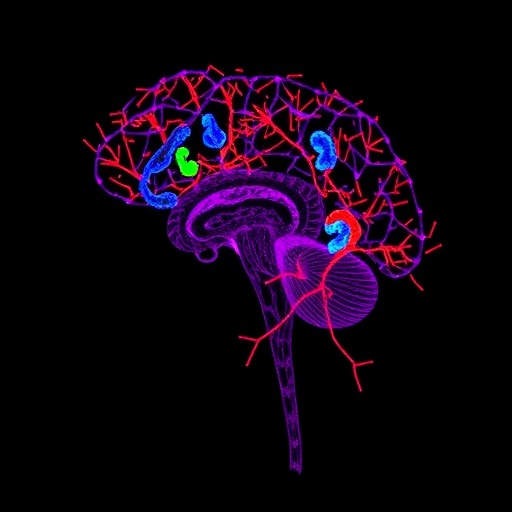
A groundbreaking study published in Nature has unveiled the pivotal role of astrocyte glucocorticoid receptor (GR) signaling in regulating neuronal plasticity within the adult brain. Historically, the adult brain was largely considered resistant to the kind of plastic changes observed during early development, particularly in response to sensory deprivation. This new research disrupts that notion by demonstrating that selective elimination of GR in astrocytes can reignite plasticity in mature visual circuits, opening fresh avenues for neuroplasticity research and therapeutic interventions.
The phenomenon at the heart of this study is ocular dominance plasticity (ODP), a critical period process whereby neural responses in the visual cortex adjust based on visual experience. Early postnatal periods are marked by heightened plasticity, where brief monocular deprivation leads to rapid strengthening of the responses from the non-deprived eye. However, such plasticity significantly diminishes after this critical window, rendering short-term monocular deprivation ineffective in adult animals. Researchers have long suspected that astrocytes—the star-shaped glial cells traditionally thought to play supportive roles—might be central in closing this critical period of plasticity.
To elucidate this, the research team engineered a sophisticated viral strategy to selectively disrupt the glucocorticoid receptor (GR) signaling pathway specifically in adult astrocytes within the primary visual cortex (V1) of mice. Using astrocyte-targeted adeno-associated viruses (AAVs) expressing Cre recombinase, they selectively deleted the GR gene in these cells of genetically modified GR^fl/fl mice. The timing was carefully chosen during early adulthood (P30-P40), allowing full maturation of visual circuits prior to intervention. Following this genetic manipulation, the scientists employed multi-electrode array recordings to quantitatively assess visual cortical activity in response to monocular deprivation.
Strikingly, adult mice lacking astrocyte GR signaling displayed a renewed capacity for ocular dominance plasticity. After only 3–4 days of monocular deprivation, these animals showed significant shifts in visual responsiveness favoring the open eye, coupled with a downregulation of responses from the deprived eye. In contrast, control mice with intact astrocytic GR signaling failed to show any plastic shifts under the same conditions. This demonstrates that astrocyte GR signaling functions as a molecular gatekeeper, restricting plasticity in the mature cerebral cortex by sustaining the stability of neural circuits.
Further mechanistic insights suggest that astrocyte GR signaling influences the formation and maintenance of perineuronal nets (PNNs)—specialized extracellular matrix structures that envelop neurons and serve to stabilize synapses, thereby constraining plasticity. Previous work has shown that PNNs consolidate around inhibitory interneurons during the critical period closure, and disruption of these nets can prolong or reopen windows of plasticity. By regulating PNN integrity, astrocytic GR signaling appears to lock the visual cortex into a less malleable state as the brain ages.
This discovery has profound implications for neuroscience and neurology. Reactivating plasticity in the adult brain could revolutionize therapeutic approaches to neurodevelopmental disorders, brain injuries, and even neurodegenerative diseases where enhancing synaptic remodeling can aid recovery or compensate for lost function. The study sets the stage for future exploration into astrocyte-targeted interventions that could manipulate GR signaling pathways to fine-tune plasticity when needed.
Notably, this study also challenges the neuron-centric paradigm of plasticity. The implication that astrocytes—once relegated to merely ‘support’ roles—directly regulate the neural circuits’ capacity for change compels a reassessment of glial functions in brain health and disease. It broadens our understanding of the cellular and molecular players involved in neural adaptability beyond neurons alone.
In an elegant combination of viral genetics, electrophysiology, and immunohistochemistry, the authors present compelling evidence linking astrocyte GR signaling to the closure of critical periods. Their data showcase that adult astrocyte-specific genetic deletion of GR not only restores physiological markers of plasticity but also reactivates functional plasticity manifest as ocular dominance shifts post-monocular deprivation.
This research also underscores the importance of glucocorticoids and stress-related hormones in brain function. GRs are receptors for glucocorticoids, steroid hormones released during stress, suggesting that stress physiology may intimately influence brain plasticity through astrocyte signaling. This adds a novel dimension to understanding how environmental factors and stress can shape neurodevelopment and plasticity through non-neuronal cells.
Future directions stemming from this work include dissecting the downstream pathways by which GR signaling in astrocytes affects PNN composition and synaptic remodeling. Moreover, it raises questions about the generality of this mechanism across other brain regions and sensory modalities. Could similar astrocyte-mediated modulation of critical periods be harnessed to enhance rehabilitation after stroke or sensory loss? The answers might transform clinical neurology.
In conclusion, the study by Gegenhuber, Sonoda, Traunmüller, and colleagues provides groundbreaking evidence that astrocyte glucocorticoid receptor signaling acts as a molecular brake on neuronal plasticity in adult visual cortex. By selectively disrupting this pathway, the adult brain’s latent capacity for plasticity is unmasked, reigniting the potent adaptability once thought exclusive to developmental stages. This compelling advance not only shifts paradigms in neurobiology but also opens promising new channels for therapeutic innovation targeting astrocyte signaling to foster recovery and brain repair.
Cite Scienmag News
Cassandra Pierce. (May 21, 2026). Astrocyte Glucocorticoid Signals Limit Neuronal Plasticity. Scienmag. https://scienmag.com/astrocyte-glucocorticoid-signals-limit-neuronal-plasticity/
Cassandra Pierce. "Astrocyte Glucocorticoid Signals Limit Neuronal Plasticity." Scienmag, 21 May 2026, https://scienmag.com/astrocyte-glucocorticoid-signals-limit-neuronal-plasticity/. Accessed 6 September 2026.
Cassandra Pierce. "Astrocyte Glucocorticoid Signals Limit Neuronal Plasticity." Scienmag. May 21, 2026. https://scienmag.com/astrocyte-glucocorticoid-signals-limit-neuronal-plasticity/


