


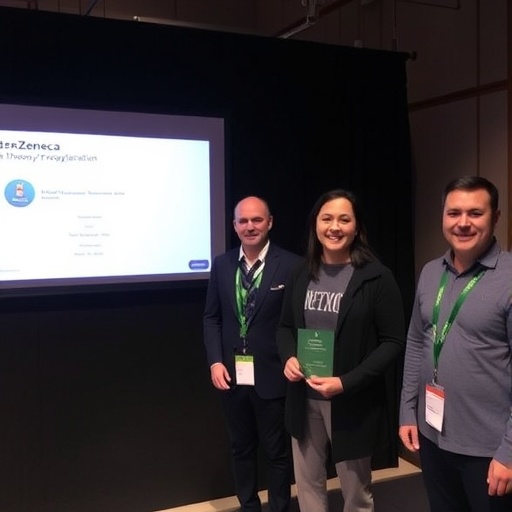
In a groundbreaking announcement from Arlington, Virginia, the American Society for Radiation Oncology (ASTRO) revealed the recipients of the prestigious 2025 ASTRO-AstraZeneca Small Cell Lung Cancer (SCLC) Therapy Challenge. This initiative is dedicated to catalyzing innovative research aimed at enhancing therapeutic strategies and clinical outcomes for patients afflicted with limited-stage SCLC, a notoriously aggressive form of lung cancer. The competition, held at ASTRO’s 2025 Annual Meeting, awarded funding totaling up to $750,000 distributed among three pioneering research projects that promise to redefine the integration of radiation therapy with emerging immunotherapeutic modalities.
Limited-stage small cell lung cancer presents a formidable clinical challenge due to its rapid progression and the difficulty of achieving durable remission. Traditional treatment paradigms have centered on chemoradiation; however, recent advances in immunotherapy have opened new avenues to potentiate treatment effectiveness. The ASTRO-AstraZeneca challenge specifically sought proposals that would explore the synergy between consolidation immunotherapy—administered post initial chemoradiation to eradicate residual disease—and next-generation radiation techniques, including highly precise delivery methods that maximize tumor control while minimizing toxicity.
The winning proposals exemplify the depth and breadth of modern oncologic research. Dr. Arya Amini from City of Hope Beckman Research Institute is spearheading a Phase II clinical trial investigating the efficacy of Stereotactic Ablative Radiation Therapy (SABR) in patients demonstrating oligoprogressive disease within the SCLC spectrum. This approach leverages the precision of SABR to target limited sites of tumor progression, hypothesizing that such focused interventions can extend patient survival by mitigating resistant tumor clones without extensive systemic toxicity.
Similarly, Dr. Nitin Ohri of Albert Einstein College of Medicine proposes a comprehensive study titled “Chemoradiotherapy Optimized for Immunotherapy for Limited Stage Small Cell Lung Cancer (COILSS).” This research aims to refine chemoradiation schedules and dosing schemas to enhance the immunogenicity of residual tumor cells, thereby rendering consolidation immunotherapy more effective. The project underscores the necessity of intricate treatment sequencing and modality integration to overcome the immunosuppressive microenvironment characteristic of SCLC.
Expanding the horizon from a personalized medicine perspective, Dr. Michael Waters at Washington University in St. Louis is pioneering an innovative framework that combines artificial intelligence with genomic and dosimetric biomarkers to precisely predict patient outcomes. His work, entitled “Precision Oncology in LS-SCLC: AI-Driven Dosimetric and Genomic Biomarkers for Outcome Prediction,” aspires to tailor radiotherapy and immunotherapy regimens based on individual tumor biology and radiation dose distribution. Such AI-driven precision has the potential not only to improve survival rates but also to minimize adverse effects by avoiding overtreatment.
This multidimensional research challenge embodies the collaborative spirit that ASTRO fosters between academic institutions, industry partners, and clinical communities. Dr. Phuoc Tran, a key figure in establishing the award, emphasized that these projects “reflect bold, thoughtful approaches” to an unmet clinical need, highlighting the critical role of coordinated efforts in accelerating therapeutic innovation. His remarks underscore an evolving oncology landscape where cross-disciplinary partnerships are crucial in translating laboratory insights to tangible clinical benefits.
Equally, the Challenge’s expert review panel—chaired by esteemed radiation oncologist Dr. Percy Lee—commended the creativity reflected in the selected works. The panel recognized that advancing the synergy between immunotherapy and radiation requires not only scientific rigor but also imaginative exploration of novel biological mechanisms and technical delivery methods. Their endorsement signals strong confidence in these projects to generate impactful data shaping future clinical guidelines.
A notable element of the Challenge process was the assembly of a specialized scientific advisory and judging committee composed of ASTRO members possessing deep expertise in both clinical SCLC management and radiation oncology research. Their discerning evaluation ensured that funding was allocated to proposals with the highest likelihood of overcoming current therapeutic plateau barriers and addressing the heterogeneity and aggressive nature of limited-stage SCLC.
The ASTRO Scientific Challenges Program serves as a strategic platform to facilitate cross-sector innovation, increase research visibility for radiation oncologists, and enhance funding opportunities. Originating in previous collaborative programs with pharmaceutical partners, this initiative now stands at the forefront of oncology research by fostering projects that combine state-of-the-art radiation techniques with cutting-edge systemic therapies such as immune checkpoint inhibitors. The success of the 2025 SCLC Therapy Challenge continues this trajectory, representing a model example of how professional societies can mobilize resources and expertise to address urgent clinical challenges.
Radiation therapy remains a cornerstone of cancer treatment worldwide, playing an essential role in curing approximately 40% of cancer patients. In the United States alone, over a million people receive radiation daily, underscoring the imperative to continually improve its efficacy and safety profile. The integration of immunotherapy represents a paradigm shift, aiming to activate the patient’s immune system to recognize and eliminate cancer cells more effectively. These research proposals are positioned at the frontier of this evolution, potentially transforming the therapeutic landscape for small cell lung cancer, a disease long in need of innovative solutions.
The converging paths of molecular oncology, dosimetric precision, and artificial intelligence herald a new era in personalized cancer treatment. By rigorously investigating SABR’s role, optimizing chemoradiation parameters for immunotherapy enhancement, and employing AI-driven biomarker analysis, the 2025 ASTRO-AstraZeneca Challenge is cultivating a multidisciplinary approach that could set new standards of care in limited-stage SCLC. If successful, these projects may not only increase progression-free and overall survival rates but also improve quality of life by minimizing the adverse effects commonly associated with more aggressive therapies.
The American Society for Radiation Oncology continues to champion such visionary research endeavors, recognizing that leadership in radiation oncology research requires sustained commitment to innovation, collaboration, and scientific excellence. This Challenge represents a seminal step towards that goal, harnessing the collective expertise of physicians, scientists, and industry leaders to unlock new potential in cancer treatment. With continued support and rigorous investigation, these projects offer hope for patients and clinicians alike confronting the daunting challenge of small cell lung cancer.
Media inquiries can be directed to Liz Gardner at ASTRO, reinforcing transparency and open communication around these transformative research efforts. Interested parties are encouraged to follow ongoing updates through ASTRO’s official communication channels, including their website and social media platforms, which provide accessible resources about cutting-edge radiation oncology advancements globally.
News Publication Date: November 4, 2025
Web References:
https://www.astro.org/provider-resources/research/scientific-challenges/az-sclc-therapy-challenge
http://www.rtanswers.org/
https://www.astro.org/
Cite Scienmag News
Nathaniel Bowman. (November 4, 2025). ASTRO-AstraZeneca Small Cell Lung Cancer Therapy Challenge Winners Revealed. Scienmag. https://scienmag.com/astro-astrazeneca-small-cell-lung-cancer-therapy-challenge-winners-revealed/
Nathaniel Bowman. "ASTRO-AstraZeneca Small Cell Lung Cancer Therapy Challenge Winners Revealed." Scienmag, 4 November 2025, https://scienmag.com/astro-astrazeneca-small-cell-lung-cancer-therapy-challenge-winners-revealed/. Accessed 3 September 2026.
Nathaniel Bowman. "ASTRO-AstraZeneca Small Cell Lung Cancer Therapy Challenge Winners Revealed." Scienmag. November 4, 2025. https://scienmag.com/astro-astrazeneca-small-cell-lung-cancer-therapy-challenge-winners-revealed/


