

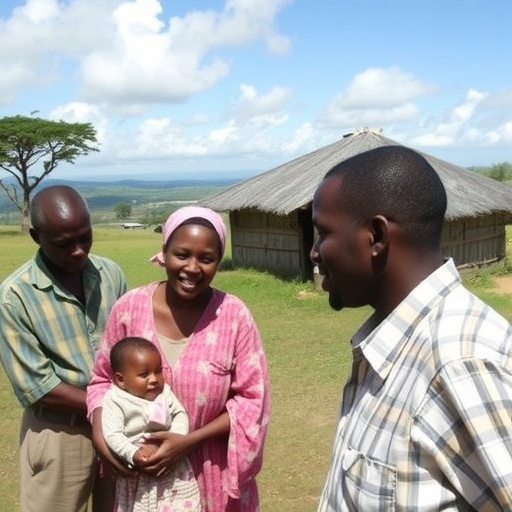
In a groundbreaking study set to reshape our understanding of autism assessment in low-resource settings, researchers have critically examined the psychometric properties of the Social Communication Questionnaire (SCQ) in rural Kenya. This investigation, led by Kipkemoi, P., Savage, J.E., Gona, J., and their colleagues, signifies a crucial step towards enhancing early detection and diagnosis of autism spectrum disorder (ASD) in populations that often face barriers to mental health resources.
The Social Communication Questionnaire, a widely recognized tool for screening communication deficits associated with autism, is primarily used in more developed countries with established protocols. However, this study aims to investigate its applicability and effectiveness in a rural Kenyan context, addressing cultural nuances that may influence communication behaviors. This research realization paves the way for potential adaptations of the SCQ that could better align with the local sociocultural realities, thus helping to ensure that no child is left behind in terms of diagnosis and subsequent support.
In the study, the researchers engaged with a diverse cohort in rural Kenya, employing a methodology that included extensive interviews and surveys. By examining the responses from caregivers of children suspected of having autism, they meticulously analyzed the performance of the SCQ in capturing the subtleties of social communication within the local community. This methodological rigor is essential to establishing the validity and reliability of the SCQ in a new cultural context, where traditional diagnostic tools may not perform as expected.
One of the significant challenges identified during the study was the discrepancy in social norms and expectations surrounding communication and behavior in Kenyan culture as compared to Western frameworks. These differences necessitate a careful interpretation of SCQ results, particularly regarding items that pertain to social reciprocity and interaction styles. The researchers highlighted the importance of training healthcare providers in the nuances of local communication practices to improve the accuracy of autism diagnoses.
The findings of this research not only contribute to the academic field of autism studies but also have profound implications for public health policy in Kenya. Providing evidence that supports the reliability of the SCQ in rural settings could encourage policymakers to invest in early intervention programs. Such initiatives would create opportunities for fostering inclusive environments for children with ASD, regardless of geographic or socioeconomic barriers.
A pivotal element of the study involved engaging families and communities, emphasizing a participatory approach to autism spectrum disorder research. By including the voices of caregivers in the study’s design and implementation, the researchers sought to ensure that the outcomes resonate with the local population’s experiences. This community-centric perspective could help combat stigma surrounding autism, encouraging more families to seek support and facilitating smoother pathways to diagnosis and intervention.
Moreover, the researchers underscored the necessity of continuous assessment and adaptation of screening tools like the SCQ to meet the evolving needs of diverse populations across Kenya. The potential for customization based on local needs is significant, as it may lead to enhanced accuracy in identifying children who require additional support. This adaptability is particularly important as the Kenyan landscape continues to change, influenced by urbanization, shifts in family structures, and varying access to educational resources.
In addition to the quantitative data collected, qualitative insights from focus groups provided a rich tapestry of information, elucidating how cultural perceptions of autism might affect the willingness of parents to pursue assessment and intervention. Understanding these dynamics is crucial for developing culturally sensitive practices that respect local beliefs while promoting scientific knowledge about autism and its manifestations.
The implications of this research extend beyond the confines of Kenya, offering lessons for similar low-resource settings worldwide. As global awareness of autism grows, the need for reliable, culturally-informed assessment tools becomes more pressing. This study serves as a model for how localized research can inform broader applications, potentially influencing international practices in autism diagnostics.
The results are expected to spark vital discussions among clinicians, policymakers, and researchers about the importance of culturally appropriate mental health resources. By demonstrating that the Social Communication Questionnaire can be effectively utilized in a rural Kenyan context, the authors hope to inspire a wave of similar studies in underserved regions, advocating for a global approach to mental health that is inclusive and equitable.
As this groundbreaking study progresses through the publication process, it serves as a reminder of the power of collaboration and community engagement in research. The team’s dedication to understanding autism in diverse cultural contexts underscores the duty of researchers to not only advance scientific knowledge but also to advocate for social change and better health outcomes for all children.
The potential long-term impact of this research is immense, shaping future policies, educational practices, and social attitudes towards autism in Kenya and beyond. By investing in the development and validation of local assessment tools, communities can create supportive environments that celebrate diversity and promote understanding of differences in communication, ultimately leading to better lives for children with autism.
As the global dialogue around autism continues to evolve, this study stands as a beacon of hope for families and communities in Kenya. The insights gained from the evaluation of the SCQ in such a unique context could pave the way for a more nuanced and effective approach to autism spectrum disorder, ensuring that resources are allocated where they are needed the most and that every child receives the attention and care they deserve.
The journey toward improved autism screening and intervention in rural Kenya is just beginning, and with ongoing research and community commitment, there lies a promising future for the understanding and support of children with ASD.
Subject of Research: Evaluation of the Psychometric Properties of the Social Communication Questionnaire in Rural Kenya
Article Title: Correction: Evaluation of the Psychometric Properties of the Social Communication Questionnaire in Rural Kenya
Article References:
Kipkemoi, P., Savage, J.E., Gona, J. et al. Correction: Evaluation of the Psychometric Properties of the Social Communication Questionnaire in Rural Kenya.
J Autism Dev Disord (2025). https://doi.org/10.1007/s10803-025-07169-0
Image Credits: AI Generated
DOI:
Keywords: Psychometric properties, Social Communication Questionnaire, autism spectrum disorder, rural Kenya, cultural adaptation, diagnostic tools, early intervention, community engagement.


