


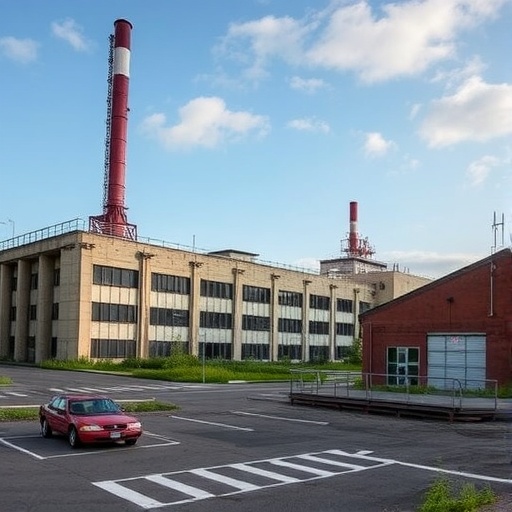
Heavy metal pollution has become a pervasive environmental issue, particularly in regions with industrial history. One such examination was conducted in Kaifeng City, focusing on the ecological risks posed by heavy metal contamination in the soils surrounding an abandoned paint factory. This thorough investigation led by Zhang Yq., Zhao Mx., and Shi Hl., represents a critical step toward understanding the long-term implications of industrial waste on soil health and surrounding ecosystems.
In recent years, ecological risk assessments have gained importance in gauging the potential adverse effects of contaminants on the environment. Heavy metals such as lead, cadmium, and arsenic, prevalent in paint formulations, can have detrimental effects not just on the immediate soil composition but also on flora and fauna in the vicinity. By identifying pollution sources within the site, the researchers aimed to provide a source-specific ecological risk assessment, thereby facilitating targeted remediation strategies.
The study adopted a multifaceted approach, combining field sampling and laboratory analyses to assess heavy metal concentrations in the soil. By employing advanced geostatistical methods, the researchers were able to ascertain the spatial distribution of these contaminants with remarkable precision. This innovative methodology allowed for an accurate mapping of pollution hotspots and significantly contributed to the overall findings of the research.
Moreover, the researchers utilized a risk assessment framework that included both ecological and human health risk dimensions. This holistic evaluation is paramount, as it not only highlights the environmental implications of soil toxicity but also the potential exposure risks to nearby populations. As urbanization continues and industrial sites remain in close proximity to residential areas, such assessments provide critical insights into community health and environmental policy-making.
The results revealed alarming concentrations of heavy metals in the soil samples when juxtaposed against established soil quality standards. Areas adjacent to the abandoned factory exhibited concentrations significantly above permissible thresholds, raising concerns for both ecological and human health. The implications of this finding are profound, as they indicate that contaminated soils could impact local agriculture, water quality, and biodiversity.
Importantly, the study also discussed the bioavailability of heavy metals in the soil, emphasizing how these pollutants can enter the food chain through crops and other vegetation. This aspect of the research underscores the interconnectedness of ecosystem components, highlighting how contamination can have cascading effects not only on soil health but also on food security and community welfare.
Furthermore, the ecological risk assessment highlighted specific risk factors related to different heavy metals. For example, cadmium posed a higher risk due to its toxicity and potential to accumulate in biological tissues. Conversely, lead, while also harmful, was assessed in terms of its behavioral patterns in the soil and interaction with other soil components. This nuanced understanding of individual metal risks is crucial for developing tailored remediation strategies.
One of the critical outcomes of the study is the clear call to action for governmental bodies and local authorities. The findings serve as an urgent reminder of the need for stringent regulations concerning industrial waste and its disposal. Moreover, it emphasizes the need for regular monitoring of soil and water quality in urban settings, particularly around legacy sites of industrial activity. The ancestors of Kaifeng’s industrious past should not bear the brunt of environmental neglect.
In addressing the remediation strategies, the authors suggested several potential methods, including phytoremediation, which uses plants to naturally extract and stabilize heavy metals from contaminated soils. This sustainable approach not only helps in decontaminating the soil but also contributes positively to the landscape, promoting biodiversity and enhancing the aesthetic value of the area.
Public awareness and community engagement were also spotlighted as essential components of any remediation endeavor. The research highlighted the importance of educating communities about the risks associated with heavy metal pollution and the significance of sustainable practices in safeguarding health and the environment. Engaging local residents in monitoring efforts could also foster a greater sense of responsibility and investment in the long-term health of their environment.
The research from Zhang and colleagues ultimately adds a significant chapter to the literature surrounding environmental monitoring and ecological risk assessments. The relevance of this study extends beyond Kaifeng City, as similar sites throughout the world face analogous issues of contamination and ecological risks. Addressing these challenges requires collective efforts from scientists, policymakers, and the public to develop comprehensive strategies aimed at mitigating pollution and restoring healthy ecosystems.
In conclusion, the ecological risks posed by heavy metal pollution, as examined in the soils surrounding the abandoned paint factory in Kaifeng, illuminate the pressing need for continuous monitoring and proactive remediation efforts. The innovative methodologies employed in this study provide a robust framework for future assessments, underscoring the critical relationship between industrial practices and environmental health. It is imperative that we recognize and address the legacy of industrial pollution to protect our ecosystems and ensure a sustainable future for generations to come.
The path forward is clear: we must act decisively to prevent further contamination, restore affected environments, and safeguard public health. As researchers continue to illuminate the consequences and sources of heavy metal pollution, it becomes increasingly vital for all stakeholders to engage in solutions that foster a harmonious coexistence with our environment.
Zhang, Yq., Zhao, Mx., Shi, Hl. et al. Source-specific ecological risk assessment of heavy metal pollution in soils of an abandoned paint factory, Kaifeng City. Environ Monit Assess 198, 75 (2026). https://doi.org/10.1007/s10661-025-14937-z
Cite Scienmag News
Violet Maxwell. (January 3, 2026). Assessing Heavy Metal Risks from Abandoned Paint Factory. Scienmag. https://scienmag.com/assessing-heavy-metal-risks-from-abandoned-paint-factory/
Violet Maxwell. "Assessing Heavy Metal Risks from Abandoned Paint Factory." Scienmag, 3 January 2026, https://scienmag.com/assessing-heavy-metal-risks-from-abandoned-paint-factory/. Accessed 4 September 2026.
Violet Maxwell. "Assessing Heavy Metal Risks from Abandoned Paint Factory." Scienmag. January 3, 2026. https://scienmag.com/assessing-heavy-metal-risks-from-abandoned-paint-factory/


