


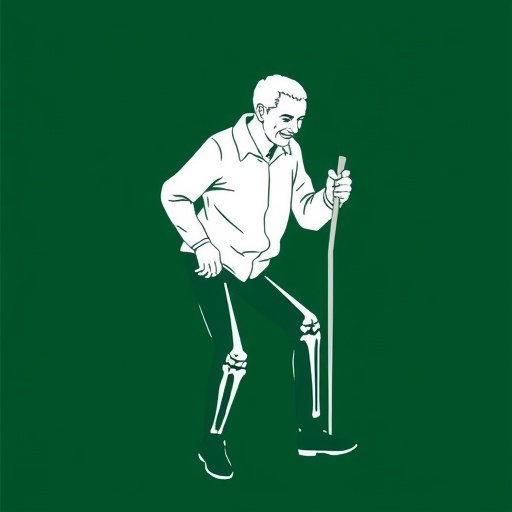
As the global population ages, one of the most pressing public health challenges is addressing the health and wellbeing of older adults. In Japan, where demographic shifts have resulted in an increasingly aged society, conditions such as fragility fractures and falls among the elderly have garnered significant attention from researchers and health professionals alike. These incidents not only diminish quality of life but also pose substantial risks to independence and longevity. Understanding the complex interplay of factors that contribute to these outcomes is therefore critical to developing effective prevention strategies.
Fragility fractures, often caused by low-impact traumas, and falls represent a significant hazard for adults over 60, threatening their healthy life expectancy. The etiology of such events is multifactorial, involving physiological changes, environmental exposures, lifestyle behaviors, and medication effects. Notably, the role of lifestyle factors—such as physical activity—and the influence of polypharmacy, defined as the concurrent use of multiple medications, have been hypothesized to impact fragility fracture and fall risk, yet definitive empirical evidence remains elusive due to limited comprehensive studies.
A groundbreaking observational study led by Dr. Masayoshi Iwamae at Osaka Metropolitan University’s Graduate School of Medicine aimed to elucidate these associations through rigorous cross-sectional analysis. The research team utilized data from 4,967 community-dwelling elders aged 60 years and older residing in Osaka Prefecture. Participants completed an online survey querying demographic information, history of fragility fractures and falls spanning five years, medication usage including polypharmacy status, unintentional weight loss, and physical activity levels.
The meticulous analysis uncovered several critical risk factors. Female participants exhibited a significantly higher likelihood of experiencing fragility fractures, consistent with the well-documented influence of postmenopausal bone density loss. Polypharmacy emerged as a robust independent predictor not only for fractures but also for falls, underscoring the detrimental cumulative side effects and drug interactions that often impair balance, cognition, and muscular function in older adults. Additionally, a history of previous falls strongly correlated with future fracture risk, reiterating the vulnerability cycle inherent in geriatric populations. Unintentional weight loss was another salient factor, likely reflecting underlying frailty, nutritional deficits, or undiagnosed illnesses compromising musculoskeletal integrity.
In a surprising finding, the researchers observed that physical activity status did not show a statistically significant association with either fragility fractures or falls within this cohort. This nuanced outcome challenges the conventional assumption that increased physical activity unequivocally reduces fracture and fall risk, suggesting that the nature, intensity, and context of physical exercise might mediate its protective effects more complexly than previously understood. While the role of physical activity remains a debated subject, the study highlights that exercise promotion should continue to focus on enhancing overall quality of life rather than solely fracture or fall prevention.
Medication optimization emerged as a paramount recommendation flowing from these findings. Given polypharmacy’s pronounced negative impact, comprehensive medication reviews to deprescribe unnecessary or high-risk drugs are vital. Health practitioners should prioritize tailoring pharmacotherapy regimens to minimize sedative load and cognitive impairment risks. Similarly, addressing unintentional weight loss through targeted nutritional interventions is crucial in fortifying bone strength and muscular resilience, thereby potentially mitigating fragility and fall susceptibility.
Beyond direct clinical applications, the study’s implications extend to public health policy. Developing integrated community-based initiatives that incorporate medication management guidelines, nutritional support programs, and adaptive physical activity schemes could enhance preventive outcomes at population levels. Such multidisciplinary approaches would recognize the multifaceted nature of fragility fractures and falls, moving beyond single-factor interventions towards holistic elder care.
Dr. Iwamae emphasized that the study’s cross-sectional design, while informative, warrants further longitudinal research to unravel causality and evaluate intervention efficacies over time. Future investigations could stratify physical activity modalities to determine which forms might confer protective benefits against fractures and falls. Additionally, exploring the biochemical and biomechanical pathways linking unintentional weight loss and polypharmacy to skeletal fragility could inspire novel therapeutic targets.
This research contributes substantial evidence supporting a paradigm shift in geriatric fracture and fall prevention strategies. While promoting physical activity remains essential for its broad health benefits, attention to medication burden and nutritional status emerges as equally critical components of comprehensive care models. Integration of such insights into clinical practice and public health frameworks promises to improve healthspan and autonomy among aging populations.
Published in the authoritative journal BMC Geriatrics, this study enriches the scientific dialogue surrounding age-associated injury risk factors and invites further exploration into optimizing elder health. As communities worldwide grapple with demographic aging, the actionable knowledge generated by Dr. Iwamae’s team underscores the urgency and potential of targeted interventions designed to mitigate the burdens of fragility fractures and falls.
Cite Scienmag News
Phoebe Ingram. (June 9, 2026). Assessing Fragility Fracture Risks to Prevent Falls. Scienmag. https://scienmag.com/assessing-fragility-fracture-risks-to-prevent-falls/
Phoebe Ingram. "Assessing Fragility Fracture Risks to Prevent Falls." Scienmag, 9 June 2026, https://scienmag.com/assessing-fragility-fracture-risks-to-prevent-falls/. Accessed 3 September 2026.
Phoebe Ingram. "Assessing Fragility Fracture Risks to Prevent Falls." Scienmag. June 9, 2026. https://scienmag.com/assessing-fragility-fracture-risks-to-prevent-falls/


