


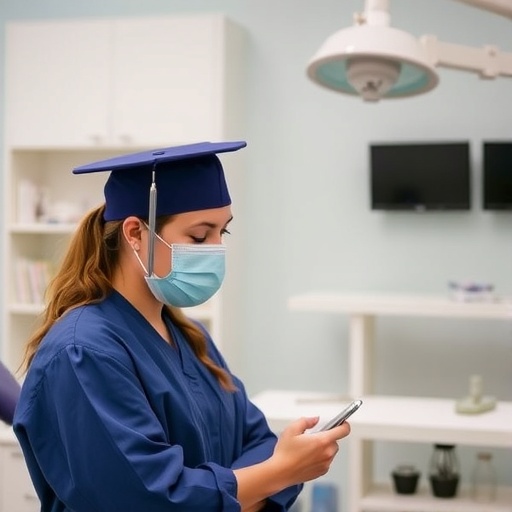
In recent years, the COVID-19 pandemic has profoundly affected education systems worldwide, creating unprecedented challenges, particularly in healthcare training programs. Among the most impacted are dental schools, where hands-on experience and face-to-face interactions are vital. A groundbreaking study authored by Oginni, F.O., Hirshfield, L.E., Schwartz, A., and others, published in BMC Medical Education, explores the readiness of both pre- and post-COVID-19 graduates of Nigerian dental schools to enter professional practice. This research not only highlights critical shifts in preparedness due to the pandemic but also invites a broader discussion on educational reforms necessary for the future of dental education.
The study surveyed a diverse sample of dental graduates, providing insights into their self-perceived readiness to practice amidst the ongoing ramifications of a global health crisis. The researchers emphasized the need to evaluate these graduates’ confidence levels in clinical skills, patient management, and overall preparedness. Interestingly, while traditional competencies were assessed, the study also examined how the pandemic has influenced perceptions of essential skills that might not have been prioritized in previous academic frameworks.
As the research unfolded, it became evident that the pandemic has altered how dental education is perceived and executed. Remote learning modalities, social distancing protocols, and limited clinical exposure have led to an essential shift in educational priorities. Graduates now face a unique blend of challenges and opportunities as they transition from academic environments into real-world practice. The study indicates that many graduates feel less prepared in certain clinical areas, reflecting concerns that may have serious implications for public health.
An unexpected revelation of the research was the impact of digital technology in enhancing educational experiences during the pandemic. Virtual simulations and remote learning techniques emerged as essential tools that, while not replacements for hands-on practice, offered significant supplementary value. Graduates reported varying degrees of effectiveness of these tools. Some felt they provided essential theoretical knowledge, while others yearned for direct mentorship and practical experience that could not be replicated online.
Crucially, the study identified demographic factors—including age, previous experience, and type of dental program—that influenced self-perceived preparedness. Younger graduates, for instance, expressed greater anxiety about their readiness for practice compared to their older counterparts, who might have had more time to adapt to the changes wrought by COVID-19. Similarly, those who had extensive hands-on practice prior to the pandemic felt significantly more confident than those who graduated during the height of restrictions.
The findings underline a collective need for curriculum evaluation within dental schools, suggesting that institutions must adapt educational strategies to ensure that future graduates can effectively meet the demands of a post-pandemic world. The focus ought to be not only on traditional skills but also on integrative approaches that include telehealth, emergency response strategies, and enhanced patient communication skills. Dental schools must reassess how they deliver education, considering flexible models that blend in-person learning with digital methods.
Moreover, the mental health of graduates must not be overlooked. While the research primarily focused on practical skills, the emotional and psychological readiness of new practitioners is equally important. Graduates reported increased levels of anxiety and uncertainty about entering the workforce in a rapidly changing environment. This calls for institutions to implement robust support systems that address mental health concerns, providing future dentists with resilience strategies and psychological tools to navigate their careers successfully.
The study’s implications extend beyond Nigeria, echoing a global call to reassess educational frameworks. As healthcare educators worldwide reflect on the struggles faced during the pandemic, the lessons learned can guide future revisions in dental education. Stakeholders must prioritize adaptability and innovation, ensuring that programs not only prepare students for traditional challenges but also for unexpected crises.
As educational institutions reshape their offerings, collaboration between academia and the healthcare industry will be vital. Employers must engage with dental schools to better understand the competencies they require in new hires, thereby forming a feedback loop that can help tailor curricula to meet real-world needs. This partnership can ensure that graduates emerge not only as knowledgeable professionals but as adaptable practitioners ready to face evolving public health challenges.
In conclusion, the research by Oginni and colleagues shines a light on a pressing issue in the context of dental education amid the COVID-19 pandemic. It emphasizes the urgent need for a re-evaluation of how dental training is conducted, with a keen eye on developing future practitioners who are well-rounded and equipped to handle the complexities of contemporary dental practice. As we look ahead, it is evident that reimagining educational approaches will be essential to navigating the post-pandemic landscape and fostering a resilient workforce ready to uplift global health.
As the dental education sector embarks on this journey, the insights provided by this study will undoubtedly fuel ongoing conversations about preparedness, adaptability, and the future of dental practice. The time for transformation is now, and the lessons learned from the pandemic will serve as guiding principles in shaping the future of dental education.
Cite Scienmag News
Courtney Benton. (November 8, 2025). Assessing Dental Graduates’ Readiness Post-COVID-19. Scienmag. https://scienmag.com/assessing-dental-graduates-readiness-post-covid-19/
Courtney Benton. "Assessing Dental Graduates’ Readiness Post-COVID-19." Scienmag, 8 November 2025, https://scienmag.com/assessing-dental-graduates-readiness-post-covid-19/. Accessed 4 September 2026.
Courtney Benton. "Assessing Dental Graduates’ Readiness Post-COVID-19." Scienmag. November 8, 2025. https://scienmag.com/assessing-dental-graduates-readiness-post-covid-19/


