


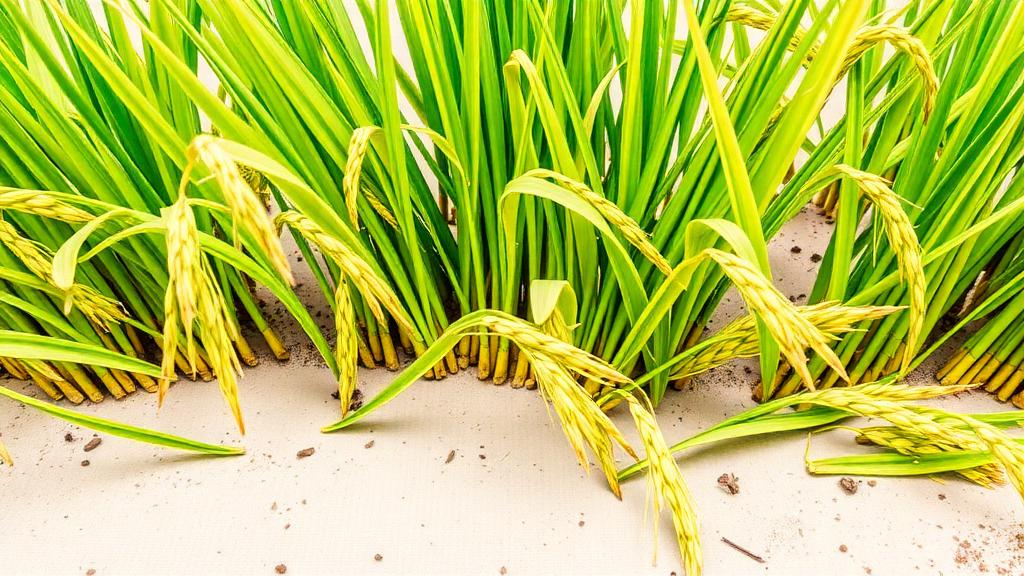
In the rain-fed fields of Assam, a quiet genetic treasure is being catalogued with new precision. A research team led by Rupak Kumar Sarma of Nalbari College, working with colleagues at Gauhati University, Assam Agricultural University and partner institutions, has carried out a detailed molecular survey of Ahu rice, the traditional summer-planted rice of the Brahmaputra valley, to map the genetic diversity that underpins its remarkable ability to withstand drought. The study, published in the Indian Journal of Genetics and Plant Breeding, screened 325 collected germplasm lines and distilled them down to fifty lines that showed dependable drought tolerance, providing breeders with a shortlist of locally adapted material for future crop improvement.
Ahu rice occupies a distinctive place in Assamese agriculture. Unlike the main monsoon-season Sali crop, Ahu cultivars are sown in the pre-monsoon months and depend largely on residual moisture and unpredictable early-season rainfall, which makes them natural candidates for carrying drought-adaptive traits. As climate change intensifies rainfall variability across South Asia, the genetic repertoire held in these landraces has become more than a matter of regional heritage; it is a potential resource for securing rice production in rain-fed agroecosystems worldwide. The research team set out to determine how much usable genetic variation actually exists within this pool and which varieties might serve as parents in breeding programs.
The molecular engine of the study was a set of forty simple sequence repeat markers, commonly known as SSR or microsatellite markers. These markers target short, tandemly repeated DNA motifs scattered across the genome, where the number of repeat units frequently differs between individuals. Because such repeats mutate rapidly and are inherited in a codominant fashion, SSRs allow researchers to distinguish even closely related landraces and to estimate how much of the observed variation is genuinely genetic rather than environmental. The markers used in the study were distributed across all twelve chromosomes of rice, giving a genome-wide view of diversity rather than a snapshot of a single region.
The results revealed substantial and clearly structured variation. Across the twelve chromosomes, the number of alleles detected per locus ranged from two to six, with a mean of 3.30 alleles per locus. The average Polymorphic Information Content, or PIC, a standard measure of a marker’s power to discriminate between genotypes, reached 0.6938, a value considered high for SSR-based diversity studies. In practical terms, this means the marker panel was highly informative and that the Ahu landraces are far from genetically uniform. For breeders, high PIC values translate directly into confidence that crosses between selected parents will generate meaningful segregating variation for selection.
To visualize the relationships among the fifty drought-tolerant lines, the team applied the UPGMA algorithm, a hierarchical clustering method that builds a dendrogram from pairwise genetic similarity estimates. The analysis segregated the genotypes into six distinct clusters, each representing a different branch of the region’s rice genealogy. Two well-known drought-tolerant reference lines, Nagina22, an Indian aus landrace famous for its heat and drought resilience, and APO, a drought-adapted variety developed for rain-fed systems, were included as benchmarks. Their placement relative to the Assamese landraces helped the researchers judge which local lines carried unique alleles and which were genetically close to established tolerant material.
Genetic clustering alone does not prove that a variety will perform under water stress, so the team added a physiological layer to the work. Five cultivars stood out for their robust drought-tolerance tendency: Dumai, Tarabali, Payjihari4, Baismuthi and Gerem dhan1. When these were characterized further, they showed elevated production of reactive oxygen species scavenging enzymes and cellular osmolytes. Both mechanisms are central to how plants cope with dehydration. Drought stress causes an overaccumulation of reactive oxygen species that can damage membranes, proteins and DNA, and antioxidant enzymes such as superoxide dismutase and catalase neutralize these molecules before they do lasting harm.
Osmolytes play the complementary role of keeping cells hydrated and structurally intact. Solutes such as proline and soluble sugars accumulate in the cytoplasm under water deficit, lowering the cell’s osmotic potential so that water continues to flow in even as the soil dries. The fact that the five standout Ahu cultivars combine strong molecular distinctiveness with heightened biochemical stress responses makes them particularly attractive candidates for parental screening. Breeders can pair the molecular data with the physiological evidence to select parents that contribute both drought-adaptive alleles and proven stress-mitigation machinery to their progeny.
The broader context gives the work its urgency. Global assessments, including recent OECD outlooks on drought and agricultural production, project increasing frequency and severity of drought episodes in major rice-growing regions, threatening yields precisely where smallholder farmers depend on rain-fed fields. Rice is simultaneously one of the world’s most water-intensive staple crops and the primary calorie source for billions of people. Studies of drought tolerance in rice have identified numerous quantitative trait loci, and marker-assisted breeding has already succeeded in combining drought tolerance with tolerance to submergence and salinity in some varieties. What such programs need most is diverse, well-characterized donor germplasm, and that is exactly what the Ahu collection provides.
Assam sits within the broader northeastern region of India, an area recognized as a hotspot of rice genetic diversity where centuries of farmer selection have produced landraces tuned to local stresses. Previous molecular work on Assamese glutinous bora rice and on landraces from other Indian regions such as Koraput has repeatedly shown that traditional cultivars harbor allelic combinations absent from modern elite varieties. The new study extends that picture to drought adaptation, demonstrating that the Ahu pool is not a relic but a living, genetically rich resource. The high PIC values and six-cluster structure suggest that different landraces arrived at drought tolerance through partly different genetic routes, which increases the chance that crossing between clusters will produce transgressive, superior progeny.
The authors, who also included W. James Singha, Hemen Deka, Diganta Deka and Pranaba Nanda Bhattacharyya, with Akhil Ranjan Baruah of Assam Agricultural University as senior collaborator, note that the study was supported by a twinning project grant from the Department of Biotechnology, Government of India. Their stated aim is practical: to help breeders screen parents for upcoming drought-tolerance breeding programs. The datasets generated in the study are available from the corresponding author on reasonable request, and the fifty drought-tolerant lines, anchored by the five physiologically validated cultivars, now form a ready-made foundation for marker-assisted selection. As water scarcity tightens its grip on rice systems across Asia, the humble Ahu fields of Assam may prove to hold some of the most valuable drought-fighting genes in the crop’s gene pool, waiting only to be crossed into the varieties of tomorrow.
Subject of Research: Genetic diversity and drought tolerance in Ahu rice landraces of Assam assessed with microsatellite markers
Article Title: Genetic Diversity in Ahu Rices for Drought Tolerance Using Microsatellite Markers
Article References: Sarma, R. K., Singha, W. J., Deka, D., Deka, H., Bhattacharyya, P. N., & Baruah, A. R. (2026). Genetic Diversity in Ahu Rices for Drought Tolerance Using Microsatellite Markers. Indian Journal of Genetics and Plant Breeding, 86(2), 105-116. https://doi.org/10.1007/s44489-026-00012-5
Image Credits: AI Generated
DOI: 10.1007/s44489-026-00012-5
Keywords: Ahu rice, genetic diversity, drought tolerance, SSR markers, microsatellites, rice landraces, Assam, plant breeding, PIC, UPGMA, osmolytes, antioxidant enzymes
Cite Scienmag News
Alan Morgan. (October 2, 2026). Assam’s Traditional Ahu Rice Landraces Reveal Hidden Genetic Keys to Drought Tolerance. Scienmag. https://scienmag.com/assams-traditional-ahu-rice-landraces-reveal-hidden-genetic-keys-to-drought-tolerance/
Alan Morgan. "Assam’s Traditional Ahu Rice Landraces Reveal Hidden Genetic Keys to Drought Tolerance." Scienmag, 2 October 2026, https://scienmag.com/assams-traditional-ahu-rice-landraces-reveal-hidden-genetic-keys-to-drought-tolerance/. Accessed 4 October 2026.
Alan Morgan. "Assam’s Traditional Ahu Rice Landraces Reveal Hidden Genetic Keys to Drought Tolerance." Scienmag. October 2, 2026. https://scienmag.com/assams-traditional-ahu-rice-landraces-reveal-hidden-genetic-keys-to-drought-tolerance/


