


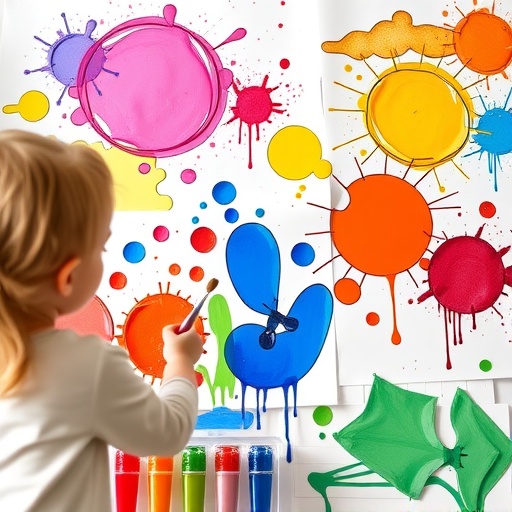
The integration of art education within museum environments has gained traction as a pivotal approach for fostering creative thinking, emotional intelligence, and cognitive skills in young children. An illuminating study conducted by Noyat, Okvuran, and Güneröz delves into this burgeoning field, exploring the profound effects of museum-based art education on visual perception development among preschool children. This exploration marks a significant contribution to the ongoing discourse surrounding art education’s role in early childhood development.
Visual perception plays a crucial role in a child’s cognitive development, influencing their ability to interpret and interact with the world around them. It encompasses the brain’s processing of visual stimuli, which is essential for effective learning and communication. In preschool-aged children, who are at a critical juncture for sensory and cognitive development, engaging experiences can significantly shape their perceptual abilities. This study addresses the urgent need for innovative educational strategies that bolster these skills through creative avenues.
The researchers meticulously designed and implemented an art education program within a museum context, aiming not only to enhance visual perception but also to stimulate children’s imaginations and self-expression. By situating learning in a vibrant, culturally-rich environment, the study hypothesized that children would benefit from the immersive experiences unique to museums. Children were encouraged to observe, create, and interpret artworks, thereby promoting engagement and critical thinking.
One major facet of the study was the diversity of artistic experiences provided. Children were introduced to various art forms, including painting, sculpture, and multimedia installations. Each session was crafted to ensure children interacted with different materials and techniques, facilitating an experiential approach to learning. By fostering tactile engagement alongside visual appreciation, the program aimed to create holistic learning experiences that transcend traditional classroom settings.
As children interacted with art, they were guided to explore concepts of color, shape, and form, which are integral to visual perception. The researchers utilized structured activities to assess changes in children’s ability to differentiate between visual stimuli before and after exposure to the museum-based program. This method allowed for a systematic analysis of growth in visual perceptual skills, laying a scientific foundation for the study’s assertions regarding art education’s benefits.
The findings revealed that children who participated in the museum-based art education program displayed marked improvements in their visual perception capabilities. Enhanced spatial awareness, improved depth perception, and an increased capacity for visual discrimination were documented among participants. This demonstrates that immersive engagement with art not only captivates young minds but profoundly influences their cognitive development.
Beyond cognitive benefits, the study emphasized the emotional and social dimensions of museum-based art education. Children experienced a sense of belonging and community as they collaborated on art projects and shared their interpretations with peers. This collaborative aspect nurtured their social skills, laying the groundwork for effective communication and teamwork in future educational settings. The emotional intelligence gained through such experiences is equally vital, supporting children’s ability to empathize and connect with their surroundings.
The implementation of this art education program also highlighted the essential role of educators and museum professionals. Training for educators to facilitate art experiences in a museum context is critical to ensure that interactions are meaningful and developmentally appropriate. Hence, equipping teachers with strategies to integrate art into learning can amplify the impact of such programs, making them far-reaching in their benefits.
A further aspect of the research involved examining how environmental factors within the museum setting contribute to learning outcomes. The sensory-rich atmosphere of museums, filled with diverse art forms and cultural narratives, provides a unique backdrop that is often absent from conventional classrooms. This study posits that the aesthetic experience of being in a museum significantly enhances learning, engaging multiple senses and fostering a deeper connection to art and culture.
The implications of this research extend beyond preschool education. As the necessity for creativity in education continues to gain recognition, museum-based art education can serve as a model for innovative pedagogical approaches across various age groups. By elevating the importance of creative education, there is potential for reshaping traditional educational frameworks to cultivate more dynamic and integrative learning environments.
Moreover, findings from this research can inform policy-making at institutional levels, advocating for increased partnerships between educational systems and cultural organizations such as museums. Collaboration can lead to resource-sharing, enhanced curriculum design, and enriched learning experiences that directly benefit children and educators alike. The evidence supporting art education’s role in visual perception also lends credibility to arguments for increased funding and support for arts programming within educational contexts.
In conclusion, the work of Noyat, Okvuran, and Güneröz offers compelling evidence of the significant positive impact of museum-based art education on preschool children’s visual perception development. This study is not merely an academic exercise, but a call to action for educators, policymakers, and cultural institutions to embrace and implement such innovative approaches. As society advances into a future increasingly reliant on creative problem-solving and critical thinking, investing in our children’s artistic and perceptual education emerges as a paramount endeavor.
The exploration of art’s potential to enrich learning is just beginning, and studies like this pave the way for a renewed focus on creativity in education, ultimately searching for a harmonious interplay between culture, art, and cognitive development in the formative years of childhood.
Noyat, Ş., Okvuran, A. & Güneröz, C. The Effect of Museum-Based Art Education on the Development of Visual Perception in Preschool Children.
IJEC (2025). https://doi.org/10.1007/s13158-025-00459-9
Cite Scienmag News
Courtney Benton. (November 19, 2025). Art Education Boosts Visual Skills in Preschoolers. Scienmag. https://scienmag.com/art-education-boosts-visual-skills-in-preschoolers/
Courtney Benton. "Art Education Boosts Visual Skills in Preschoolers." Scienmag, 19 November 2025, https://scienmag.com/art-education-boosts-visual-skills-in-preschoolers/. Accessed 3 September 2026.
Courtney Benton. "Art Education Boosts Visual Skills in Preschoolers." Scienmag. November 19, 2025. https://scienmag.com/art-education-boosts-visual-skills-in-preschoolers/


