

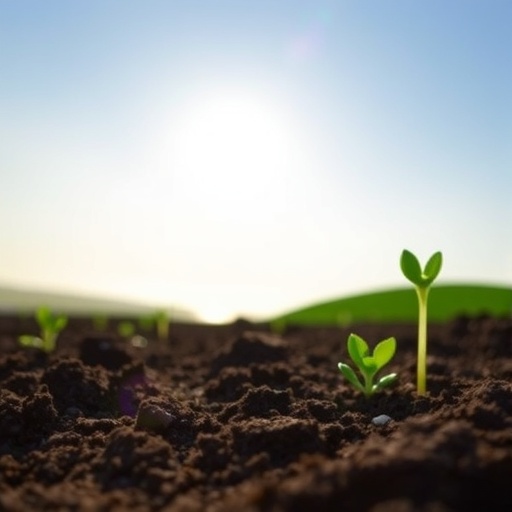
Scientists are increasingly emphasizing the critical role microscopic organisms play in soil health, urging the global community to integrate these complex biological systems into soil management initiatives. In the UK, a groundbreaking policy report titled Improving Soil Health in the UK, launched by Applied Microbiology International (AMI), has laid the foundation for a transformative approach toward preserving and enhancing the country’s soils. This comprehensive report pushes for a strategic overhaul that engages all stakeholders across scientific, agricultural, and policy-making sectors with a united goal: to secure soil vitality for future generations.
Soil is a cornerstone of ecological sustainability, underpinning vital processes such as food production, biodiversity conservation, and climate resilience. However, intense agricultural practices and environmental degradation pose significant threats to this resource. AMI’s report highlights the urgent need for a rigorous and universally accepted definition of what constitutes “healthy soil,” one that transcends regional and institutional boundaries. Establishing a cohesive and adaptable conceptual framework is paramount, acknowledging both the uniformity required for policy coherence and the variability demanded by the diverse soil ecosystems found across England, Scotland, Wales, and Northern Ireland.
The report’s emphasis on biological indicators marks a paradigm shift from traditional soil assessment techniques. Modern advances in environmental DNA (eDNA) and metagenomic sequencing offer unprecedented insight into the soil microbiome’s composition and functional dynamics. These cutting-edge tools enable experts to capture a holistic picture of soil biodiversity, extending beyond mere chemical and physical properties. By integrating microbial diversity and functional capacity analyses, researchers can more accurately gauge soil health, thereby enabling tailored interventions that promote sustainable land use.
Stressed within the report is the urgent call for interdisciplinary cooperation. It is no longer sufficient for soil health to be viewed purely through agricultural or environmental lenses; instead, it requires integrated communication and shared objectives among farmers, scientists, policymakers, and commercial enterprises. Successfully transitioning to sustainable management practices hinges on this collective action framework, supported by robust policy, adequate financial investments, and a science-based advisory infrastructure.
The recognition of microbial solutions as a pivotal tool in soil regeneration is born from growing evidence of soil microbiota’s critical influence on nutrient cycling, disease suppression, and plant health. This microbiome-centric approach underscores beneficial symbiotic relationships within the rhizosphere, where microbes interact intimately with plant roots to enhance nutrient uptake and resilience. Encouraging soil regenerative practices that nurture these microbial communities will be instrumental in restoring degraded soils and maintaining agricultural productivity under changing climatic conditions.
One of the report’s groundbreaking contributions is the advocacy for a dual-focus measurement approach that balances microbial diversity with microbial function. While diversity reflects the spectrum of microbial species present, functional analysis illuminates their ecological roles and interactions. This bifocal strategy acknowledges the complexity of soil ecosystems and the necessity of understanding both the components and processes to inform management decisions effectively.
The report also confronts the communication challenges endemic to the soil health sector. Divergent terminologies, disciplinary silos, and conflicting priorities have historically hampered progress. By fostering transparent, evidence-based dialogue and trust-building exercises among stakeholders, the AMI report argues that these barriers can be dismantled. Co-creation of shared agendas and knowledge exchange platforms will propel the soil health narrative forward and facilitate policy alignment at both national and regional levels.
Technological innovations in soil microbiology are rapidly changing the landscape of soil science. Metagenomic methods, capable of sequencing millions of DNA fragments directly from soil samples, allow for comprehensive profiling of microbial communities without culturing biases. These approaches illuminate hidden microbial taxa and novel gene functions involved in nutrient transformations and bioactive compound production. Utilizing this information can lead to precision agriculture practices that optimize input use efficiency while preserving soil integrity.
In parallel, there is a pressing need to integrate microbial data with other soil health indicators such as physical structure, moisture retention, and chemical parameters. Soil is a multifaceted ecosystem where biotic and abiotic components interact synergistically. Therefore, an interdisciplinary research agenda that combines microbiology, soil chemistry, and agronomy will yield the most actionable insights for sustainable management and policy formulation.
Achieving meaningful and lasting improvements in soil health requires supportive policy frameworks that incorporate long-term monitoring, incentives for sustainable practices, and capacity-building for land managers. The AMI report stresses that these frameworks must be flexible enough to address the heterogeneity of soils across the UK’s landscapes while maintaining consistent standards for health assessment and reporting. This will facilitate nationwide benchmarking and progress tracking in line with global sustainability targets.
Moreover, the report illuminates the socio-economic dimensions of soil health management, advocating for stakeholder inclusion beyond scientists and farmers to encompass funding bodies, advocacy groups, and food industry players. This broad-based coalition has the potential to mobilize resources, influence public opinion, and accelerate the adoption of best practices that benefit ecological and economic systems alike.
Ultimately, selecting and validating biological soil health indicators, including eDNA-based metrics, requires ongoing research investments and the development of standardized protocols. The report recommends fostering collaborations between academic institutions, government agencies, and private sector innovators to refine these metrics and translate them into accessible decision-support tools.
To conclude, Improving Soil Health in the UK serves as a clarion call to harness the power of microbial ecosystems and modern genomic technologies to revolutionize soil stewardship. By fostering interdisciplinary alliances, harmonizing definitions, and integrating biological indicators into policy and practice, the UK stands at the threshold of pioneering a sustainable soil future that underpins environmental resilience and food security.
Subject of Research: Soil Health, Microbial Ecosystems, Sustainable Agriculture
Article Title: Improving Soil Health in the UK: The Microbial Frontier in Sustainable Land Management
News Publication Date: Not specified
Keywords: Microbiology, Food security, Agriculture, Farming, Sustainable agriculture, Soil fertility, Soils, Rhizosphere, Plant microbe interactions, Soil science, Soil bacteria, Rhizobium


