

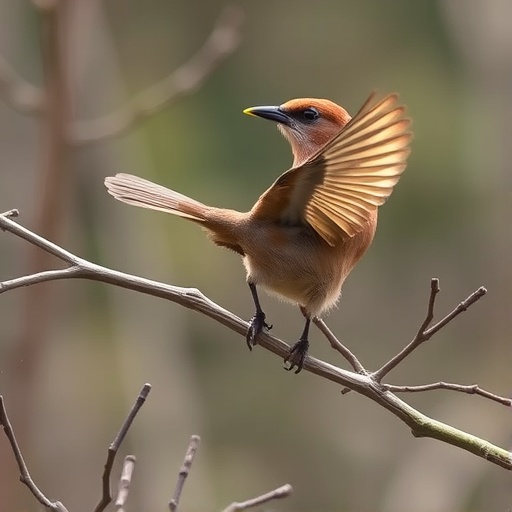
In the intricate tapestry of nature, the delicate balance of animal communication is vital for the survival of countless species. Birds, with their elaborate calls and songs, rely heavily on auditory signals to convey everything from mating calls to alarm signals. However, as anthropogenic noise pollution increases, particularly in urban environments, these essential communications face unprecedented threats. A groundbreaking study conducted by Moriya et al. sheds light on how human-induced noise at varying frequencies disrupts avian vocalization and response patterns, potentially endangering bird populations.
Anthropogenic noise, stemming from various sources such as traffic, construction, and industrial activities, creates a cacophony that blurs critical sound frequencies used by birds. The study reveals that when exposed to this noise, birds exhibit heightened vulnerability in their alert responses, especially when confronted with mixed call sequences. This phenomenon presents significant implications for both the immediate survival of avian species and the broader ecological systems they inhabit.
The research focused on specific species known for their rich vocalizations. By analyzing their responses to synthesized calls mingled with recorded urban noise, the team discovered that the effectiveness of alarm calls diminishes dramatically in noisy environments. Birds are no longer able to effectively distinguish between warning signals or identify the severity of a threat when competing with anthropogenic sound distractions. This finding raises alarming concerns regarding the capacity of these creatures to respond adequately to potential predators, which can directly affect their population dynamics.
Moreover, the study highlights the nuances in bird communication that are often overlooked. The combination of call sequences—where various alarm calls are layered—can contain crucial information regarding the level of danger present. However, under the interference of urban noise, birds struggled to interpret these sequences accurately. Consequently, a simplistic response may be adopted, resulting in maladaptive behaviors that can lead to fatal consequences.
The ramifications extend beyond individual birds; entire ecosystems hinge on effective communication among species. Birds play critical roles as pollinators, seed dispersers, and predators of insects. Disruptions in their communication can cause ripple effects throughout their habitats, potentially leading to declines in biodiversity. The researchers emphasize the urgency of understanding these dynamics, especially as urban areas continue to expand and encroach upon natural habitats.
Interestingly, the study also investigates the variance in susceptibility among different bird species. Some birds showed a remarkable resilience to noise interference, while others appeared more vulnerable. This disparity suggests an evolutionary aspect to the adaptability of bird communication in urban environments. The findings reinforce the notion that not all avian species will respond uniformly to the challenges posed by anthropogenic noise, leading to potential shifts in community structures.
In addition to the ecological implications, the study calls for immediate attention from policymakers and urban planners. Strategies that mitigate noise pollution—such as creating quieter urban spaces or implementing noise barriers—could prove beneficial for preserving avian communication and, by extension, biodiversity. The impact of noise is often underestimated, especially when considering the balance of ecosystems that can easily be disrupted by seemingly benign human activities.
Furthermore, the research prompts a critical examination of conservation strategies. Traditional efforts often focus on habitat preservation and restoration, but as this study shows, addressing the auditory landscape is equally crucial. Conservationists may need to incorporate an awareness of noise pollution into their agendas, crafting initiatives that aim not only to protect physical environments but also to preserve the acoustic environments vital for avian communication.
As we navigate a world increasingly filled with human noise, the implications of this research could resonate far beyond avian species. The disruption of signaling mechanisms affects not only birds but could offer insights into other species impacted by similar noise pollution. The study underscores the intricate interconnectedness of all life forms and the environmental factors that shape their interactions.
To further elucidate the complexities of this issue, Moriya et al. utilize controlled experimental designs. By subjecting birds to varying levels of noise and observing their responses to altered call sequences, the researchers ensure their findings contribute to the growing body of literature on the effects of anthropogenic influences on wildlife. This rigorous approach adds credibility to their conclusions and invites further investigation into the underlying mechanisms that drive these observed behaviors.
As scientists continue to explore the effects of anthropogenic noise, future research will undoubtedly delve deeper into how other species perceive and adapt to auditory disturbances. With ongoing technological advancements, we may uncover additional layers of complexity in animal communication, revealing just how sensitive these signals are to environmental changes.
Ultimately, the research conducted by Moriya et al. serves as a clarion call to embrace conservation efforts that reflect the multifaceted relationships within ecosystems. It emphasizes that to protect avian communication is to protect the integrity of biodiversity itself. Our responsibility is not only to acknowledge the beauty of bird calls but to recognize the critical importance of maintaining the soundscapes of nature, which are essential for the survival of myriad species that inhabit our planet.
As we continue to advance into urbanized futures, solutions must incorporate an appreciation and understanding of the need for quieter, more harmonious environments. Protecting bird communication is not merely an ecological issue; it’s a challenge that invites humanity to coexist thoughtfully with the other inhabitants of our shared planet. The time to act is now, to ensure that the songs of birds do not fade into silence amidst the clamor of civilization.
In a world grappling with the impact of its own noise, awareness and informed action shine as beacons of hope for preserving rich avian dialogues. The future of bird communication—and the health of our ecosystems—depends on fostering environments where these vital exchanges can thrive, undisturbed by human interference.
Subject of Research: The impact of anthropogenic noise on bird communication and alert responses.
Article Title: Increased vulnerability of alert responses to combined call sequences under anthropogenic noise in bird communication.
Article References: Moriya, M., Senzaki, M., Kitazawa, M. et al. Increased vulnerability of alert responses to combined call sequences under anthropogenic noise in bird communication. Environ Sci Pollut Res (2026). https://doi.org/10.1007/s11356-026-37457-w
Image Credits: AI Generated
DOI: https://doi.org/10.1007/s11356-026-37457-w
Keywords: anthropogenic noise, bird communication, ecological implications, conservation strategies, urban planning, biodiversity.


