


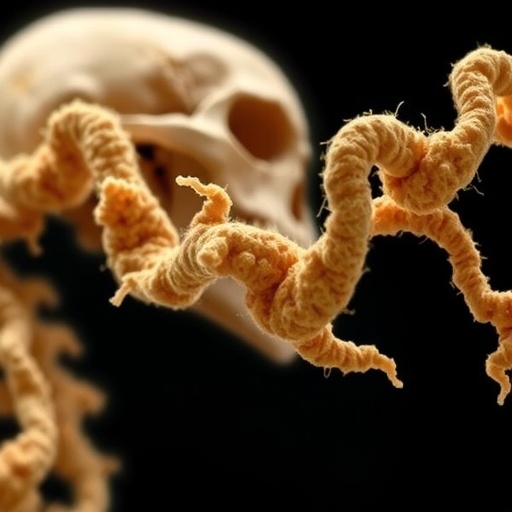
In a groundbreaking revelation that intertwines the ancient past with modern microbiology, researchers have successfully decoded the genome of Streptococcus pyogenes extracted from a pre-Columbian Bolivian mummy, pushing the boundaries of paleogenomics and infectious disease research. This extraordinary scientific leap provides a rare window into the evolutionary trajectory of one of humanity’s most notorious bacterial pathogens, known for causing an array of illnesses ranging from mild pharyngitis to life-threatening invasive infections. By analyzing this ancient genome, scientists are piecing together the historical narrative of bacterial virulence, antibiotic resistance, and pathogen-host dynamics that have shaped human health long before the advent of contemporary medicine.
Streptococcus pyogenes, a Group A Streptococcus (GAS), is infamous in clinical microbiology for its role in diseases such as strep throat, scarlet fever, rheumatic fever, and necrotizing fasciitis. Its ability to adapt and evade host immune defenses has made it a persistent public health challenge worldwide. The isolation and genomic sequencing of a pathogen from an ancient mummy, dating back to the pre-Columbian era, opens unprecedented avenues for comparative studies with extant strains, facilitating a deep-time perspective on genetic variation, pathogenicity factors, and evolutionary pressures that have sculpted this bacterium’s genome over centuries.
The study, led by an international team of experts including genomicists and bioarchaeologists, employed cutting-edge sequencing technologies adapted for ancient DNA (aDNA), which is characterized by fragmentation, chemical modifications, and contamination risks. Utilizing meticulous protocols for sample preparation, DNA extraction, and library construction, the researchers ensured the retrieval of authentic microbial genetic material from the mummified tissues. Subsequent metagenomic analyses isolated Streptococcus pyogenes sequences, which underwent comprehensive assembly and annotation procedures to reconstruct the genome with high fidelity. These efforts overcame longstanding technical challenges and demonstrated the viability of recovering complex bacterial genomes from archaeological specimens.
One of the notable revelations from the ancient genome is the composition and arrangement of virulence genes. The genomic blueprint reveals that key virulence determinants—including emm typing, superantigen toxins, and hyaluronic acid capsule biosynthesis genes—were already established in the pre-Columbian strain. This suggests that the pathogenic potential of Streptococcus pyogenes has ancient origins, providing a plausible explanation for the persistent clinical manifestations observed in human populations across millennia. Comparative genomic analyses highlighted both conserved elements and mutations that appear to have emerged through natural selection, shedding light on evolutionary mechanisms that enabled adaptation to host immune responses.
Equally compelling is the insight into antibiotic resistance—or the lack thereof—in this ancient pathogen. Since the mummy predates the antibiotic era by centuries, the genome lacks resistance-conferring mutations or mobile genetic elements commonly found in contemporary isolates. This absence highlights the profound impact of anthropogenic antibiotic use driving resistance development in modern GAS populations. By establishing a pre-antibiotic baseline, the study furnishes a valuable reference point to decipher the genomic consequences of antimicrobial pressure on bacterial evolution, informing future surveillance and therapeutic strategies.
Beyond the genomic content itself, the discovery bears significant implications for understanding the epidemiology of infectious diseases in ancient societies. The preservation of Streptococcus pyogenes DNA within mummified remains indicates that such infections once contributed to morbidity and mortality in indigenous populations of the Andean region. This challenges prevailing notions that many infectious diseases emerged or intensified only post-European contact or due to urbanization, instead suggesting a prolonged coexistence and complex interplay between humans and pathogenic bacteria across different ecocultural contexts.
The interdisciplinary approach encompassing molecular biology, archaeology, and computational genomics exemplifies the transformative potential of paleopathogenomics. Techniques such as high-throughput sequencing, single-molecule real-time sequencing, and bioinformatic phylogenetic reconstruction were pivotal in generating a genomic resource that is both robust and insightful. These methodologies can now be leveraged to explore other ancient pathogens that shaped human history but have remained elusive due to technical hurdles.
Furthermore, the data garnered from the ancient Streptococcus pyogenes genome fuel new hypotheses regarding host-pathogen co-evolution. Genetic adaptations in both the bacterium and its human hosts may have influenced disease susceptibility, immune evasion strategies, and transmission dynamics. Investigations into human genetic loci associated with immune responses could leverage this microbial genomic context to unravel how ancient infections molded the genetic landscape of indigenous populations, a research frontier that blends genomics with anthropology.
The ethical dimensions of this work are equally profound, requiring sensitive collaboration with local communities, cultural heritage authorities, and bioethicists to ensure respectful treatment of human remains. This project sets a precedent for responsible conduct in paleogenomic research, balancing scientific inquiry with cultural reverence and data stewardship. Such partnerships enrich the scientific narrative by incorporating indigenous perspectives and knowledge systems, fostering a holistic understanding of infectious diseases through time.
This pioneering research also heralds potential applications in modern medical microbiology. Understanding ancestral pathogen genomes enhances vaccine design by highlighting conserved antigenic targets less prone to mutation. It may also reveal overlooked virulence mechanisms or genetic vulnerabilities that could inspire novel drug development. As antibiotic resistance continues to escalate worldwide, insights from ancient microbial genomes provide an invaluable historical context essential for combating contemporary infectious threats.
Moreover, the successful recovery and analysis of this ancient bacterial genome open pathways for comparative studies with other pathogenic and commensal microbes preserved in archaeological contexts. Such cross-species investigations can elucidate microbial community dynamics, shifts in pathogenicity, and environmental influences on disease emergence and decline. Integrating paleomicrobiology with ecological and evolutionary frameworks enriches our understanding of microbial life and its intimate relationship with humans through the ages.
In conclusion, the sequencing of Streptococcus pyogenes from a pre-Columbian Bolivian mummy marks a monumental milestone in the field of ancient pathogen genomics. It bridges the temporal divide between past and present, enriching our comprehension of bacterial evolution, infectious disease history, and human health. This discovery not only rewrites chapters of microbial ancestry but also empowers future research at the intersection of genomics, archaeology, and medicine, ultimately enhancing our capacity to confront infectious diseases with informed precision.
The full spectrum of implications stemming from this study underscores the importance of interdisciplinary collaboration, technological innovation, and ethical sensitivity in unlocking the secrets harbored within ancient biomolecules. As scientific methodologies continue to advance, we stand on the cusp of a renaissance in understanding pathogens not merely as current health adversaries but as enduring biological entities whose stories span epochs and cultures. This ancestral genome is more than a relic; it is a testament to the persistent and intricate dance between microbes and humans that continues to shape life on Earth.
Cite Scienmag News
Juliet Wilcox. (April 14, 2026). Ancient Streptococcus pyogenes Genome Found in Mummy. Scienmag. https://scienmag.com/ancient-streptococcus-pyogenes-genome-found-in-mummy/
Juliet Wilcox. "Ancient Streptococcus pyogenes Genome Found in Mummy." Scienmag, 14 April 2026, https://scienmag.com/ancient-streptococcus-pyogenes-genome-found-in-mummy/. Accessed 3 September 2026.
Juliet Wilcox. "Ancient Streptococcus pyogenes Genome Found in Mummy." Scienmag. April 14, 2026. https://scienmag.com/ancient-streptococcus-pyogenes-genome-found-in-mummy/


