


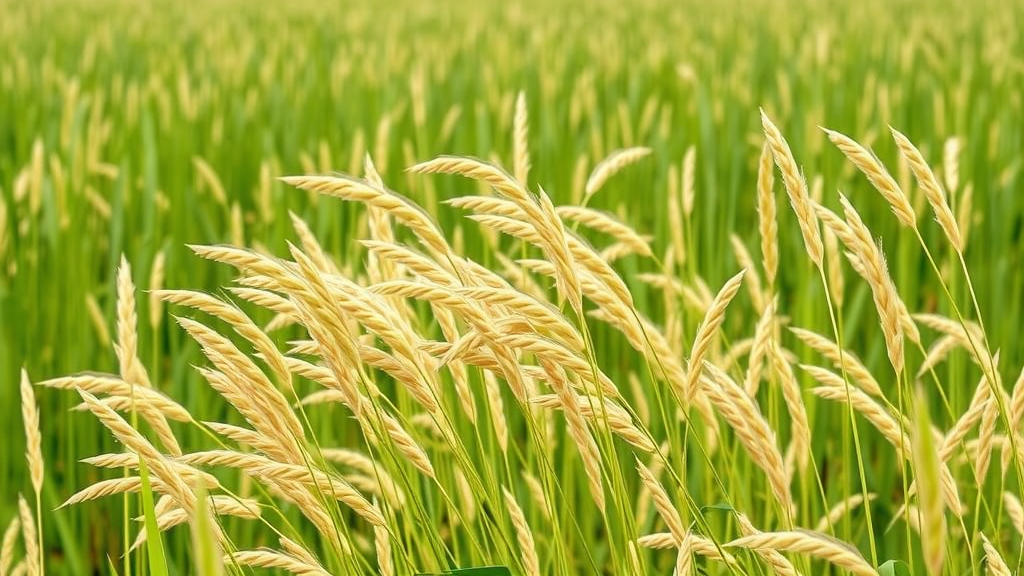
Grasspea (Lathyrus sativus L.) has long occupied a paradoxical place in world agriculture. It is one of the toughest crops a farmer can grow, shrugging off drought, waterlogging and impoverished soils where most legumes would simply fail, and its seeds are packed with protein that could nourish both people and livestock across some of the planet’s most marginal agro-ecosystems. Yet for decades the crop has been held back by a single, stubborn problem: a neurotoxin called β-N-Oxalyl-α,β-diaminopropionic acid, better known as β-ODAP. When grasspea seeds are consumed as a dominant part of the diet over long periods, high levels of this compound have been linked to neurolathyrism, a devastating and irreversible paralysis of the lower limbs. The stigma attached to that disease has kept grasspea, often called an orphan crop, largely locked out of mainstream breeding programmes and commercial markets, even as climate change pushes breeders to search for exactly the kind of resilient, low-input legume that grasspea represents.
A new study from researchers at Bidhan Chandra Krishi Viswavidyalaya in West Bengal, working with colleagues at ICAR-National Bureau of Plant Genetic Resources in New Delhi and the ICARDA Food Legume Research Platform in Amlaha, offers fresh ammunition for the campaign to rehabilitate this ancient crop. Published in the Indian Journal of Genetics and Plant Breeding, the research systematically evaluated twenty-one grasspea landraces collected from West Bengal, together with two check varieties, across two growing seasons. The team combined classical field measurements of morphological and yield traits with biochemical assays of seed quality and a molecular survey using simple sequence repeat, or SSR, markers. The goal was ambitious but practical: to find out how much hidden diversity these farmer-developed landraces actually contain, how that diversity is organised genetically, and whether any of the lines could serve as donors of both low neurotoxin content and high yield for future cultivar development.
The answer to the first question is emphatically yes. Across the two seasons, the landraces displayed substantial and economically meaningful variability in nearly every trait the researchers measured. Grain yield per plant ranged from 6.98 grams to 14.38 grams, a spread that represents a genuine breeding opportunity rather than background noise. Seed ODAP content varied more than fivefold, from a remarkably low 0.09 percent to 0.46 percent, while soluble protein content ranged from 17.37 percent to 31.07 percent. That protein ceiling is particularly striking, because it demonstrates that some of these unimproved farmer selections already match or exceed the nutritional quality of many conventional pulse crops. In a world where plant-based protein demand is rising and marginal lands are expanding under climate stress, landraces that combine resilience with such protein density are resources worth taking very seriously.
Beneath the raw numbers, the genetic architecture of the traits matters enormously for breeders, and here the study delivered some of its most useful insights. Using generation mean analysis-style reasoning grounded in the partitioning of variance, the team found that additive gene effects predominated for pods per plant, seeds per plant, biological yield, harvest index, grain yield, ODAP content and soluble protein. In practical terms, additive gene action means that the performance of a trait scales roughly predictably with the alleles an individual plant carries, which makes those traits directly amenable to straightforward selection. Breeders can cross a high-performing donor with an elite variety and expect to make steady progress simply by picking the best progeny in each generation, without needing to exploit complex dominance interactions or heterosis. For a crop that has received comparatively little formal breeding attention, the confirmation that its most important traits respond to simple selection is genuinely encouraging news.
Correlation analysis added a second layer of practical guidance. Grain yield showed a strong positive association with pods per plant, with a correlation coefficient of 0.77, identifying pod number as the single most effective primary selection criterion for yield improvement in this material. This kind of indirect selection is a cornerstone of efficient breeding: rather than waiting for full yield data that may be confounded by environmental variation, breeders can reliably screen large populations early for pod production and capture most of the yield signal. The study also found that ODAP content was significantly associated with several key phenological and yield-related traits, suggesting that the neurotoxin is not an isolated biochemical curiosity but is woven into the broader developmental and adaptive physiology of the plant. That linkage has implications for breeding strategy, because it means selection on ODAP alone could inadvertently shift flowering time or yield architecture if the associations are not monitored and managed through careful, multi-trait selection.
To understand how the landraces relate to one another genetically, the researchers turned to molecular markers. SSR markers, which detect variation in short tandemly repeated DNA sequences, remain a workhorse tool for diversity analysis in orphan crops where full genome sequences and high-density SNP arrays are not yet routine. The SSR analysis revealed a moderate level of polymorphism, with a mean polymorphism information content, or PIC, of 0.30. Two markers stood out as especially informative: S_97, with a PIC value of 0.61, and S_33, with a PIC of 0.40. In marker-assisted breeding, high-PIC markers are valuable because they distinguish genotypes efficiently, and S_97 in particular could serve as a useful anchor locus for future fingerprinting, purity testing and association mapping work in grasspea. At the same time, the overall moderate polymorphism pointed to a relatively narrow genetic base among the evaluated landraces, a finding that carries a caution: the diversity captured in this collection, while real, may not be inexhaustible, and broader germplasm exploration could be warranted.
One of the study’s most methodologically satisfying results was the concordance between phenotypic and genotypic clustering. The researchers used multivariate analyses to group the landraces based on morphological and biochemical traits, and separately based on SSR marker data, then applied the Mantel test to compare the resulting distance matrices. The test revealed a moderate but statistically significant correlation between the morphological and molecular distances, validating the trait-based grouping of the material. This matters because it tells breeders that what they see in the field is not an illusion of environment or measurement error; the observable differences among these landraces reflect genuine underlying genetic differentiation. It also means that either type of data, measured alone, provides a reasonably trustworthy guide to the structure of the collection, which is reassuring for breeding programmes that lack the resources to run both kinds of analysis routinely.
The headline deliverables of the work are two stand-out accessions. IC 0634674 was identified as a low-ODAP donor, with seed neurotoxin content of just 0.09 percent, a level that approaches the thresholds considered safe for unrestricted human consumption and that could dramatically reduce the risk of neurolathyrism in communities that depend on grasspea as a staple. Meanwhile, IC 0634670 exhibited superior yield potential at 14.38 grams per plant, the highest in the entire panel. Together, these two lines offer complementary donor profiles: one addresses the safety bottleneck that has stigmatised the crop, and the other addresses the productivity bottleneck that has limited its competitiveness with major pulses. Crossing programmes that pyramid low ODAP with high yield, guided by the additive gene action and pod-number selection criterion documented in this study, now have a clear starting point.
The broader significance of the research extends beyond a single crop. As climate volatility intensifies, agricultural scientists are increasingly looking to underutilised, climate-resilient legumes to diversify food systems, and grasspea is frequently cited as a prime candidate for drought-prone and flood-prone regions of South Asia and sub-Saharan Africa. Studies like this one show that the raw material for that transformation already exists, sitting in farmer fields and gene banks, waiting to be characterised and deployed. By demonstrating that West Bengal’s grasspea landraces harbour usable variation for toxin content, protein quality and yield, and by supplying the genetic and statistical framework to exploit that variation, the researchers have converted a stigmatised orphan crop into a credible breeding target. The next step, transferring the low-ODAP and high-yield donor alleles into locally adapted cultivars through targeted crossing and selection, will determine whether grasspea finally takes its place as a safe, nutritious staple for the marginal lands of the future.
Subject of Research: Genetic diversity and low-ODAP, high-yield donor identification in Bengal grasspea landraces
Article Title: Integrative Morpho-Biochemical and SSR-Based Diversity Analysis of Bengal Grasspea (Lathyrus sativus L.) Landraces Reveals Low ODAP and High-Yielding Donors
Article References: Das, N., Chanda, R., Roy, S., Das, A., Bhattacharya, S., Datta, J., Mandal, G. S., Tripathi, K., Barpete, S., & Kumar, S. (2026). Integrative Morpho-Biochemical and SSR-Based Diversity Analysis of Bengal Grasspea (Lathyrus sativus L.) Landraces Reveals Low ODAP and High-Yielding Donors. Indian Journal of Genetics and Plant Breeding. https://doi.org/10.1007/s44489-026-00049-6
Image Credits: AI Generated
DOI: 10.1007/s44489-026-00049-6
Keywords: grasspea, Lathyrus sativus, landraces, ODAP, genetic diversity, SSR markers, grain yield, protein content, plant breeding, climate-resilient legume, West Bengal, neurolathyrism
Cite Scienmag News
Alan Morgan. (September 20, 2026). Ancient Indian Grasspea Landraces Yield Safe, High-Protein Breeding Donors. Scienmag. https://scienmag.com/ancient-indian-grasspea-landraces-yield-safe-high-protein-breeding-donors/
Alan Morgan. "Ancient Indian Grasspea Landraces Yield Safe, High-Protein Breeding Donors." Scienmag, 20 September 2026, https://scienmag.com/ancient-indian-grasspea-landraces-yield-safe-high-protein-breeding-donors/. Accessed 5 October 2026.
Alan Morgan. "Ancient Indian Grasspea Landraces Yield Safe, High-Protein Breeding Donors." Scienmag. September 20, 2026. https://scienmag.com/ancient-indian-grasspea-landraces-yield-safe-high-protein-breeding-donors/


