


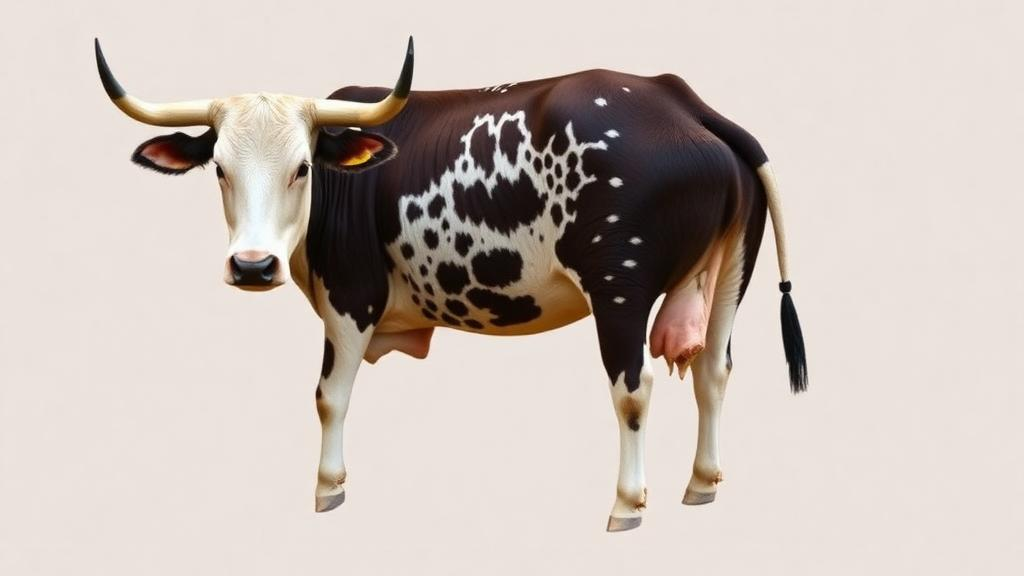
Some of China’s most valued beef cattle carry within their genomes a story of ancient migration, hybridization, and human selection that has never been fully told. A new whole-genome sequencing study of indigenous Central Plains cattle has now mapped that story in fine detail, revealing how the mingling of two distinct cattle lineages produced animals prized for meat quality, disease resistance, and the ability to thrive on rough forage. The research, published in BMC Genomics, analyzed five representative breeds from the Central Plains region of China and uncovered both the ancestry components that shape their diversity and the specific genomic regions that bear the fingerprints of strong natural and artificial selection.
Cattle in China trace their origins to two major lineages of the domestic cow. The first is Bos taurus, the humpless taurine cattle that were domesticated in the Fertile Crescent and spread westward into Europe and eastward across Asia. The second is Bos indicus, the humped zebu or indicine cattle of South Asian origin, well adapted to hot, humid climates and resistant to many tropical parasites and diseases. In most of the world these lineages remained geographically separated, but in China, and particularly in the Central Plains, they met and interbred extensively over centuries of animal husbandry. The result is a set of cattle populations whose genomes are living mosaics of taurine and indicine ancestry, combining traits from both parental stocks in ways that modern breeders find highly valuable.
To dissect this hybrid heritage, the research team led by Chenqi Bian, Haijian Cheng, Wei You, Enliang Song, and Chuzhao Lei generated new whole-genome sequencing data for 120 cattle from two Central Plains breeds, the Luxi and Bohai Black cattle. They then integrated these freshly sequenced genomes with publicly available whole-genome sequences from 106 cattle representing three additional Central Plains breeds, namely Mengshan, Jiaxian Red, and Qinchuan cattle, and with data from 225 domestic cattle drawn from public databases. This combined dataset allowed the researchers to place the Central Plains breeds in a broader context, comparing them against reference populations that included European taurine, Eurasian taurine, East Asian taurine, East Asian indicine, and South Asian indicine cattle. Such a design is essential for disentangling the contributions of different ancestral groups to the modern genomes of hybrid breeds.
The analysis of population genetic diversity produced a clear and telling pattern: the level of genetic diversity within each Central Plains breed is closely tied to the proportions of taurine and indicine ancestry it carries. Breeds with more balanced admixture between the two lineages tend to harbor more genetic variation, while those with ancestry skewed toward one lineage or the other show correspondingly reduced diversity. Among the five populations examined, Luxi cattle stood out with the highest level of genetic diversity, followed in descending order by Jiaxian Red, Bohai Black, Qinchuan, and Mengshan cattle. This ranking provides breeders with an immediate practical insight, because genetic diversity is the raw material on which future selection depends. Populations with high diversity retain more capacity to respond to changing breeding goals, disease pressures, and environmental challenges, whereas low-diversity populations risk the accumulation of deleterious recessive variants and reduced fertility.
The study went beyond simple diversity measures by deploying a battery of population genetic tools designed to detect the marks that selection leaves in the genome. When a particular genetic variant confers an advantage, whether through natural selection for environmental tolerance or through deliberate human choice for production traits, the chromosomal segment carrying that variant rises in frequency faster than neighboring segments would under neutral drift. This process, known as a selective sweep, leaves characteristic signatures such as extended regions of heightened homozygosity and elevated genetic differentiation between populations. The researchers applied the fixation index, or FST, which quantifies genetic distance between populations, alongside the cross-population extended haplotype homozygosity statistic, or XP-EHH, which detects haplotypes that have swept to fixation in one population but remain polymorphic in another. By requiring candidate regions to appear in both analyses, the team strengthened the reliability of their selection signals.
The strongest and most striking selection signal emerged in Luxi cattle, one of the oldest and most celebrated draft and beef breeds of the Central Plains. On Bos taurus autosome 3, within a region spanning roughly 8.90 to 9.40 megabases, the researchers identified a strongly selected segment containing four genes: SLAMF1, SLAMF6, CD84, and VANGL2. The first three of these belong to the SLAM family of immune receptors, signaling molecules that sit on the surface of immune cells and coordinate responses to pathogens. Their concentration in a swept haplotype suggests that immune function has been a major target of selection in Luxi cattle, consistent with the breed’s reputation for strong disease resistance. VANGL2, the fourth gene in the region, participates in planar cell polarity pathways and has roles in development, adding a further layer of functional interest to this candidate interval.
A second candidate region in Luxi cattle, located on Bos taurus autosome 2 between 125.68 and 125.81 megabases, contained three genes: WASF2, AHDC1, and FGR. These genes are primarily associated with the binding of actin, the structural protein that forms the cytoskeleton of every cell. Actin remodeling underlies countless cellular processes, from cell migration and shape change to immune cell function, and the presence of these genes in a selected region hints that cellular structural dynamics may have contributed to the adaptive profile of the breed. Functional enrichment analyses, conducted using Gene Ontology and Kyoto Encyclopedia of Genes and Genomes frameworks and performed when Luxi cattle were compared separately against East Asian indicine populations and against taurine cattle populations, helped to categorize the biological themes represented in the selected genes and confirmed the prominence of immune-related functions among the candidates.
Coat color, one of the most visually obvious and historically deliberate traits in cattle breeding, also yielded a genomic explanation in this study. In Bohai Black cattle, a breed named for its uniformly dark coat, the researchers identified a missense mutation in the melanocortin 1 receptor gene, universally abbreviated MC1R, located at position 14,705,671 on Bos taurus autosome 18 and catalogued as rs109688013. This mutation had been reported previously and is predicted to alter the structure of the MC1R protein, a key regulator of pigment production in melanocytes. Variants of MC1R are among the classic determinants of coat color variation across mammals, switching the balance between the dark pigment eumelanin and the red-yellow pigment pheomelanin. The identification of this variant in Bohai Black cattle connects the breed’s characteristic appearance to a specific molecular change, and supplementary analyses of genotype frequencies across 451 cattle, together with haplotype network analysis of the MC1R gene, showed how this mutation is distributed among black-coated and yellow-coated animals across breeds.
The broader significance of the work lies in what it says about hybrid cattle as a genetic resource. Taurine-indicine hybrids, the authors conclude, provide a valuable reservoir for enhancing key traits in cattle breeding programs. The Central Plains breeds combine the meat quality and docility often associated with taurine cattle with the heat tolerance, forage flexibility, and disease resistance contributed by indicine ancestry, and the genomic regions under selection identified here point to the biological pathways, particularly immunity and cellular structure, through which these advantages have been consolidated. For China’s beef industry, in which Central Plains breeds such as Qinchuan and Luxi are flagship animals, the findings offer a molecular roadmap for future improvement: markers linked to the selected regions can be incorporated into genomic selection schemes, and the diversity rankings of the breeds can inform strategies to conserve genetic variation while advancing production goals.
The study also demonstrates the power of integrating newly generated sequencing data with public archives to answer questions about breed history that no single dataset could resolve. By comparing Central Plains cattle against five reference groups spanning the taurine and indicine spectrum, the researchers could assign ancestry components with confidence and detect selection signals that distinguish the hybrids from both parental stocks. As whole-genome sequencing becomes ever cheaper, similar approaches are likely to be applied to other admixed livestock populations worldwide, from African sanga cattle to tropical crossbred dairy herds. For the ancient cattle of China’s Central Plains, the message of their genomes is now legible: centuries of admixture and selection have crafted animals whose diversity and adaptation are written in their DNA, and that record is ready to be read and used by the breeders who will shape the next generation of Chinese beef cattle.
Subject of Research: Genomic diversity, ancestry, and selection signatures in indigenous hybrid cattle of China's Central Plains
Article Title: Genomic signatures of diversity, adaptation and selection in indigenous Central Plains cattle in China
Article References: Bian, C., Cheng, H., You, W., Song, E., & Lei, C. (2026). Genomic signatures of diversity, adaptation and selection in indigenous Central Plains cattle in China. BMC Genomics. https://doi.org/10.1186/s12864-026-13386-3
Image Credits: AI Generated
DOI: 10.1186/s12864-026-13386-3
Keywords: Chinese cattle, Central Plains cattle, Bos taurus, Bos indicus, hybridization, genetic diversity, selection signatures, whole-genome sequencing, MC1R, Luxi cattle, Bohai Black cattle, coat color
Cite Scienmag News
Juliet Wilcox. (October 1, 2026). Ancient Hybrid Cattle of China’s Central Plains Reveal Genomic Secrets of Adaptation and Selection. Scienmag. https://scienmag.com/ancient-hybrid-cattle-of-chinas-central-plains-reveal-genomic-secrets-of-adaptation-and-selection/
Juliet Wilcox. "Ancient Hybrid Cattle of China’s Central Plains Reveal Genomic Secrets of Adaptation and Selection." Scienmag, 1 October 2026, https://scienmag.com/ancient-hybrid-cattle-of-chinas-central-plains-reveal-genomic-secrets-of-adaptation-and-selection/. Accessed 4 October 2026.
Juliet Wilcox. "Ancient Hybrid Cattle of China’s Central Plains Reveal Genomic Secrets of Adaptation and Selection." Scienmag. October 1, 2026. https://scienmag.com/ancient-hybrid-cattle-of-chinas-central-plains-reveal-genomic-secrets-of-adaptation-and-selection/


