


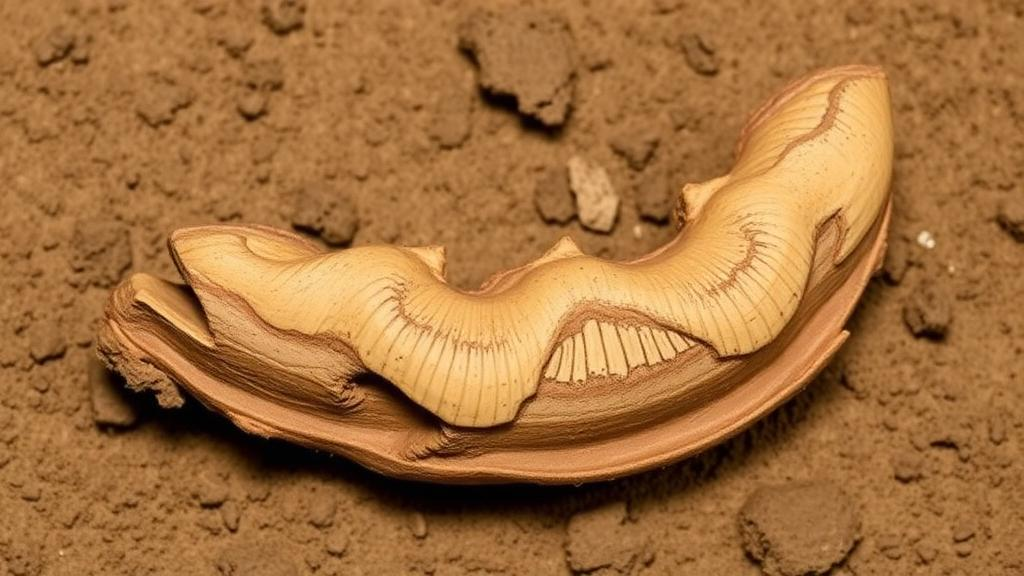
A single fossilized molar, pulled from the sediments of a prehistoric site in northern Israel, has opened an extraordinary window onto a world that vanished hundreds of thousands of years ago. The tooth belonged to Palaeoloxodon antiquus, the straight-tusked elephant, one of the largest land mammals ever to walk the Pleistocene landscapes of the Old World. Recovered at Gesher Benot Ya’aqov, a site where early humans knapped stone tools roughly 700,000 years ago, the specimen has now been transformed into a biological archive of an entire ecosystem. In a study published in Quaternary Science Reviews, researchers led by Hannah Farrell, a PhD candidate at the University of Haifa, combined an unusually broad suite of analytical techniques to reconstruct the woodlands, wetlands, and waterways that once flourished in the Jordan Rift Valley, south of today’s Hula Valley.
The site itself, known in the study as GBY-NBA and located near the Daughters of Jacob Bridge, was excavated by Prof. Gonen Sharon of Tel-Hai University of Kiryat Shmona in the Galilee and his colleagues. The elephant remains, a giant molar and fragments of tusk, were discovered alongside basalt handaxes and cleavers, the hallmark implements of the Acheulian tradition. That technological complex, characterized by large cutting tools shaped through deliberate flaking, represents one of the earliest and most widespread stone-tool industries in human history, and its presence at the site places some of the region’s earliest toolmakers in direct association with the carcasses or remains of megafauna. Rather than treating the elephant as an isolated find, the research team used the tooth as a proxy for the broader environment, asking what the animal ate, where it lived, and what its surroundings looked like during the Middle Pleistocene.
The methodological backbone of the study is a multi-proxy approach that few fossil sites can support. The team employed computed tomography scanning and three-dimensional reconstruction to examine the internal structure of the molar without damaging it, microscopic wear analysis to read the fine scratches and pits left on the enamel by the animal’s final meals, isotope geochemistry to trace the carbon signatures of the vegetation the elephant consumed, and pollen studies of the surrounding sediments to characterize the plant communities of the landscape. Each technique interrogates a different strand of evidence, and together they converge on a remarkably coherent picture. According to the researchers, the evidence points to a long-lasting mosaic of woodlands, grasslands, marshes, rivers, and shallow-water habitats, a resource-rich environment capable of sustaining both enormous herbivores and the human populations that shared the valley with them.
The isotope results are particularly telling. Carbon isotope values preserved in the elephant’s dental tissues indicate that the animal lived in a consistently well-watered environment, feeding on vegetation that grew under humid, stable conditions rather than in an arid or highly seasonal setting. This matters because the straight-tusked elephant was a keystone species of Pleistocene ecosystems across Europe and Asia, and its dietary ecology is often used as an indicator of habitat character. At Gesher Benot Ya’aqov, the isotopic signal aligns with the pollen record recovered from the site’s sediments, which revealed abundant wetland vegetation including reeds, sedges, willow, tamarisk, and a variety of aquatic plants. The concordance between the chemistry of the tooth and the botanical record of the sediments gives the reconstruction unusual internal consistency.
Pollen analysis, carried out by Minji Jin and Dafna Langgut of Tel Aviv University, adds the vegetational dimension that the tooth alone cannot provide. The assemblage of reeds, sedges, willows, and tamarisks speaks to standing water and riverine woodland, while the broader spectrum of the pollen record reflects the grasslands and denser woodlands that framed the wetlands. Such a mosaic would have offered elephants and other large mammals a continuous supply of food and water through the seasons, and it would have offered early humans something equally valuable: predictable encounters with game, reliable freshwater, raw materials, and sheltered corridors of movement. The study’s authors argue that the Hula Valley region formed part of a stable ecological refuge within the Levantine Corridor, the great land bridge connecting Africa and Eurasia along which hominins, animals, and plants moved for hundreds of thousands of years.
That corridor framing gives the findings a significance that extends well beyond a single valley. The Levantine Corridor is one of the most intensively studied pathways in human evolutionary geography, the terrestrial route through which early members of our lineage repeatedly expanded out of Africa and into Eurasia. Understanding what that corridor actually looked like at any given moment in the Pleistocene is essential for understanding why populations moved when they did, and why certain places preserve dense concentrations of archaeological material while others do not. The Gesher Benot Ya’aqov reconstruction suggests that the Jordan Rift Valley functioned as a kind of waystation, a persistently watered and biologically generous landscape embedded in a corridor that could otherwise be demanding. As Prof. Sharon puts it, understanding how humans and animals responded to environmental change hundreds of thousands of years ago helps us better understand the forces that shaped our species.
Sharon’s framing of the result emphasizes the ecological logic of human presence in the valley. The availability of water, vegetation, and animal resources shaped where humans and wildlife could survive, he notes, and the wetlands, rivers, and woodlands of the Hula Valley helped sustain life along one of the world’s earliest migration corridors. In his words, the landscape offers a rare opportunity to understand the ecological conditions that supported both animals and human populations nearly 700,000 years ago. The association of Acheulian tools with elephant remains at the site is consistent with a picture in which early humans exploited the same resource base as the megafauna around them, whether through hunting, scavenging, or simply sharing the same water sources and travel routes. The study, an observational analysis of the dental remains and their sedimentary context, is careful to reconstruct the shared environment rather than to claim a specific behavioral scenario for the association.
The technical achievement of the study lies in the integration of its methods. Dental microwear, for example, records the texture of an animal’s diet over its final days or weeks of life, distinguishing browsing on woody vegetation from grazing on grasses and from mixed feeding. Stable carbon isotopes, meanwhile, integrate diet over longer spans, reflecting the photosynthetic pathways of the plants consumed. CT scanning and 3D reconstruction allow researchers to assess dental morphology and internal anatomy non-destructively, preserving the specimen for future work. Layered onto these tooth-centered analyses, the pollen record provides the regional vegetation signal, and the sedimentary context anchors everything in time and space. The convergence of these independent lines of evidence on a single environmental picture, a well-watered mosaic of wetlands, rivers, grasslands, and woodland, is what gives the reconstruction its persuasive power, and it demonstrates how much information a single well-preserved tooth can carry when examined with a full analytical toolkit.
The research was conducted by Hannah Farrell of the University of Haifa in collaboration with Cheryl A. Makarewicz, who led the isotope studies, and Nimrod Marom, who contributed the archaeozoological expertise, both also of the University of Haifa, together with the pollen team of Minji Jin and Dafna Langgut from Tel Aviv University. The work builds directly on the excavations directed by Prof. Sharon at the GBY-NBA site, and it exemplifies a growing trend in Quaternary science: the treatment of individual fossils as archives of entire paleoenvironments rather than as isolated curiosities. For a site already famous for its evidence of early human technology and behavior in the Jordan Rift Valley, the elephant molar adds an environmental foundation, showing that the toolmakers of Gesher Benot Ya’aqov inhabited a landscape of extraordinary and enduring productivity, a green refuge whose rivers, marshes, and woodlands sustained giants and humans alike along the crossroads of continents.
Subject of Research: Pleistocene paleoecology and Acheulian human environments at Gesher Benot Ya'aqov, Israel
Article Title: 700,000-year-old elephant tooth reveals a lost ecosystem shared by early humans in the levant
Article References: 700,000-year-old elephant tooth reveals a lost ecosystem shared by early humans in the levant. (n.d.). Original publication
Image Credits: AI Generated
DOI: Not provided
Keywords: Palaeoloxodon antiquus, Gesher Benot Ya'aqov, Acheulian, Levantine Corridor, Hula Valley, Pleistocene, stable isotopes, pollen analysis, dental microwear, CT scanning, straight-tusked elephant, Jordan Rift Valley
Cite Scienmag News
Courtney Benton. (October 7, 2026). Ancient Elephant Tooth Reconstructs a 700,000-Year-Old Haven for Early Humans. Scienmag. https://scienmag.com/ancient-elephant-tooth-reconstructs-a-700000-year-old-haven-for-early-humans/
Courtney Benton. "Ancient Elephant Tooth Reconstructs a 700,000-Year-Old Haven for Early Humans." Scienmag, 7 October 2026, https://scienmag.com/ancient-elephant-tooth-reconstructs-a-700000-year-old-haven-for-early-humans/. Accessed 7 October 2026.
Courtney Benton. "Ancient Elephant Tooth Reconstructs a 700,000-Year-Old Haven for Early Humans." Scienmag. October 7, 2026. https://scienmag.com/ancient-elephant-tooth-reconstructs-a-700000-year-old-haven-for-early-humans/


