


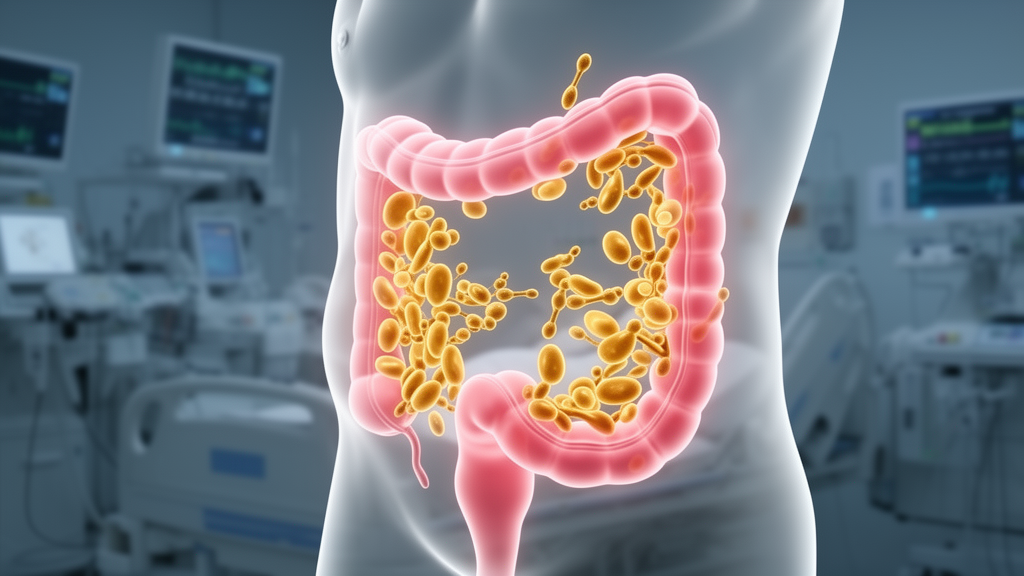
Patients in intensive care units who carry the multidrug-resistant fungus Candida auris in their gut are far more likely to be anaemic and to have recently received antifungal drugs than patients who test negative, according to a retrospective study conducted at a single Chinese hospital. Researchers at Guangdong Provincial Second Hospital of Traditional Chinese Medicine analysed 970 intensive care patients admitted between January 2024 and December 2025 and found that Candida auris appeared in the stool cultures of 13 of them, a detection rate of 1.34 per cent. Using two routinely collected clinical indicators, the team built a simple predictive tool that distinguished carriers from non-carriers with an area under the receiver operating characteristic curve of 0.828, where 0.5 indicates no discriminatory power and 1.0 indicates perfect discrimination. The findings, published in Frontiers in Cellular and Infection Microbiology, suggest that targeted screening based on bedside information could help intensive care units identify patients most likely to harbour the fungus before it spreads.
Candida auris is an emerging yeast that was first isolated in 2009 from the external ear canal of a hospitalised patient in Japan and has since been detected in more than 50 countries and regions. Under the microscope it presents as ovoid-to-ellipsoidal budding yeast cells and rarely forms true hyphae or pseudohyphae in routine culture. The pathogen resists commonly used antifungal agents such as fluconazole and can survive for weeks to months on both biotic and abiotic surfaces, a property that favours efficient cross-transmission within hospitals. Its virulence-related mechanisms include biofilm formation on medical devices, secretion of aspartic proteases and phospholipases for nutrient acquisition and tissue damage, and a capacity to partially evade killing by host innate-immune neutrophils. Invasive bloodstream infection with Candida auris carries reported crude in-hospital mortality rates ranging from 30 to 72 per cent in critically ill populations, which makes intensive care units a focal point of concern for public health authorities.
The gastrointestinal tract serves as the primary ecological niche for Candida auris colonisation, and that colonisation status is both a significant risk factor for subsequent invasive infection and a critical reservoir for nosocomial cross-transmission and outbreak propagation. Reports indicate that 25 per cent of colonised critically ill patients progress to candidemia, resulting in severe adverse outcomes. Intensive care patients, characterised by prolonged hospitalisation, compromised immunity, frequent invasive procedures and widespread broad-spectrum antimicrobial use, constitute a high-risk cohort for both colonisation and infection. In China, Candida auris infection cases have grown rapidly, with new cases increasing by more than 300 per cent between 2023 and 2024, and the majority of these cases are concentrated in intensive care settings. Multiple healthcare institutions and intensive care units worldwide have now reported outbreaks of Candida auris infection.
The study team monitored all 1,074 patients admitted to the intensive care unit during the two-year window, performing 1,578 stool routine examinations with microscopic inspection and submitting 1,641 stool specimens, a test-level count that includes repeated samples from individual patients, for fungal culture. Cultures were ordered for patients with diarrhoea, abnormal stool consistency, fungal detection on microscopic examination of faecal smears, or when the attending physician deemed testing clinically necessary. A patient was classified as Candida auris-positive if any single stool culture yielded the organism. After applying exclusion criteria that removed patients under 18 years of age, stays shorter than 24 hours, invalid samples, known prior Candida auris colonisation or infection, and repeated admissions, 970 unique patients remained for analysis. The authors caution that systematic stool culture data were not available for asymptomatic patients, so some positive cases may have been missed and the true prevalence of gastrointestinal carriage at the facility may be underestimated.
Fungal isolation occurred in 171 cases overall, and Candida auris accounted for 7.6 per cent of those intestinal isolates, ranking behind Candida glabrata at 38.0 per cent, Candida tropicalis at 26.9 per cent and Candida albicans at 15.8 per cent, and ahead of Candida parapsilosis at 5.3 per cent and Candida krusei at 3.5 per cent. Laboratory identification relied on MALDI-TOF mass spectrometry, and antimicrobial susceptibility testing was performed with ATB FUN 3 strips using breakpoints from the United States Centers for Disease Control and Prevention and the European Committee on Antimicrobial Susceptibility Testing: fluconazole at 32 micrograms per millilitre or higher, amphotericin B at 2 micrograms per millilitre or higher, and 5-flucytosine at 0.5 micrograms per millilitre or higher. Only 8 of the 13 isolates underwent susceptibility testing; two patients had already been discharged when the organism was detected, and clinicians judged testing unnecessary for the other three.
The susceptibility results underscored the resistance problem. Seven of the eight tested isolates, or 87.5 per cent, were resistant to fluconazole, one was intermediate, and none were susceptible. Resistance to 5-fluorocytosine stood at 25.0 per cent, with 62.5 per cent susceptible and 12.8 per cent intermediate, while all eight isolates remained susceptible to amphotericin B. The authors note that this fluconazole resistance rate is higher than rates currently reported elsewhere, and they attribute the difference to disruption of gut microbial homeostasis caused by antibiotic use and prior antifungal exposure, which appears to have favoured the survival of highly resistant strains within the intestinal environment.
Univariate comparisons revealed no statistically significant differences between the 13 carriers and the 957 non-carriers in age, with medians of 72 and 73 years respectively, in sex distribution, or in Acute Physiology and Chronic Health Evaluation II scores, which had medians of 24 and 20 points. Comorbidities such as renal insufficiency and hepatic insufficiency also showed no significant differences. What did differ was striking: anaemia was present in 76.9 per cent of the positive group versus 25.2 per cent of the negative group, prior antifungal medication use in 53.8 per cent versus 8.4 per cent, mechanical ventilation before stool culture in 61.5 per cent versus 24.1 per cent, and the median duration of broad-spectrum antibiotic therapy was 7 days versus 5 days, all statistically significant. Carriers also fared worse on outcomes: their median duration of antibiotic use after admission was 26 days versus 18 days, and their median hospital stay was 16 days versus 6 days, nearly a threefold difference. Total hospital costs and discharge status showed no statistically significant differences between the groups.
To distil these signals into a usable tool, the researchers entered 21 variables, including demographics, illness severity, comorbidities, invasive procedures and medication exposures, into least absolute shrinkage and selection operator logistic regression, which reduced the model to two predictors: anaemia and antifungal drug exposure before stool culture. In multivariate analysis, anaemia carried an odds ratio of 7.784, with a 95 per cent confidence interval of 2.081 to 29.119 and a p-value of 0.002, while antifungal exposure carried an odds ratio of 9.687, with a 95 per cent confidence interval of 3.099 to 30.287 and a p-value below 0.001. The resulting nomogram achieved an area under the curve of 0.828, exceeding the 0.727 for anaemia alone and the 0.759 for antifungal exposure alone. Calibration curves showed close agreement between predicted and observed detection rates, and decision curve analysis indicated net clinical benefit for interventions applied within a 0 to 15 per cent risk threshold.
The authors propose biological explanations for both associations. Prolonged broad-spectrum antibiotic exposure indiscriminately eradicates commensal anaerobic bacteria such as Bacteroides and Firmicutes, which normally maintain resistance to fungal colonisation by secreting short-chain fatty acids and inducing the intestinal epithelium to produce the antifungal peptide LL-37. Once these bacterial communities are depleted, their protective effects on mucosal integrity and microbial competition disappear, and resident intestinal fungi that might otherwise restrain Candida auris through nutrient competition or antifungal metabolites may also be disrupted. Repeated antifungal exposure, meanwhile, continuously selects for Candida auris clones carrying ERG11 gene mutations and upregulated TAC1B efflux pumps, enhancing their survival advantage in the gut. As for anaemia, the authors suggest it may reflect coexisting conditions such as chronic kidney disease and malnutrition that compromise host defence, altered iron metabolism that damages intestinal mucosal integrity and creates a microenvironment favourable to fungal proliferation, or systemic inflammation that disturbs gut microbiota balance.
The study carries important limitations. Its single-centre retrospective design and the small size of the positive group, just 13 patients, may limit statistical power for variables such as heart failure and pneumonia, and multicentre validation is needed before the model can be generalised. The researchers did not differentiate types of anaemia, which may exert varying effects on colonisation risk, and they did not track long-term outcomes such as progression to invasive infection. Notably, none of the 13 colonised patients in this cohort subsequently developed candidemia, a discrepancy the authors attribute to possible differences in population distribution and in pathogenicity among Candida auris strains, a hypothesis they say requires genomic and phenotypic investigation and longer-term observation. The team also stresses that the associations reported here are observational and do not establish causation. Future work, they write, should pursue multicentre prospective studies, test in vitro whether iron metabolism drives fungal proliferation, and evaluate whether model-guided prevention strategies such as early isolation and decolonisation reduce nosocomial transmission. For now, the nomogram offers intensive care clinicians a way to estimate colonisation probability from two routine indicators, prioritising stool culture or molecular testing for high-scoring patients and concentrating infection control resources where they are most likely to matter.
Subject of Research: Risk factors and predictive modelling for gastrointestinal Candida auris colonisation in intensive care unit patients
Article Title: Clinical characteristics of ICU patients with gastrointestinal colonisation by Candida auris
Article References: Fang, L., Duan, Y., Cai, D., Mei, C., Hong, X., & Li, X. (2026). Clinical characteristics of ICU patients with gastrointestinal colonisation by Candida auris. Frontiers in Cellular and Infection Microbiology, 16, Article 1944762. https://doi.org/10.3389/fcimb.2026.1944762
Image Credits: AI Generated
DOI: 10.3389/fcimb.2026.1944762
Keywords: Candida auris, gastrointestinal colonisation, intensive care unit, anaemia, antifungal resistance, nomogram, predictive model, infection control, fluconazole resistance, stool culture, LASSO regression, nosocomial transmission
Cite Scienmag News
Kristina Jarvis. (October 24, 2026). Anaemia and antifungal exposure flag Candida auris gut carriage in ICU. Scienmag. https://scienmag.com/anaemia-and-antifungal-exposure-flag-candida-auris-gut-carriage-in-icu/
Kristina Jarvis. "Anaemia and antifungal exposure flag Candida auris gut carriage in ICU." Scienmag, 24 October 2026, https://scienmag.com/anaemia-and-antifungal-exposure-flag-candida-auris-gut-carriage-in-icu/. Accessed 24 October 2026.
Kristina Jarvis. "Anaemia and antifungal exposure flag Candida auris gut carriage in ICU." Scienmag. October 24, 2026. https://scienmag.com/anaemia-and-antifungal-exposure-flag-candida-auris-gut-carriage-in-icu/


