


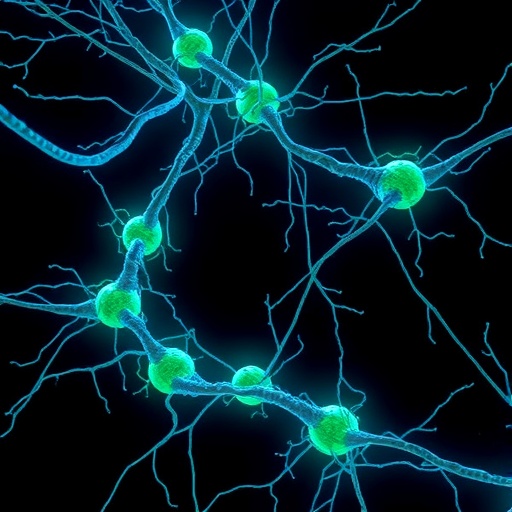
In a groundbreaking new study set to be published in Nature Neuroscience on May 14, 2026, researchers at Northwestern University have unveiled novel insights into the underpinnings of amyotrophic lateral sclerosis (ALS), commonly known as Lou Gehrig’s disease. This devastating neurodegenerative disorder is notorious for its variability in progression and survival time—patients typically survive around three years post-diagnosis, yet some endure for a decade or more. The mystery behind this heterogeneity has long eluded scientists, but the latest research reveals a complex cascade of molecular and immune events that drive disease progression.
ALS begins insidiously with the dysfunction of motor neurons, the essential nerve cells responsible for controlling voluntary muscle movement. The study highlights that an early and critical pathological trigger involves the misbehavior of the TDP-43 protein, which accumulates abnormally within motor neurons. This dysregulation sets off a domino effect, igniting a highly detrimental inflammatory response both in the central nervous system and peripheral immune compartments. The inflammation not only reflects the body’s attempt to respond to cellular distress but paradoxically exacerbates neuronal degeneration, accelerating disease trajectory.
Using state-of-the-art single-cell RNA sequencing and spatial transcriptomics, the researchers examined nearly 300 patients’ blood and spinal cord samples—including living subjects and postmortem tissues. These cutting-edge technologies enabled an unprecedented resolution of immune cell behavior and gene expression across different ALS subtypes: genetic ALS, associated particularly with mutations in the C9orf72 gene, and sporadic non-genetic ALS. The analyses uncovered distinctive immune signatures that vary according to genetic status, disease stage, and progression speed, marking the intensity and nature of the inflammation as pivotal determinants of patient prognosis.
Intriguingly, the study demonstrates that the quantity of inflammation within the spinal cord does not influence when ALS symptoms first appear, but crucially dictates how rapidly the disease advances and ultimately the duration of survival. Patients exhibiting lower inflammatory signatures in spinal tissues tended to have a more protracted course, suggesting that immune-mediated damage plays a central role in driving rapid neurodegeneration. This insight reframes the therapeutic landscape for ALS, spotlighting immune modulation as a promising target to decelerate disease progression.
The hallmark accumulation of TDP-43 within motor neurons emerges as a nexus connecting neuron-intrinsic dysfunction to immune system activation. Immune cells were found to congregate intensively at the sites of motor neuron loss and proteinopathy, with gene activity profiles revealing upregulation of complement system components and other pro-inflammatory pathways. These complement proteins function as frontline defenders against pathogens and cellular injury but their hyperactivation within the nervous system fosters a hostile environment, accelerating neuronal death.
What distinguishes this research is the spatially resolved molecular mapping enabled by spatial transcriptomics, which allowed scientists to pinpoint gene expression changes in the exact anatomical locations where neurodegeneration unfolds. This level of precision clarifies how inflammation is not a diffuse, generalized occurrence but a targeted, site-specific phenomenon tightly linked to pathological hallmarks of ALS. It also underscores the importance of timing and anatomical context when devising immune-directed therapies.
Further, the divergence in immune responses between genetic and sporadic ALS subtypes highlights that a one-size-fits-all therapeutic approach is unlikely to succeed. The genetic form’s distinct inflammatory gene profile contrasts substantially with the sporadic cases, emphasizing the necessity of personalized medicine strategies tailored to individual molecular and immune landscapes. The current findings thus chart a path toward more nuanced, subtype-specific interventions that could more effectively mitigate the disease.
Building on these findings, ongoing efforts aim to dissect the motor circuit comprehensively—from cortical motor neuron populations to spinal pathways and peripheral muscle targets—to trace the spatial and temporal evolution of inflammatory signals throughout the entire motor system. This holistic mapping will be instrumental in discerning critical nodes and mechanisms driving rapid progression, ultimately informing rational therapeutic design to halt or slow down disease spread.
Another crucial research avenue involves elucidating the causal link between TDP-43 pathology and immune activation. While TDP-43’s accumulation is known to disrupt neuronal function, how exactly it triggers peripheral and central immune responses remains unclear. Studies underway in the lab of Evangelos Kiskinis seek to unravel this mechanistic connection, potentially revealing new molecular targets that can interrupt the harmful feedback loop between neuronal proteinopathy and inflammation.
These compelling advances change the fundamental understanding of ALS from a static neurodegenerative process to a dynamic interplay between selective neuronal vulnerability and maladaptive immune responses. They reinforce the concept that immune cells, although intrinsically protective, become harmful collaborators in the neurodegenerative cascade. Thus, carefully calibrated immunomodulation offers a promising therapeutic strategy capable of extending life expectancy and improving quality of life for ALS patients.
The study’s unprecedented scale and depth—leveraging blood and spinal cord samples from hundreds of ALS patients—and the use of cutting-edge genomics techniques position it as a milestone in neurodegenerative disease research. The integration of single-cell RNA sequencing with spatial transcriptomics sets a new standard for exploring the cellular and molecular complexity underlying ALS, bridging gaps between genetic triggers, neuroinflammation, and clinical outcomes.
As the research community digests these findings, the focus now turns to translating them into effective treatments. By elucidating how immune dysfunction drives disease heterogeneity, this study paves the way for clinical trials targeting specific inflammatory pathways. Future therapeutics may employ tailored immune signatures as biomarkers for patient stratification and therapy optimization, ushering in a new era of precision medicine in ALS care.
In summary, the Northwestern Medicine team has illuminated a critical domino-like cascade in ALS pathogenesis: starting with TDP-43 proteinopathy inside motor neurons, propagating through an aberrant immune response in the bloodstream and spinal cord, and culminating in variable neurodegeneration influenced by inflammation intensity. This mechanistic insight enriches understanding of why ALS progression varies so greatly among patients and offers tangible avenues for developing personalized, immune-targeted interventions that can transform the disease’s devastating trajectory.
News Publication Date:
14-May-2026
Web References:
https://www.nature.com/articles/s41593-026-02300-5
References:
Northwestern University Feinberg School of Medicine study published in Nature Neuroscience, May 14, 2026, DOI: 10.1038/s41593-026-02300-5
Cite Scienmag News
Diana Fleming. (May 14, 2026). ALS Progresses Through a Domino-Like Chain Reaction Initiated in Nerve Cells. Scienmag. https://scienmag.com/als-progresses-through-a-domino-like-chain-reaction-initiated-in-nerve-cells/
Diana Fleming. "ALS Progresses Through a Domino-Like Chain Reaction Initiated in Nerve Cells." Scienmag, 14 May 2026, https://scienmag.com/als-progresses-through-a-domino-like-chain-reaction-initiated-in-nerve-cells/. Accessed 3 September 2026.
Diana Fleming. "ALS Progresses Through a Domino-Like Chain Reaction Initiated in Nerve Cells." Scienmag. May 14, 2026. https://scienmag.com/als-progresses-through-a-domino-like-chain-reaction-initiated-in-nerve-cells/


