


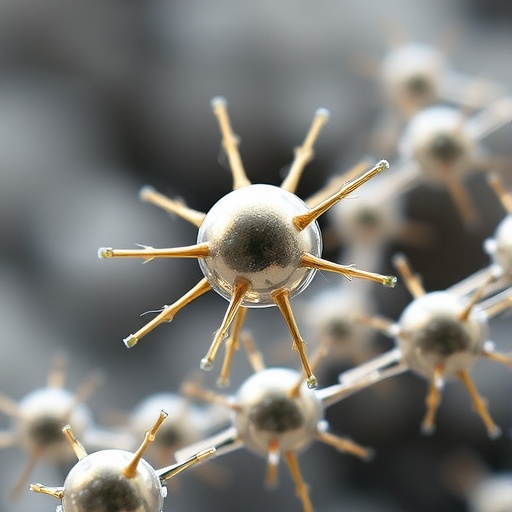
In a groundbreaking advancement slated to reshape the future of medical diagnostics and therapeutics, researchers from Johns Hopkins University have unveiled a novel class of biodegradable, all-metal microrobots capable of performing intricate functions within the gastrointestinal system. These diminutive robotic agents, roughly the size of microbes, possess the unique ability to morph their shape post-ingestion, facilitating both painless biopsy sample collection and targeted drug delivery. Unlike traditional endoscopic methods, which often involve discomfort, invasiveness, and the risk of tissue damage, these microrobots promise a minimally invasive alternative. Their eventual dissolution within the body eliminates the need for retrieval, marking a significant milestone in patient-friendly medical technology.
Central to this innovation is the microrobots’ composition: an entirely metallic framework engineered to maintain sufficient rigidity and strength for tissue penetration and manipulation. This is a remarkable departure from existing biodegradable microrobots predominantly made from polymers or hydrogels, which, while biocompatible, often lack the mechanical robustness needed for tasks like cutting or gripping tissue with precision. The all-metal nature of these devices ensures that they can perform mechanical functions akin to surgical instruments at a microscopic scale, overcoming limitations previously imposed by material weaknesses.
The operational paradigm of these microrobots involves their encapsulation within an ingestible capsule packed with thousands of individual units. Upon reaching their designated location within the gastrointestinal tract, the microrobots activate their pre-programmed shape transformation abilities. They reconfigure into complex two-dimensional and three-dimensional geometries, such as minuscule grippers designed to latch onto tissue or microinjectors tailored for delivering precise dosages of medication. This transformational capability draws inspiration from principles of materials engineering, where the interplay of metallic layer thickness and intrinsic stress induces controlled bending and folding, enabling the robots to adopt and retain specific configurations essential for their functional roles.
A particularly striking feature of these microrobots is their programmable biodegradability, achieved through meticulous control over metal layer composition and thickness. By finely tweaking these parameters, researchers can dictate how long each microrobot remains functional before it gradually dissolves in the physiological environment. Depending on therapeutic requirements, degradation timescales can span from mere minutes to several months. This temporal control ensures safety and efficacy; the devices persist just long enough to complete their tasks without leaving residual material to provoke adverse reactions or obstructions within the gastrointestinal tract.
The capability of these microrobots to interact delicately with biological tissues was rigorously demonstrated in murine models. Experimental trials showed that the devices could infiltrate the mucosal lining of the intestines without puncturing or causing damage that might induce bleeding or inflammation. This precision ensures not only safety but also opens avenues for effective localized drug delivery and tissue sampling in areas of the gastrointestinal tract that are challenging to access via conventional instruments. The microrobots’ adhesives and mechanical grasp are powered solely by their innovative material design, foregoing the need for external power sources or bulky electronics.
From a pharmaceutical perspective, these microrobots represent a leap forward in drug administration for a range of gastrointestinal disorders including inflammatory bowel disease, gastrointestinal bleeding, and cancer. Their ability to transform into microinjectors that deliver biologic agents—such as anti-tumor necrosis factor (TNF) antibodies and glucagon-like peptide-1 (GLP-1) analogs—directly beneath the mucosal lining enhances targeted absorption and efficacy. This strategy contrasts sharply with systemic delivery methods, which often entail widespread distribution of drugs and frequent, sometimes uncomfortable injections or hospital visits. Such precision dosing could revolutionize chronic disease management by improving patient compliance, reducing side effects, and optimizing therapeutic outcomes.
The fabrication process for these microrobots is equally impressive, distinguished by a novel liquid-free technique. This method bypasses traditional wet chemical manufacturing steps, enabling the production of ultra-small metallic structures composed of water-soluble metals and metal oxides. These materials confer the robots with their hallmark biodegradability, as they slowly dissolve upon exposure to bodily fluids post-deployment. Moreover, the novel manufacturing process consumes only a few micrograms of metal per robot, a quantity rigorously engineered to remain within established biosafety limits, thus addressing concerns over potential metal accumulation or toxicity.
Customizing the microrobots requires intimate understanding of material science and mechanical engineering. By manipulating intrinsic stresses within layered metals, the team achieves predictable and repeatable shape morphing. This innovation, grounded in the principles of bioinspired design and microfabrication, allows each robot to execute specific mechanical tasks inside the body’s complex and dynamic environment. Such a design philosophy blends the robustness of inorganic materials with the biocompatibility required for in vivo applications, a balancing act rarely achieved prior to this work.
Looking ahead, this pioneering research serves as a platform for enabling fully autonomous microrobactic interventions. By integrating sensors and possibly feedback control in future iterations, these devices could navigate to specific sites, perform diagnostic sampling or therapeutic delivery autonomously, and dissolve safely once their mission is accomplished. This paradigm shift promises to diminish patient discomfort and risks associated with today’s endoscopic procedures, and potentially extend the reach of medical interventions into previously inaccessible anatomical regions.
The researchers acknowledge that despite these promising results, further studies and clinical trials are essential to validate the efficacy and safety of these microrobots in humans. The intricate interplay between device mechanics, biological responses, and pharmacokinetics requires comprehensive evaluation. Nonetheless, the foundational advancements in shape-morphing, biodegradable, all-metal microrobots mark a transformative step toward minimally invasive diagnostics and precision therapeutics, aligning with the broader vision of personalized and patient-centric healthcare.
The unveiling of these microrobotic devices was presented by Dr. Ling Li and her colleagues at Digestive Disease Week® (DDW) 2026, the preeminent international forum for gastroenterology and hepatology research. Their findings underscore the vital synergy between engineering disciplines and medical science in the development of next-generation technologies poised to revolutionize gastrointestinal care.
As this technology matures, it holds the potential to not only replace uncomfortable and invasive endoscopy procedures with a simple capsule swallow but also to redefine how clinicians approach biopsy sampling and drug delivery. The successful demonstration in animal models is a harbinger of a future where patients undergoing gastrointestinal evaluations can expect less invasive, more effective, and safer diagnostic and therapeutic interventions.
News Publication Date: May 5, 2026
Web References: https://ddw.org/, http://www.ddw.org/press
Cite Scienmag News
Louis Brooks. (May 5, 2026). All-Metal Biodegradable Microrobots Set to Revolutionize Drug Delivery and Biopsy Techniques. Scienmag. https://scienmag.com/all-metal-biodegradable-microrobots-set-to-revolutionize-drug-delivery-and-biopsy-techniques/
Louis Brooks. "All-Metal Biodegradable Microrobots Set to Revolutionize Drug Delivery and Biopsy Techniques." Scienmag, 5 May 2026, https://scienmag.com/all-metal-biodegradable-microrobots-set-to-revolutionize-drug-delivery-and-biopsy-techniques/. Accessed 4 September 2026.
Louis Brooks. "All-Metal Biodegradable Microrobots Set to Revolutionize Drug Delivery and Biopsy Techniques." Scienmag. May 5, 2026. https://scienmag.com/all-metal-biodegradable-microrobots-set-to-revolutionize-drug-delivery-and-biopsy-techniques/


