


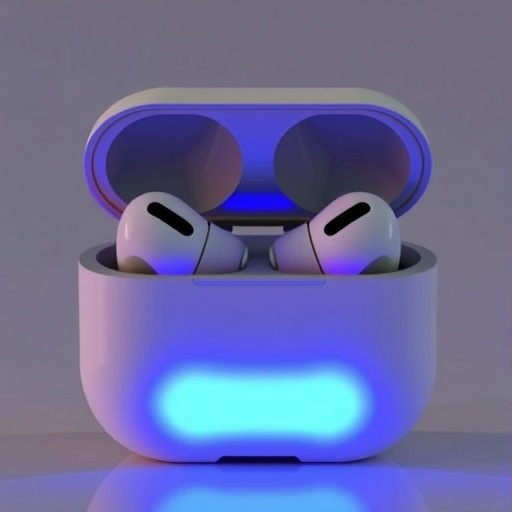
Researchers at the University of Illinois are tackling a central challenge in home diagnostics: how to replicate laboratory-grade fluorescent molecular testing in a device small enough to live in everyday life. Their work focuses on what a “holistic system” must include—hardware, sensing, workflow design, and user-facing software—to make sensitive pathogen and cancer-associated measurements practical outside centralized labs.
The team led by Han Keun Lee, with engineering guidance from Brian Cunningham and bioengineering collaboration from Xing Wang, reports a pocket-size fluorimeter built on a compact optical approach. The core goal is to support quantitative readouts from assays that use fluorescent dye, where signal amplification enables more accurate interpretation than simple line-based home tests.
Many consumer-style tests are designed for yes/no outcomes and can lack sensitivity, often requiring new strips for each target analyte. By contrast, fluorescent assays can be measured more precisely, but conventional fluorescence readers are typically bulky, costly, and require skilled operation—exactly the barriers that prevent widespread point-of-care use.
To address these constraints, the researchers selected a photodetector strategy rather than full imaging. A single light detector does not inherently distinguish the tested sample from a baseline control, but their solution is to measure both simultaneously. The resulting device, VPodDuo, expands on a previous single-port design by adding a dual-port, paired test-and-control workflow.
Built to handle multiple assay chemistries, VPodDuo targets green-emitting fluorescence signals across different molecular formats. In demonstrations, the system quantified genetic material associated with Zika virus, HIV, and methicillin-susceptible Staphylococcus aureus, and it also measured human genetic markers linked to the possible presence of cancer cells.
Portability is not the only requirement. The instrument is designed to connect wirelessly to a mobile device, using an application that provides an intuitive interface for operation and results interpretation. Safeguards are included to reduce accidental misuse and help maintain reliable testing conditions.
The research positions the device as part of a broader diagnostic loop rather than a standalone gadget. The team emphasizes that point-of-care testing can increase testing frequency, improving the chance of timely intervention, even when definitive diagnosis still depends on clinical follow-up.
Published in the IEEE Sensors Journal, the study combines experimental validation with system-level engineering decisions aimed at taking advanced fluorescent molecular diagnostics beyond laboratory walls.
Cite Scienmag News
Nathaniel Bowman. (July 16, 2026). AirPods-Size Fluorescence Device Could Enable Rapid At-Home Molecular Testing. Scienmag. https://scienmag.com/airpods-size-fluorescence-device-could-enable-rapid-at-home-molecular-testing/
Nathaniel Bowman. "AirPods-Size Fluorescence Device Could Enable Rapid At-Home Molecular Testing." Scienmag, 16 July 2026, https://scienmag.com/airpods-size-fluorescence-device-could-enable-rapid-at-home-molecular-testing/. Accessed 4 September 2026.
Nathaniel Bowman. "AirPods-Size Fluorescence Device Could Enable Rapid At-Home Molecular Testing." Scienmag. July 16, 2026. https://scienmag.com/airpods-size-fluorescence-device-could-enable-rapid-at-home-molecular-testing/


