


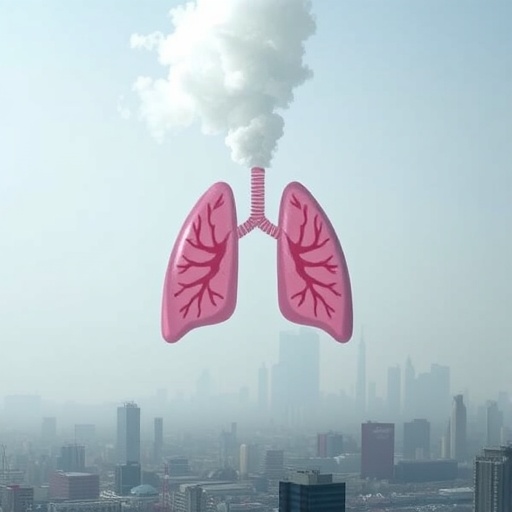
In a groundbreaking study leveraging the extensive UK Biobank cohort, researchers have unveiled compelling evidence linking air pollution to an elevated risk of developing second primary lung cancer among lung cancer survivors. This pioneering epidemiological investigation adds a crucial layer to our understanding of environmental factors influencing cancer recurrence and survivorship outcomes. As lung cancer survivors grapple with the looming threat of a second malignancy, these findings emphasize the urgency of addressing ambient air pollution as a modifiable risk factor within public health frameworks.
Lung cancer remains one of the most daunting oncological challenges worldwide, with high mortality rates despite advances in detection and treatment. Survivors of initial lung cancer experience a distressing phenomenon: an increased risk of developing a second primary lung cancer distinct from cancer recurrence. Understanding the etiopathogenesis behind this vulnerability is essential for devising effective monitoring and prevention strategies. While smoking history has been recognized as a dominant risk component, the present study illuminates the previously underexplored role of air pollution, especially particulate matter and nitrogen oxides, in fostering these secondary malignancies.
The methodological rigor of this prospective cohort study is particularly notable, as it capitalizes on the UK’s rich biobank database containing detailed health, lifestyle, and genetic information of half a million participants. Out of this massive population, lung cancer survivors were identified and tracked longitudinally to establish correlations between their residential air quality exposure and subsequent lung cancer outcomes. By employing sophisticated geo-spatial modeling techniques to estimate exposure levels to fine particulate matter (PM2.5) and other pollutants, the investigators ensured a high granularity in environmental assessment, surpassing many previous research constraints.
The statistical analyses employed advanced Cox proportional hazards models adjusted for a multitude of confounders, including age, sex, socioeconomic status, smoking intensity, and comorbidities. This comprehensive adjustment strengthens confidence that the observed associations are not spurious but likely reflect a true causal relationship between air pollutant exposure and second primary lung cancer incidence. Importantly, the findings reveal a dose-response pattern, wherein higher concentrations of ambient particulate matter correlate with incrementally elevated risks.
Mechanistically, the carcinogenic properties of air pollution have been well-documented in primary lung cancer formation, but their specific role in inducing malignancies after an initial cancer episode demands nuanced exploration. Particulate matter and nitrogen oxides can induce chronic inflammation, oxidative DNA damage, and dysregulation of cellular repair pathways, all of which promote carcinogenesis. In survivors whose tissue microenvironments have been altered by initial cancer and oncologic therapies, these environmental insults may accelerate malignant transformation or clonal expansion of initiated cells, thereby driving secondary cancer development.
Another compelling feature of this study is its focus on vulnerable subpopulations within lung cancer survivors. Stratified analyses reveal that individuals with pre-existing compromised pulmonary function or underlying chronic obstructive pulmonary disease (COPD) are at even greater risk when exposed to elevated air pollution levels. This suggests that biological susceptibility coupled with environmental challenge exacerbates the cumulative carcinogenic burden, highlighting the necessity for tailored surveillance and mitigation strategies for high-risk survivor phenotypes.
Furthermore, the research sheds light on temporal aspects of exposure. The critical window of vulnerability appears to span from immediate post-treatment years to the longer-term survivorship period. Continuous air pollution exposure during these phases corresponds to a heightened likelihood of second primary lung cancer occurrence. This temporal dimension reinforces the need for sustained environmental health policies alongside clinical follow-up, underscoring that survivorship care cannot be siloed from broader ecological determinants.
The translatability of these findings to clinical practice offers a beacon of hope for improving survivor outcomes. Integrating environmental exposure assessments into survivorship care plans could facilitate more personalized risk stratification. For instance, survivors living in urban settings with poor air quality might benefit from increased imaging surveillance protocols or early therapeutic interventions. Simultaneously, these insights propel advocacy for stricter air quality regulations as a cancer control measure, blending individual-level medical vigilance with population-level environmental action.
This study also opens avenues for future research exploring potential interventions to mitigate air pollution-related carcinogenesis in cancer survivors. Investigating the efficacy of antioxidant therapies, inhaled protective agents, or lifestyle modifications such as relocation and air filtration could revolutionize survivorship care. Moreover, understanding genetic polymorphisms that modulate susceptibility to pollution-induced lung carcinogenesis may enable precision medicine strategies that safeguard vulnerable survivors.
The societal implications of this research ripple far beyond cancer epidemiology. Air pollution is a pervasive, global health hazard implicated in myriad chronic diseases, and its intersection with cancer survivorship represents a critical nexus of vulnerability. Policymakers, healthcare providers, and environmental scientists are thus called upon to collaborate in crafting holistic approaches that ameliorate air pollution exposure while supporting the complex needs of lung cancer survivors.
In sum, this landmark UK Biobank study decisively establishes air pollution as a significant risk factor for second primary lung cancer among those already burdened by lung malignancies. Its findings compel a paradigm shift in how survivorship care and environmental health policies interlace, advocating a vision where cancer survivors receive not only medical follow-up but also protection from environmental carcinogens. The prospect of leveraging environmental intervention to reduce second cancer risk illuminates a promising frontier in oncology and public health.
As lung cancer incidence continues rising globally alongside urbanization and industrial pollution, mitigating environmental risks assumes unprecedented urgency. This study’s revelations will undoubtedly galvanize further research, public health campaigns, and regulatory reforms aimed at protecting the vulnerable survivor population from preventable second cancers. Ultimately, reconciling cancer control with environmental stewardship marks a vital stride toward healthier, longer lives for lung cancer survivors worldwide.
The future research trajectory inspired by this work may encompass interdisciplinary efforts integrating epidemiology, molecular biology, and environmental science. Unraveling the precise molecular pathways by which air pollutants induce carcinogenic transformation in previously injured pulmonary tissue holds significant promise for targeted drug development. Meanwhile, leveraging machine learning models to predict individual pollution exposure risk based on geospatial and personal health data could revolutionize clinical decision-making and survivorship surveillance.
In conclusion, the comprehensive assessment by Choi, Luo, Ding, and colleagues paves an essential pathway toward recognizing environmental carcinogens as paramount considerations in lung cancer survivorship. Their publication in the British Journal of Cancer on April 27, 2026, precisely quantifies the peril posed by air pollution and sparks a clarion call for integrated oncology-environmental health strategies. The integration of robust biobank data, meticulous exposure quantification, and rigorous statistical methodologies serves as a model framework for future investigations at the critical intersection of cancer and the environment.
Cite Scienmag News
Nathaniel Bowman. (April 28, 2026). Air Pollution Raises Second Lung Cancer Risk. Scienmag. https://scienmag.com/air-pollution-raises-second-lung-cancer-risk/
Nathaniel Bowman. "Air Pollution Raises Second Lung Cancer Risk." Scienmag, 28 April 2026, https://scienmag.com/air-pollution-raises-second-lung-cancer-risk/. Accessed 3 September 2026.
Nathaniel Bowman. "Air Pollution Raises Second Lung Cancer Risk." Scienmag. April 28, 2026. https://scienmag.com/air-pollution-raises-second-lung-cancer-risk/


