


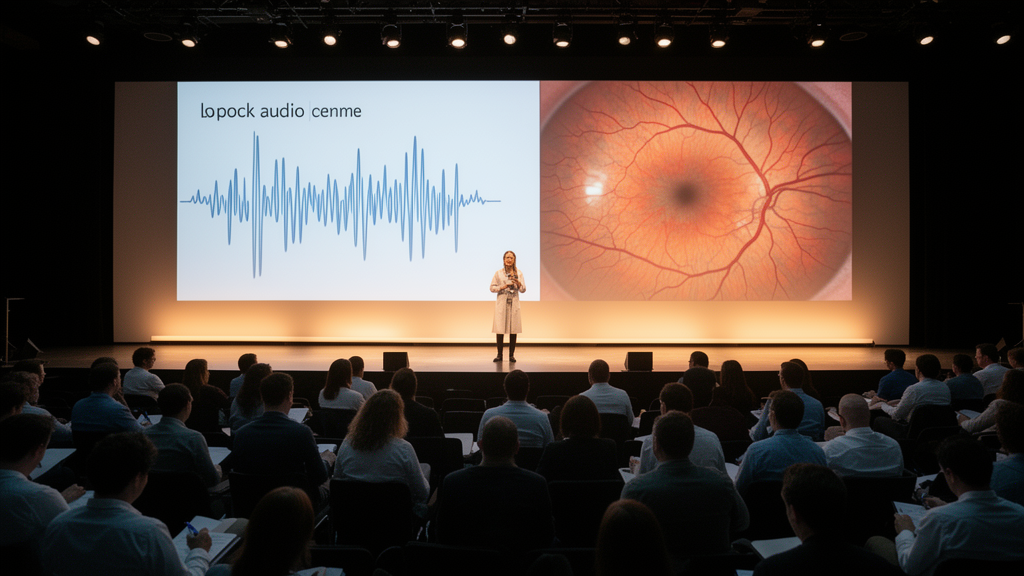
When the Schizophrenia International Research Society convened its annual meeting in 2026 under the theme “Schizophrenia Research in the Era of Artificial Intelligence,” it gathered researchers, clinicians and persons with lived experience to take stock of a field whose tools for measuring, predicting and intervening in psychosis have expanded at remarkable speed. A comprehensive rapporteur-led report of the proceedings, published in the journal Schizophrenia, synthesised evidence from 53 of the 59 programme sessions and revealed a discipline in the midst of a technical transformation. Themes spanned artificial intelligence, automated speech analysis, retinal imaging, computational modelling and novel psychosocial and pharmacological targets. Individually, the findings warrant cautious but serious attention; collectively, they point toward a more mechanistically grounded psychiatry.
Among the most technically striking developments was automated speech analysis. Researchers presented machine learning models capable of detecting subtle disruptions in the coherence, syntax and semantic richness of spontaneous speech, features that often precede or accompany psychotic symptoms. By extracting high-dimensional linguistic features from transcribed speech samples and feeding them into classification algorithms, these models can distinguish individuals at clinical high risk for psychosis from healthy controls with accuracy levels that outperform many conventional clinical scales. The approach is attractive because speech is cheap to record, non-invasive and repeatable, making it a candidate digital biomarker for tracking symptom trajectory over time. Yet the rapporteurs noted a recurring caution: most models have been trained on small, linguistically and culturally homogeneous samples, and their performance degrades when applied to new languages, dialects and recording conditions. Rigorous external validation across diverse populations emerged as a non-negotiable requirement before any clinical deployment.
Retinal imaging represented another unexpected frontier. Because the retina shares embryological origins with the brain and offers a directly observable window into neural tissue, investigators presented evidence that optical coherence tomography and related techniques can reveal thinning of retinal nerve fibre layers and microvascular alterations in people with schizophrenia. These structural changes correlate with cognitive deficits and illness chronicity, raising the prospect of the eye as a low-cost biomarker platform. The technical logic is compelling: retinal measures are objective, quantifiable and far cheaper than brain MRI, potentially enabling large-scale screening studies in settings where advanced neuroimaging is unavailable. The meeting’s discussions emphasised that retinal findings must still be disentangled from confounds such as medication exposure, smoking and comorbid metabolic disease before they can be interpreted as illness-specific signals.
Computational modelling sessions offered a different kind of rigour. Rather than treating symptoms as surface phenomena to be correlated, presenters used formal models of reinforcement learning, Bayesian inference and predictive coding to characterise the underlying computational mechanisms of delusion formation, anhedonia and cognitive control deficits. In one line of work, parameters estimated from behavioural tasks quantified how individuals with psychosis overweight improbable evidence, providing a mechanistic account of delusion formation that connects to circuit-level theories of dopamine signalling. In another, hierarchical models of belief updating described how aberrant precision weighting in predictive processing architectures could generate the fixed, self-referential interpretations characteristic of paranoid ideation. These approaches translate abstract neuroscience into quantifiable patient-level parameters, a step the meeting identified as essential for building treatments that target mechanisms rather than symptom checklists.
Artificial intelligence threaded through nearly every session, but the meeting’s tone was notably more sober than the hype surrounding AI in mental health. Presenters described large language models being adapted to summarise clinical notes, predict relapse risk from electronic health records and personalise psychotherapy content. Others used deep learning on neuroimaging data to derive individual-level brain signatures that correlate with symptom profiles. The rapporteurs documented a recurring call across the meeting for rigorous external validation, equitable implementation and sustained scrutiny of underlying assumptions. Questions were raised about whether existing diagnostic categories and treatment targets remain adequate when algorithms can detect subgroups that cut across traditional syndromal boundaries. There was also frank discussion of algorithmic bias: models trained on data from well-resourced academic centres may systematically underperform in underrepresented populations, potentially widening rather than narrowing existing disparities in care.
Novel pharmacological targets received renewed attention. Beyond the dopamine hypothesis that has dominated antipsychotic development for decades, presenters described agents acting on glutamatergic signalling, cholinergic systems and inflammatory pathways. Evidence was presented for drugs that modulate N-methyl-D-aspartate receptor function and for compounds targeting alpha-7 nicotinic acetylcholine receptors, each grounded in circuit-level rationales rather than symptom suppression alone. The meeting also highlighted psychosocial interventions with mechanistic grounding, including cognitive remediation programmes that train specific neurocognitive functions and psychotherapy approaches informed by computational accounts of belief formation. The convergence of pharmacological and psychosocial work on shared mechanistic targets suggested a field moving beyond the false dichotomy of biological versus psychological treatment.
Structural determinants of illness onset and treatment access emerged as an underworked but critical theme. Presenters noted that social factors such as urban upbringing, migration, childhood adversity and socioeconomic deprivation exert effects on psychosis risk comparable in magnitude to many genetic variants, yet they receive far less mechanistic attention. Sessions examined how structural barriers shape who gets early intervention, who receives clozapine and who experiences prolonged untreated psychosis. The rapporteurs observed that translating basic neuroscience advances into questions relevant to patients and families remained underdeveloped relative to its importance, a gap that several speakers argued reflects a field more comfortable with molecular and computational detail than with the social architecture of illness.
Perhaps the most significant development at SIRS 2026 was not any single scientific finding but the broadening of whose voices and experiences are treated as evidence worth taking seriously. Persons with lived experience participated not merely as subjects of study but as contributors to research design, interpretation and priority setting. Sessions explored how first-person accounts of auditory hallucinations, delusional conviction and recovery can refine computational models and generate testable hypotheses. This shift, whose consolidation remains a question for the field as much as for any individual programme of work, suggests that the era of AI in schizophrenia research may be defined less by algorithms than by a more inclusive epistemology of what counts as evidence.
The synthesis does not cover all activities at the meeting, only those open to rapporteurs, and the editors acknowledge that proceedings from six sessions are represented only through programme abstracts. The report was drafted with AI-assisted sentence rewriting and word count reduction, checked manually before submission, with final editorial responsibility resting with the authors. What emerges from the proceedings is a field whose technical ambition has outpaced its validation infrastructure, and whose most consequential task in the coming years may be ensuring that the tools it builds serve the populations it studies. The convergence of digital biomarkers, computational psychiatry and inclusive research practice offers a genuine opportunity to build a more mechanistically grounded and equitably implemented psychiatry, but only if the field holds itself to the standards of scrutiny it demands of its algorithms.
Subject of Research: Schizophrenia research in 2026: report from the annual meeting of the Schizophrenia International Research Society
Article Title: Schizophrenia research in 2026: report from the annual meeting of the Schizophrenia International Research Society
Article References: Palaniyappan, L., Abassi, B., Abboud, F., Alarabi, M. A., Aramburu, M., Arslan, B., Barnes-Scheufler, C. V., Böke, A., Bryant, L., Carvajal-Paredes, P., Castiello de Obeso, S., Chau, A. K. C., Chung, L. K.-H., de Beer, F., De Simone, G., Destro, P. H., Dlikan, M., El Mouslih, C., Fang, Z., … Yamada, Y. (2026). Schizophrenia research in 2026: report from the annual meeting of the Schizophrenia International Research Society. Schizophrenia. https://doi.org/10.1038/s41537-026-00813-3
Image Credits: AI Generated
DOI: 10.1038/s41537-026-00813-3
Keywords: Schizophrenia, research, report, annual, meeting, International, Society, scientific research
Cite Scienmag News
John Fleming. (October 17, 2026). AI, speech analysis and retinal imaging take center stage at 2026 schizophrenia research meeting. Scienmag. https://scienmag.com/ai-speech-analysis-and-retinal-imaging-take-center-stage-at-2026-schizophrenia-research-meeting/
John Fleming. "AI, speech analysis and retinal imaging take center stage at 2026 schizophrenia research meeting." Scienmag, 17 October 2026, https://scienmag.com/ai-speech-analysis-and-retinal-imaging-take-center-stage-at-2026-schizophrenia-research-meeting/. Accessed 17 October 2026.
John Fleming. "AI, speech analysis and retinal imaging take center stage at 2026 schizophrenia research meeting." Scienmag. October 17, 2026. https://scienmag.com/ai-speech-analysis-and-retinal-imaging-take-center-stage-at-2026-schizophrenia-research-meeting/


