


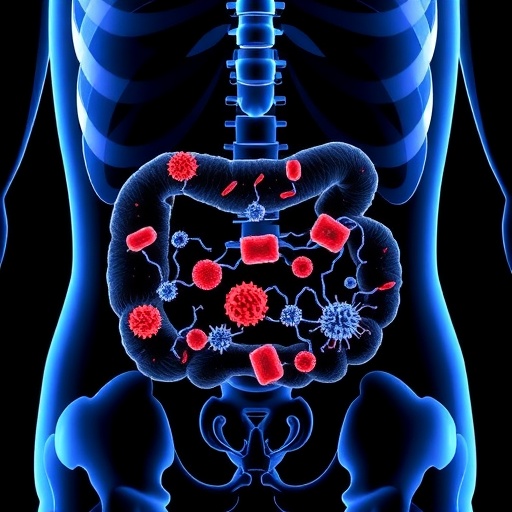
Researchers from McMaster University and the Massachusetts Institute of Technology (MIT) have hit a remarkable milestone by discovering a new antibiotic named enterololin, specifically engineered to combat inflammatory bowel diseases (IBD) such as Crohn’s disease. This breakthrough not only holds promise for millions afflicted by such conditions but also epitomizes the revolutionary role of artificial intelligence (AI) in expediting drug discovery and development.
Traditional antibiotics often fall short in their quest against complex diseases. Most of them are broad-spectrum, meaning they indiscriminately eliminate both harmful and beneficial bacteria alike. Such a sweeping approach can inadvertently lead to an imbalance in the microbiome, paving the way for harmful bacteria, including drug-resistant strains of E. coli, to flourish. In stark contrast, enterololin represents a paradigm shift. This newly engineered antibiotic operates as a narrow-spectrum drug, meticulously targeting only a specific group of pathogens, particularly within the Enterobacteriaceae family, thus preserving the microbiome’s integrity while attacking harmful agents.
The implications of this discovery are profound, especially for those affected by Crohn’s disease, a chronic inflammatory condition with no definitive cure to date. According to recent statistics, IBD affects thousands of individuals across Canada alone, underscoring the urgency for effective treatments. Stokes, an assistant professor at McMaster, emphasizes that the introduction of enterololin could significantly enhance the quality of life for millions of patients, offering a new ray of hope in an otherwise bleak therapeutic landscape.
The innovation does not end with the antibiotic itself; the process of understanding how enterololin functions marks another significant achievement, this time from an AI perspective. Leveraging cutting-edge methodologies, McMaster researchers utilized a novel AI model developed by MIT to ascertain the drug’s mechanism of action (MOA) within an astonishing six-month timeframe and a modest budget of $60,000. Traditionally, elucidating a drug’s MOA has been a daunting task, often requiring up to two years and millions of dollars, thus positioning this development as a game changer in the field.
Stokes remarked on the transformative potential of AI in drug development, claiming that using algorithms to predict drug behavior significantly expedites scientific inquiry. Instead of following long-established protocols blindly, researchers can channel AI’s analytical power to hypothesize more swiftly and accurately about potential therapeutic effects. The AI model provided a critical insight: enterololin interacts with a microscopic protein complex called LolCDE, crucial for the survival of certain bacterial strains. This predictive capability opens new avenues for scientists to explore effective drug mechanisms, enhancing the innovation cycle exponentially.
While these AI-generated insights were noteworthy, it was crucial for the research team to conduct experimental validation in the lab. Stokes emphasized the importance of skepticism towards AI predictions as they serve as guides rather than definitive conclusions. The pivotal role of traditional methodologies remains intact, as they validate and bolster clinical findings, ultimately earning trust in AI-assisted predictions through experimental confirmation. Following laboratory examinations, it became evident that the AI had accurately predicted the antibacterial target, thereby reducing the timeframe typically needed for MOA studies by an impressive 18 months.
The success of this research signals a broader narrative about the urgent need for novel antibiotics in an era where antimicrobial resistance poses a serious public health threat. Enterololin’s development not only targets existing bacterial infections but strives to prevent the proliferation of antibiotic-resistant strains. The innovative collaboration between McMaster University and MIT showcases a model for what the future of drug discovery could look like, highlighting an interdisciplinary approach that harnesses the power of human intellect in synergy with advanced computational tools.
Moreover, the pathway to clinical application has already commenced, as Stokes’ spin-out company, Stoked Bio, has secured the rights to enterololin and is currently optimizing the drug for human trials. They are also exploring modified variations of this antibiotic against other drug-resistant bacteria, such as Klebsiella, with initial findings proving optimistic. This rapid trajectory toward human trials positions enterololin squarely within the exigency of real-world medical applications, potentially within a three-year scale.
While the journey from laboratory bench to bedside is fraught with challenges, Stokes and his team represent a promising frontier in the fight against drug resistance and the continuing search for effective therapies for chronic conditions like IBD. Their work does not merely adhere to the established timeline of medical research but accelerates it, carving out new paths for scientific exploration that could one day lead to remarkable therapeutic break-throughs.
With the landscape of bacterial infections rapidly evolving, the need for cutting-edge solutions such as enterololin is more pressing than ever. As communities increasingly grapple with the rise of antibiotic-resistant pathogens, the efficacy of using AI to inform drug discovery illustrates a pivotal moment in medical history that could redefine how we approach microbiology and pharmacology moving forward. This synergy of innovation, focusing on patient-centric treatments, could unify research and technological advancements into a cohesive framework aimed at ensuring healthier outcomes for vulnerable populations.
As discussions surface around the ethical implications and regulatory landscapes of AI-assisted drug development, the findings from McMaster and MIT echo a broader narrative. They underscore the transformative power of interdisciplinary collaborations, where scientific rigor meets computational intelligence, in delivering viable therapeutic options. The implications of this research extend beyond the confines of academia into the real world, paving the way towards medical advancements that hold the potential to reshape how we manage chronic diseases and bacterial infections.
The spotlight on enterololin serves as a beacon of hope, showcasing the relentless pursuit of new scientific frontiers and the steadfast commitment of researchers to enrich human health. As Stokes noted, the journey ahead will be continuous and collaborative, striving to address the drumming calls for innovation in antimicrobial stewardship, while AI remains an indispensable tool in unlocking new biological possibilities.
Keywords
Cite Scienmag News
Denise Maddox. (October 3, 2025). AI Pioneers New Antibiotic Targets for IBD, Predicting Mechanisms Ahead of Experimental Validation. Scienmag. https://scienmag.com/ai-pioneers-new-antibiotic-targets-for-ibd-predicting-mechanisms-ahead-of-experimental-validation/
Denise Maddox. "AI Pioneers New Antibiotic Targets for IBD, Predicting Mechanisms Ahead of Experimental Validation." Scienmag, 3 October 2025, https://scienmag.com/ai-pioneers-new-antibiotic-targets-for-ibd-predicting-mechanisms-ahead-of-experimental-validation/. Accessed 4 September 2026.
Denise Maddox. "AI Pioneers New Antibiotic Targets for IBD, Predicting Mechanisms Ahead of Experimental Validation." Scienmag. October 3, 2025. https://scienmag.com/ai-pioneers-new-antibiotic-targets-for-ibd-predicting-mechanisms-ahead-of-experimental-validation/


