


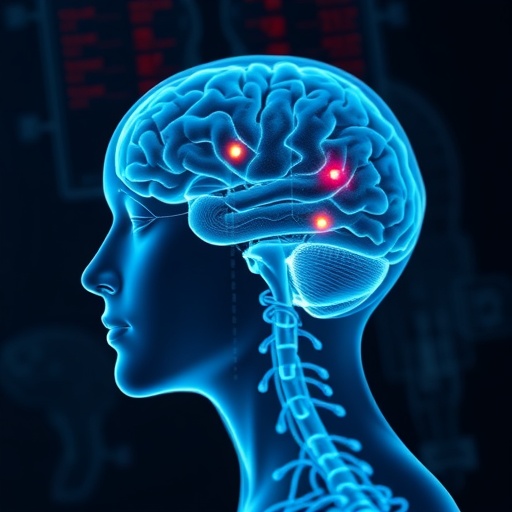
A groundbreaking study from China is revolutionizing how healthcare professionals approach mental health among the elderly by introducing a machine learning-based screening model designed to predict the risk of depression. Depression remains one of the most pervasive yet underdiagnosed conditions affecting older adults globally, often exacerbated by social isolation, chronic illness, and cognitive decline. This new approach leverages advanced computational algorithms to identify subtle patterns and risk factors invisible to traditional diagnostic methods, creating a proactive pathway for early intervention.
The research, recently published in BMC Geriatrics, taps into the power of artificial intelligence to analyze complex data sets that include demographic information, lifestyle indicators, health history, and psychological assessments. By utilizing machine learning techniques, the model dynamically learns from vast amounts of data, improving its predictive accuracy over time. Unlike conventional screening tools, which often rely on self-reported symptoms or clinician judgment, this system offers an objective, data-driven evaluation, minimizing bias and enhancing detection capabilities.
Depression among the elderly is notoriously difficult to diagnose, partly because its symptoms overlap with those of aging and other medical conditions. Memory loss, fatigue, and loss of appetite are common in both depression and age-related illnesses, leading to frequent misdiagnosis or neglect. This study addresses these challenges by constructing a multi-dimensional profile of each patient, capturing not only psychological metrics but also physiological and social dimensions that influence mental health. The machine learning model integrates this complexity, allowing for nuanced risk stratification.
Central to the model’s success is the diversity and granularity of the data it uses. The research team collected comprehensive datasets from a representative sample of the elderly population across different regions of China, ensuring inclusivity of various socioeconomic backgrounds and health statuses. This robust dataset included electronic health records, survey responses, wearable device data, and environmental factors. Incorporating such rich data enables the machine learning algorithms to detect subtle correlations between seemingly unrelated variables and the risk of depression.
One of the novel aspects of this research lies in its use of deep learning architectures that are capable of processing high-dimensional data. These neural networks mimic the human brain’s neural pathways to identify complex patterns that traditional statistical methods might miss. By training the system on labeled data—where depression diagnoses had been confirmed—the model could generalize from the training set to predict depression risk accurately in unseen individuals. This approach dramatically improves the potential for early detection before clinical symptoms become severe.
The model’s predictive capacity was validated through rigorous testing that demonstrated high sensitivity and specificity. Sensitivity here refers to the model’s ability to correctly identify individuals with depression risk, while specificity measures its ability to correctly exclude those without risk. Achieving a balance between these metrics is critical to avoid false positives, which could lead to unnecessary treatment, and false negatives, which could result in missed intervention opportunities. The study reports a commendable balance, underscoring the potential clinical utility of this technology.
Another important technical innovation lies in the interpretability of the model’s decisions. Machine learning models, especially deep learning ones, are often criticized as “black boxes” because their internal decision-making processes are opaque. To overcome this, the research team incorporated explainability algorithms that highlight which factors most heavily influenced the risk predictions for each individual. This transparency is essential for clinical acceptance, as practitioners need to understand why a patient is flagged at risk to tailor appropriate care plans.
The implications of this study extend beyond individual diagnosis. By integrating such screening models into public health systems, policymakers can gain a real-time view of depression epidemiology among the elderly, enabling targeted resource allocation. For example, regions with higher predicted risk can receive more mental health outreach initiatives, social support programs, and clinical staffing. The scalability of this approach also means it could be adapted to other mental health disorders and demographics, heralding a new era in precision medicine.
Moreover, the researchers discuss ethical considerations essential to deploying machine learning in healthcare, including data privacy, consent, and potential biases in the algorithm. Since machine learning systems are only as good as the data they learn from, ensuring diverse and representative input data is crucial to avoid systemic discrimination against marginalized groups. The team advocates for continuous monitoring and updating of the model to maintain fairness and accuracy over time, especially as population health trends evolve.
Technically, the model’s development utilized state-of-the-art frameworks and computational resources, including GPU acceleration and cloud-based platforms to handle the data volume and complexity. The choice of features—ranging from sleep patterns derived from wearable sensors to social isolation metrics assessed via questionnaires—was informed by a thorough literature review and expert clinical input. Feature engineering, a process of selecting and transforming variables before feeding them into the model, played a pivotal role in enhancing performance.
This study exemplifies the convergence of geriatric psychiatry, data science, and machine learning engineering—a multidisciplinary approach that is increasingly vital in tackling the complex challenges of aging populations worldwide. By harnessing predictive analytics and automated decision support systems, healthcare delivery can shift from reactive to proactive models, where risks are identified and managed before adverse outcomes manifest. This not only improves patient quality of life but also reduces healthcare costs associated with untreated mental illness.
Looking forward, the authors emphasize the importance of integrating such screening tools into existing clinical workflows seamlessly. User-friendly interfaces and clinician training will be necessary to translate the algorithm’s insights into actionable treatment plans. Furthermore, longitudinal studies to track outcomes of at-risk individuals identified by the model will validate its long-term clinical impact. Collaborations with primary care providers and mental health specialists will be crucial in this endeavor.
In summary, this pioneering investigation showcases the promise of artificial intelligence in addressing a pressing global health issue: depression among the elderly. By creating a sophisticated machine learning-based screening model, the study opens new horizons for early detection and personalized intervention. As populations age rapidly worldwide, innovations like this will become indispensable tools in mitigating the burden of mental illness and enhancing the longevity and well-being of older adults.
The successful integration of technology and psychology demonstrated in this research provides hope that mental health care can become more accessible and precise. As machine learning models continue to evolve and incorporate more diverse data sources, their predictive power and utility will only expand. This heralds a transformative future for mental health screening where prediction, prevention, and personalized care converge effectively.
Overall, this study sets a new standard in the application of machine learning in clinical geriatrics. By meticulously addressing technical challenges, ethical concerns, and clinical needs, the research team has laid a robust foundation for future innovations. The path forward will require concerted efforts from technologists, clinicians, policymakers, and the community to fully realize the potential of AI-driven mental health care for the aging population.
Development of a machine learning-based screening model to predict the risk of depression among the elderly population in China.
Development of a machine learning-based screening model for the risk of depression among the elderly in China.
Tan, L., Ibrahim, M.S., Adnan, L.H.M. et al. Development of a machine learning-based screening model for the risk of depression among the elderly in China. BMC Geriatr (2026). https://doi.org/10.1186/s12877-026-07397-8
Cite Scienmag News
Glenn Wilkins. (April 1, 2026). AI Model Predicts Depression Risk in Elderly China. Scienmag. https://scienmag.com/ai-model-predicts-depression-risk-in-elderly-china/
Glenn Wilkins. "AI Model Predicts Depression Risk in Elderly China." Scienmag, 1 April 2026, https://scienmag.com/ai-model-predicts-depression-risk-in-elderly-china/. Accessed 4 September 2026.
Glenn Wilkins. "AI Model Predicts Depression Risk in Elderly China." Scienmag. April 1, 2026. https://scienmag.com/ai-model-predicts-depression-risk-in-elderly-china/


