


When a catastrophic earthquake, tsunami or aircraft crash claims hundreds or thousands of lives, the grim work of identifying the dead becomes one of the most demanding tasks in all of forensic science. Disaster victim identification, known universally in the field as DVI, exists to ensure that human remains are matched to names with rigor and dignity, allowing families to bury their loved ones and legal systems to close the record. A narrative review published in the Journal of Emergency and Disaster Medicine by Doaa Tawfik of Cairo University’s Department of Forensic Medicine and Clinical Toxicology surveys the technological wave now breaking over this solemn discipline, and delivers a clear warning: the same tools that promise speed and accuracy also carry profound ethical risks that forensic teams are only beginning to confront.
Traditional DVI rests on three established pillars. Forensic anthropology applies skeletal analysis and archaeological technique to remains that may be fragmented, burned or decomposed, guiding recovery and interpretation. Forensic odontology compares dental records, which often survive conditions that destroy other identifiers. DNA profiling, widely regarded as the most reliable method, analyzes genetic material from remains and compares it against reference samples donated by relatives or recovered from personal items. These techniques work, the review notes, but they are time-consuming, resource-intensive and mentally taxing, particularly in mass casualty scenarios where thousands of data points must be manually compared, all while a strict chain of custody is maintained to protect the legal and ethical rights of the deceased.
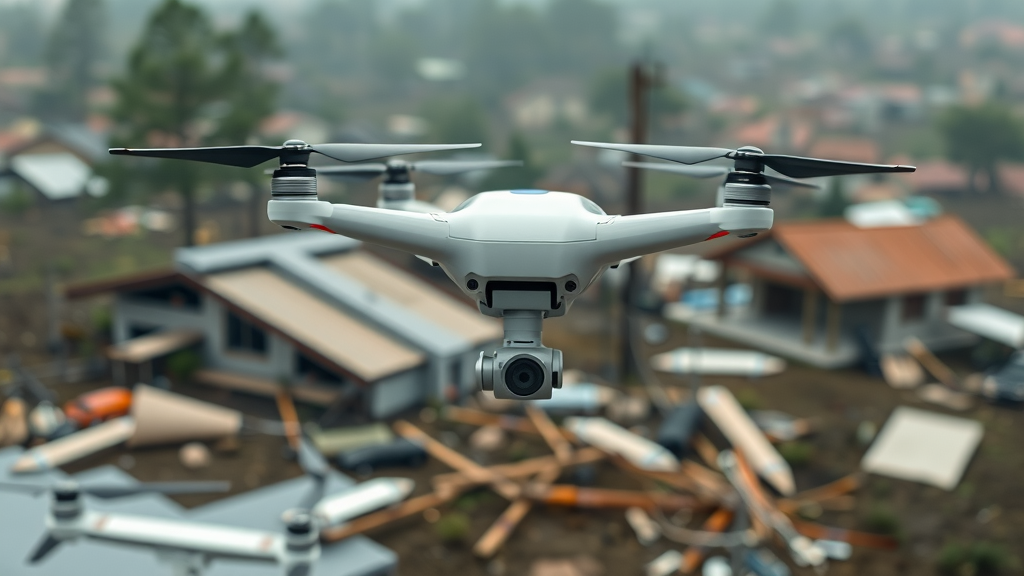
The review identifies a paradigm shift underway across three stages of the DVI workflow: scene management and recovery, victim identification itself, and data integrity and management. At the disaster scene, the first stage, drones and remote sensing are emerging as force multipliers. Equipped with real-time aerial imaging and thermal scanning, drones can survey affected areas that ground teams cannot reach safely or quickly, a critical advantage because delays in reaching remains accelerate post-mortem DNA degradation and complicate identification. Unmanned aircraft can deliver sampling kits and rapid-DNA devices, and recent studies demonstrate the feasibility of aerial environmental DNA sampling and surface swabbing, recovering trace human DNA from vegetation and surfaces as a supplementary, non-contact approach when direct recovery is delayed. Validation studies and operational protocols are still required before routine integration, but the strategic role of drones in extending sampling capacity in protracted or inaccessible disaster environments is now well supported by the literature.
Yet the aerial revolution arrives with baggage. Drones raise safety issues for first responders in the event of malfunction, confidentiality concerns about data collected over surveilled neighborhoods, and questions about algorithmic decision-making bias. The review flags a deeper structural problem: the majority of drone studies have been conducted in or by nations that develop and own these advanced technologies, so reported success rates, cost-benefit analyses and logistical frameworks may not translate to resource-constrained regions without technical expertise. The literature also reveals a paucity of validated evidence on drones’ actual capacity to identify disaster victims, partly because conducting research during real-world disasters is ethically and logistically fraught. Simulation studies, meanwhile, suffer from such heterogeneity in design that the review calls for a standardized disaster simulation checklist to reduce bias and improve methodological consistency.
Inside mortuaries and identification units, 3D printing is reshaping forensic reconstruction. The technology can produce lifelike facial models based on skeletal remains, aiding visual identification and increasing the chances of recognition. But accuracy remains a concern, because bone density and surface characteristics cannot be fully replicated and modeling parameters affect print quality. There is also a uniquely modern hazard: the open-source culture of the 3D community means any model can be easily shared, downloaded and printed, potentially compromising evidence integrity. These issues have kept 3D-printed evidence on shaky admissibility footing in courts. In 2023, researchers in the UK made the first attempt to create an ethical framework for 3D reconstruction, articulating nine principles including transparency, beneficence, context, non-maleficence and anonymity.
Digital forensics has opened another identification channel. Smartphones accumulate extensive personal and behavioral metadata, including contacts, messaging logs, geolocation traces, gait data and app usage history, all of which analysts can extract and correlate with external records to support identity hypotheses. When victims carried implanted medical devices or wearables connected to phone applications, communication artifacts such as timestamps, device IDs and telemetry logs stored on the phone can serve as a digital bridge linking the device to its owner. Encryption and data deletion remain significant hurdles, and severe physical damage to devices in disasters limits usefulness, so the review emphasizes that smartphones should aid DVI efforts rather than stand alone. The field also faces mounting ethical risks around data accuracy, standardization, confidentiality and accountability, compounded by non-technical factors like inadequate training, cognitive bias and poor case management, particularly where speed is prioritized over accuracy.
The most transformative and most ethically charged technology is artificial intelligence. Machine learning is already applied to DNA mixture deconvolution, ancestry prediction, kinship matching and assessing the forensic value of complex samples. Deep learning shows promise in estimating age and sex from skeletal remains, dental records and medical images, and in predicting post-mortem interval and cause of death. AI-driven face restoration using diffusion models and Generative Adversarial Networks has been shown to improve forensic face recognition accuracy by reconstructing degraded images of the deceased to a more identifiable state, and AI software can compare vast datasets efficiently, reducing human error and accelerating identification. The caveats, however, are substantial. AI can generate inaccurate information, a phenomenon known as AI hallucination, which must be scientifically scrutinized and documented. Both human and algorithmic bias can enter through candidate selection and through demographic composition of training datasets, meaning models may perform poorly on populations outside their training data and misidentification could compound the tragedy for affected families.
The review draws instructive parallels from commercial deployments. Analysis of facial recognition cases such as Clearview AI and airport biometric surveillance reveals fundamental tensions between technological innovation and privacy, confidentiality and informed consent, exposing systemic gaps in governance. The implication for forensic science is stark: if using biometric data without explicit consent in public spaces raises serious societal and regulatory challenges, applying such technologies to vulnerable deceased populations, where consent can never be obtained, demands even more rigorous scrutiny and restrictive governance. The well-known Gender Shades study demonstrated significant accuracy disparities across race and gender intersections in commercial classification systems, showing that biased datasets and opaque model design can perpetuate systemic discrimination, and that these risks are not theoretical but have already manifested in practice. The review also stresses cultural sensitivity: fairness and accountability in AI for disaster risk management require local stakeholder inclusion and transparent decision pathways, and generative AI systems must be culturally tailored to different racial and ethnic communities to maintain trust during crisis communication.
DNA phenotyping and predictive biometrics extend the frontier further, allowing scientists to generate probable facial structures, eye color and ancestry information from genetic material alone, which is valuable when no missing-persons list or reference sample exists. But the accuracy of phenotyping remains a challenge, especially with mixed DNA samples, many countries lack legal frameworks governing its responsible use, and no new DNA markers have been established to support accurate measurement and validation. Predictions are probabilistic and subject to error, so misclassification may produce misleading leads or unfair targeting of individuals or groups. Privacy and informed consent are at stake when samples are used without explicit permission to infer traits or ancestry that individuals may consider sensitive, and the literature increasingly calls for privacy impact assessment frameworks before laboratories and law enforcement adopt the technology.
For data integrity, blockchain offers a potential revolution in chain of custody. As a distributed ledger producing immutable, time-stamped, cryptographically secured records shared across multiple nodes, it prevents unilateral modification of stored data and could enable secure, unified platforms for storing, managing and cross-jurisdictionally comparing sensitive identifying data such as DNA, dental and medical records. Reviews support blockchain’s usefulness for preserving evidence integrity and enabling real-time global collaboration among healthcare teams, but concerns remain over data collection, confidentiality, sharing, ownership, cost, privacy and unauthorized access. The review concludes with a set of recommendations: training disaster teams on ethically sound and culturally appropriate technologies, developing checklists and guidelines aligned with local, national and international regulations, building internationally recognized blockchain forensic databases, exploring bioethical policies for predictive biometrics and genetic privacy with compensation mechanisms for bias, and operationalizing the proposed ethical framework through pilot programs in disaster-prone regions. Accountability, the review insists, must ultimately remain with human and institutional actors, preserving what it calls attributability so that identification decisions express human values. Forensic science, it argues, must evolve with a dual focus, embracing cutting-edge technology while upholding the highest ethical standards, so that identification becomes not only faster and more reliable but fair, transparent and respectful of victims’ dignity.
Subject of Research: A narrative review of emerging technologies and their ethical implications in disaster victim identification
Article Title: Disaster victim identification: a narrative review of innovations and ethical considerations
Article References: Tawfik, D. (2026). Disaster victim identification: a narrative review of innovations and ethical considerations. Journal of Emergency and Disaster Medicine, 2(1), Article 7. https://doi.org/10.1007/s44467-026-00010-3
Image Credits: AI Generated
DOI: 10.1007/s44467-026-00010-3
Keywords: disaster victim identification, forensic science, artificial intelligence, DNA phenotyping, blockchain, drones, remote sensing, 3D printing, digital forensics, algorithmic bias, data privacy, mass disasters
Cite Scienmag News
Blake Davidson. (September 21, 2026). AI, Drones and Blockchain Reshape Disaster Victim Identification. Scienmag. https://scienmag.com/ai-drones-and-blockchain-reshape-disaster-victim-identification/
Blake Davidson. "AI, Drones and Blockchain Reshape Disaster Victim Identification." Scienmag, 21 September 2026, https://scienmag.com/ai-drones-and-blockchain-reshape-disaster-victim-identification/. Accessed 5 October 2026.
Blake Davidson. "AI, Drones and Blockchain Reshape Disaster Victim Identification." Scienmag. September 21, 2026. https://scienmag.com/ai-drones-and-blockchain-reshape-disaster-victim-identification/


