


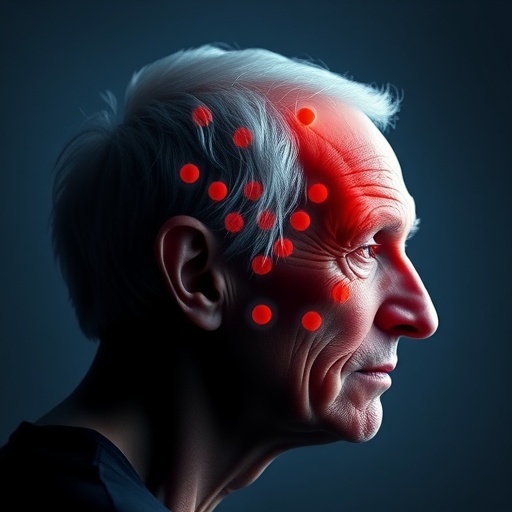
A team led by Wan, Wan, and Liu has unveiled a viral-sounding breakthrough aimed at catching early-stage Parkinson’s disease before symptoms become clinically obvious. Published in npj Parkinson’s Disease in 2026, the study focuses on a detection pipeline built around non-contact, multi-modality measurements paired with artificial intelligence, targeting the earliest window where intervention could plausibly slow progression.
The researchers emphasize that traditional diagnostic workflows often rely on observing motor and non-motor signs that may not surface until damage is already underway. Their approach instead extracts subtle physiological and behavioral signals without physical sensors, reducing friction for large-scale screening and repeat monitoring.
At the core of the work is a highly efficient model designed to learn from multiple data streams simultaneously. Rather than treating single modalities in isolation, the system aligns complementary signals—capturing patterns that may reflect dopaminergic dysfunction, altered movement dynamics, and systemic changes—then fuses them into a unified prediction space.
Efficiency is a central claim. The authors report an architecture optimized to maintain performance while minimizing computation, enabling faster inference that could fit real-world clinical or at-home workflows. This matters because screening tools must be practical, not just accurate, especially when scaled to high patient volumes.
Technically, the model leverages deep learning to identify disease-related signatures through feature extraction and multi-modal fusion. The training strategy is tailored to improve generalization, with attention to how the system handles variability across individuals and measurement conditions—an essential requirement for non-contact imaging or sensing environments.
The study also frames its methodology around non-contact measurement as a safety and comfort advantage. Removing direct contact can lower contamination risks, streamline data collection, and support longitudinal monitoring that tracks change over time rather than capturing disease status at a single moment.
While early detection remains challenging, the reported results suggest the AI system can discriminate early-stage Parkinson’s signatures more effectively than approaches that depend on fewer measurement channels. The emphasis on “highly efficient” design positions the technology as a candidate for faster deployment.
If validated in broader, diverse cohorts, the platform could reshape screening by offering continuous, low-friction assessments. That would turn a traditionally slow diagnostic pathway into something closer to an adaptive signal-processing task—where risk can be flagged earlier through multi-modal observation.
The work, under DOI 10.1038/s41531-026-01481-x, marks a notable step toward automated Parkinson’s detection using AI and non-contact sensing. In a field where time is critical, the promise of earlier visibility—paired with practical efficiency—could fuel widespread interest and rapid follow-up studies.
Cite Scienmag News
Ophelia Keating. (July 27, 2026). AI Detection Model Uses Noncontact Multimodal Data for Early Parkinson’s Diagnosis. Scienmag. https://scienmag.com/ai-detection-model-uses-noncontact-multimodal-data-for-early-parkinsons-diagnosis/
Ophelia Keating. "AI Detection Model Uses Noncontact Multimodal Data for Early Parkinson’s Diagnosis." Scienmag, 27 July 2026, https://scienmag.com/ai-detection-model-uses-noncontact-multimodal-data-for-early-parkinsons-diagnosis/. Accessed 4 September 2026.
Ophelia Keating. "AI Detection Model Uses Noncontact Multimodal Data for Early Parkinson’s Diagnosis." Scienmag. July 27, 2026. https://scienmag.com/ai-detection-model-uses-noncontact-multimodal-data-for-early-parkinsons-diagnosis/


