


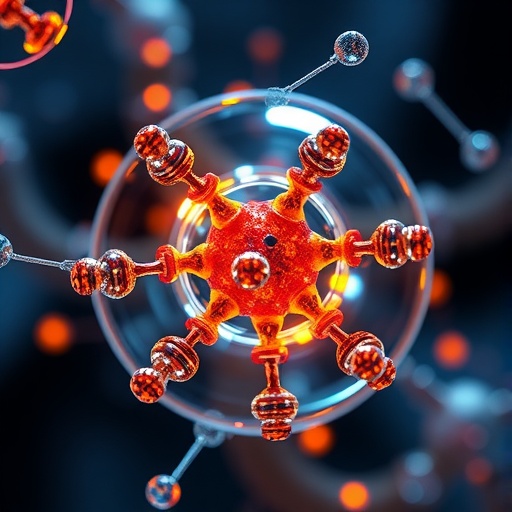
Fuel cells promise a cleaner path to large-scale energy conversion, but cathode performance is still held back by sluggish oxygen reduction reaction (ORR) kinetics. Platinum catalysts can accelerate ORR, yet their high cost and vulnerability to poisoning constrain commercial deployment. To find earth-abundant substitutes, researchers have turned to Fe–N–C single-atom catalysts—materials that can mimic key catalytic steps while using far less precious metal.
A team from Fuzhou University, Qingyuan Innovation Laboratory, and the University of Science and Technology of China published a study in ENGINEERING Energy that blends density functional theory (DFT) with machine learning (ML). Instead of relying on slow trial-and-error experimentation, they systematically explore how catalyst “design knobs” reshape activity and stability at the atomic level.
The central strategy is “dual modulation”: coupling in-plane heteroatom doping with axial coordination decoration above the Fe–N–C plane. By building 158 modified catalyst models, the team investigates 13 candidate elements for either substitutional doping or axial ligation, addressing a major challenge in catalyst design—the combinatorial explosion of possible structures.
DFT results reveal a striking hierarchy: axial ligands exert a much stronger effect on ORR than in-plane dopants. The researchers trace this behavior to electronic modulation—axial ligands primarily adjust the Fe d_{z2} orbital, extracting electron density and weakening adsorption of *OH intermediates on the Fe center. That mechanistic lever translates directly into improved ORR energetics.
To accelerate discovery beyond computed examples, the authors train Random Forest models to learn interpretable descriptors. For stability, the most influential factors are electron affinity and atomic radius of axial heteroatoms. For ORR activity, p-electron count and electronegativity of axial ligands dominate, linking chemical intuition to data-driven predictions.
With validated ML models in hand, they screen 864 designed structures and identify new dual-modified Fe–N–C candidates that outperform a pristine reference model in ORR activity. Among the axial ligands, fluorine emerges as especially powerful due to its high electronegativity and compact atomic size.
DFT validation highlights six high-performing candidates—FeNC-O(4)-F, FeNC-N(4)-F, FeNC-P(2)-F, FeNC-P(4)-F, FeNC-S(2)-F, and FeNC-O(2)-F—each sharing axial fluorine coordination while differing in in-plane dopants. Together, these findings offer a unified, mechanistic-and-data framework for designing next-generation electrocatalysts.
By mapping structure to electronic effects and performance, the study demonstrates how computation and artificial intelligence can converge to engineer cheaper, more efficient cathode catalysts for hydrogen fuel cells—turning complex atomic tuning into a predictable workflow.
Keywords
Machine learning; density functional theory (DFT); electrocatalysis; oxygen reduction reaction (ORR); Fe–N–C; single-atom catalysts; axial ligands; fluorine coordination; Random Forest
Cite Scienmag News
Bethany Barker. (July 16, 2026). AI and Quantum Chemistry Reveal Dual-Modulated Catalysts for Next-Gen Fuel Cells. Scienmag. https://scienmag.com/ai-and-quantum-chemistry-reveal-dual-modulated-catalysts-for-next-gen-fuel-cells/
Bethany Barker. "AI and Quantum Chemistry Reveal Dual-Modulated Catalysts for Next-Gen Fuel Cells." Scienmag, 16 July 2026, https://scienmag.com/ai-and-quantum-chemistry-reveal-dual-modulated-catalysts-for-next-gen-fuel-cells/. Accessed 3 September 2026.
Bethany Barker. "AI and Quantum Chemistry Reveal Dual-Modulated Catalysts for Next-Gen Fuel Cells." Scienmag. July 16, 2026. https://scienmag.com/ai-and-quantum-chemistry-reveal-dual-modulated-catalysts-for-next-gen-fuel-cells/


