


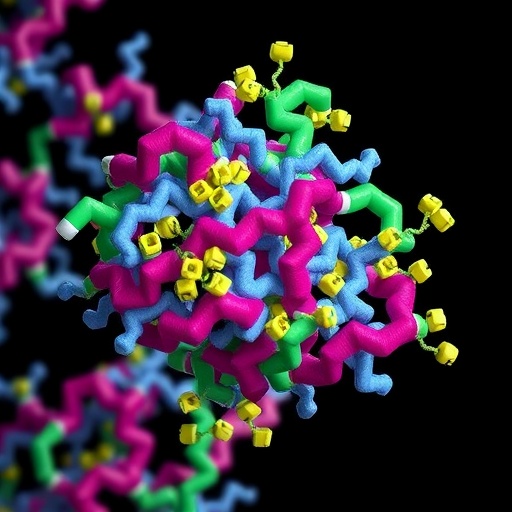
In a groundbreaking advancement that bridges molecular pharmacology and structural biology, scientists have unveiled the detailed crystal structures of the human cannabinoid receptor CB1 bound to two distinct agonists. This achievement not only deepens our understanding of the activation mechanisms behind CB1 — the principal receptor targeted by Δ9-tetrahydrocannabinol (Δ9-THC), the main psychoactive ingredient of marijuana — but also sets the stage for innovative drug design strategies to address a variety of neurological and psychiatric conditions.
Cannabinoid receptor 1 belongs to the expansive class A family of G protein-coupled receptors (GPCRs), proteins embedded in cellular membranes that translate extracellular signals into intricate intracellular responses. CB1 is expressed predominantly in the brain and controls many physiological processes including pain, mood, memory, and appetite. Prior knowledge of CB1 architecture was mostly limited to antagonist-bound states, which depict the receptor in its inactive form. However, this new research takes a significant leap forward by resolving high-resolution structures of CB1 simultaneously bound to agonists, revealing the dynamic conformational landscape essential for receptor activation.
Employing advanced X-ray crystallography techniques, the researchers resolved two distinct agonist-bound complexes of human CB1. These complexes involved not just the well-characterized tetrahydrocannabinol derivative AM11542, but also a hexahydrocannabinol analog AM841, offering a nuanced view of how chemically related cannabinoids engage the receptor. Remarkably, these structures demonstrate an approximately 53% contraction in the volume of the ligand-binding pocket when compared to the receptor’s antagonist-bound form. This drastic reduction indicates a tightly regulated pocket plasticity that is essential for fine-tuning receptor responses to different ligands.
This insight into the ligand-binding domain emphasizes the extraordinary flexibility of CB1. Unlike many other GPCRs which show rigid pockets, CB1 adapts its binding cavity to accommodate structurally diverse cannabinoid molecules. Such plasticity enhances the receptor’s capability to interact not only with endogenously produced endocannabinoids but also with varied synthetic and plant-derived cannabinoids, highlighting a versatile molecular recognition system. Understanding these adaptive structural principles opens up new paths for the rational design of selective modulators with improved specificity and reduced side effects.
Moreover, the agonist-bound structures reveal profound conformational rearrangements extending beyond the ligand-binding site. One of the most striking observations lies in the G protein-binding region of CB1, which exhibits a significant increase in surface area compared to the inactive receptor state. This architectural expansion presumably facilitates the recruitment and activation of intracellular G proteins, crucial players in signal transmission. These conformational changes underscore the allosteric nature of CB1, where orthosteric ligand binding instigates distant structural shifts indispensable for functional receptor signaling.
Central to the activation mechanism is a molecular feature dubbed the “twin toggle switch,” consisting of two highly conserved aromatic residues: phenylalanine at position 200 (Phe2003.36) and tryptophan at position 356 (Trp3566.48), using Ballesteros–Weinstein numbering. This pair acts as a molecular switch that undergoes a coordinated movement upon agonist binding, orchestrating the transition from inactive to active receptor conformations. Experimental evidence supports that this twin toggle switch is essential for CB1 functionality, positioning these residues as critical nodes for manipulating receptor activity pharmacologically.
The elucidated structures also provide a molecular framework capable of explaining the nuanced binding modes of Δ9-THC itself, along with an array of related cannabinoids. Given the global interest in cannabinoid-based therapies — spanning pain management, neuromodulation, and psychiatric treatment — these insights hold enormous translational potential. By revealing how subtle chemical modifications in cannabinoid ligands influence receptor engagement and downstream activation, medicinal chemists can now tailor molecules to elicit desired therapeutic outcomes while minimizing unwanted psychoactive or adverse effects.
Intriguingly, the structural plasticity observed in CB1 seems to resonate with general patterns found in certain subfamilies of class A GPCRs. This suggests that these receptors might share common mechanistic principles that govern ligand recognition and activation despite their divergent physiological roles. Hence, the newfound blueprint of CB1 agonist binding could serve as a paradigm for other GPCR research, extending the implications far beyond cannabinoid pharmacology.
This research was conducted through an integrated multidisciplinary approach leveraging crystallography, molecular biology, and biochemistry. The intricate preparation of receptor-ligand complexes and optimization of crystallization conditions allowed the capture of receptor snapshots with agonists securely locked in place, a method notoriously challenging given the innate flexibility and instability of GPCRs. Such technical proficiency marks a significant technological achievement, setting a benchmark for the structural investigation of similarly complex membrane proteins.
From a therapeutic perspective, the knowledge garnered here might catalyze the development of next-generation cannabinoid receptor modulators. Such drugs could selectively activate CB1 or modulate its signaling pathways to treat ailments ranging from chronic pain and epilepsy to mood disorders and neurodegenerative diseases. Furthermore, the rational design based on these structures could significantly reduce the risk of addictive or psychoactive side effects, improving patient outcomes and expanding the utility of cannabinoid-based medications.
In summation, the successful determination of these two agonist-bound CB1 crystal structures represents a landmark in cannabinoid receptor biology. These molecular insights not only clarify the activation process but also illuminate the receptor’s remarkable structural adaptability, providing a robust template for future drug discovery and therapeutic innovation in cannabinoid science. As the field progresses, it is anticipated that this new structural knowledge will inspire a wave of chemically diverse ligands with tailored pharmacological profiles, ushering in a new era of cannabinoid-based medicine that is both efficacious and safe.
Hua, T., Vemuri, K., Nikas, S.P. et al. Crystal structures of agonist-bound human cannabinoid receptor CB1. Nature (2025). https://doi.org/10.1038/s41586-025-09454-5
Cite Scienmag News
Glenn Wilkins. (August 28, 2025). Agonist-Bound Crystal Structures Reveal Human CB1. Scienmag. https://scienmag.com/agonist-bound-crystal-structures-reveal-human-cb1/
Glenn Wilkins. "Agonist-Bound Crystal Structures Reveal Human CB1." Scienmag, 28 August 2025, https://scienmag.com/agonist-bound-crystal-structures-reveal-human-cb1/. Accessed 6 September 2026.
Glenn Wilkins. "Agonist-Bound Crystal Structures Reveal Human CB1." Scienmag. August 28, 2025. https://scienmag.com/agonist-bound-crystal-structures-reveal-human-cb1/


