


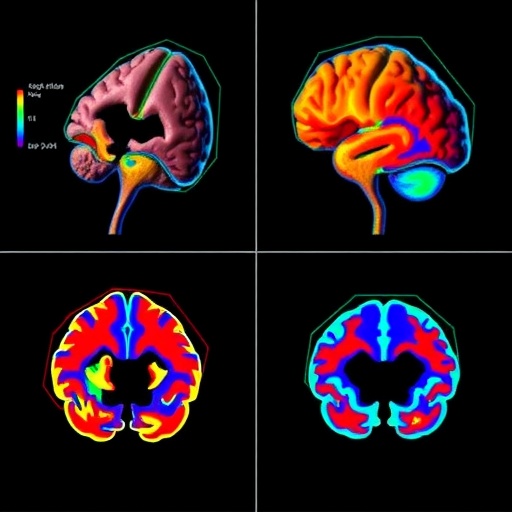
Pediatric and young-onset meningiomas have long posed a diagnostic challenge: they look similar under the microscope to adult cases, yet their biology and clinical behavior can diverge dramatically. In a new study published in Nature Communications, researchers report that these tumors are not a single entity. Instead, they contain distinct molecular subgroups that track with age-related risk, suggesting that current one-size-fits-all stratification may miss patients who need earlier, more tailored intervention.
The team analyzed meningioma samples with an emphasis on genomic and molecular features linked to tumor identity. Rather than relying solely on histopathology or existing adult-oriented categories, they searched for patterns that could separate tumors into biologically meaningful groups. Their results indicate that age and molecular state are intertwined: pediatric and young-onset tumors form subgroup structures that do not simply mirror adult disease.
Crucially, the study connects these subgroup signatures to differences in outcomes. In practical terms, the molecular divisions can function as a risk lens, helping distinguish tumors more likely to progress from those with a comparatively favorable course. That risk signal is especially relevant in younger patients, where treatment decisions must balance long-term efficacy with the need to limit late effects.
The work also points to a path toward age-adapted clinical workflows. By incorporating molecular subgroup information, clinicians could refine prognosis at diagnosis, potentially guiding choices about surveillance intensity, surgical planning, and the threshold for adjuvant therapy. The authors argue that such age-aware stratification could reduce both undertreatment and overtreatment.
From a mechanistic perspective, the findings reinforce the idea that meningioma evolution depends on a context of developmental stage and tumor drivers. Different molecular subgroup architectures imply different sets of regulatory circuits, which may affect proliferation, genome stability, and interaction with the tumor microenvironment.
In viral-science-news terms, the message is striking: meningiomas in children and young adults may be “molecularly rebranded,” and that reclassification could change how risk is communicated and managed.
The study’s DOI, 10.1038/s41467-026-75357-2, anchors the report in a fast-moving field where comprehensive molecular profiling is increasingly reshaping neuro-oncology.
Cite Scienmag News
Harold Sullivan. (July 14, 2026). Age-Specific Molecular Subgroups in Pediatric and Young-Onset Meningiomas Require Tailored Risk Models. Scienmag. https://scienmag.com/age-specific-molecular-subgroups-in-pediatric-and-young-onset-meningiomas-require-tailored-risk-models/
Harold Sullivan. "Age-Specific Molecular Subgroups in Pediatric and Young-Onset Meningiomas Require Tailored Risk Models." Scienmag, 14 July 2026, https://scienmag.com/age-specific-molecular-subgroups-in-pediatric-and-young-onset-meningiomas-require-tailored-risk-models/. Accessed 4 September 2026.
Harold Sullivan. "Age-Specific Molecular Subgroups in Pediatric and Young-Onset Meningiomas Require Tailored Risk Models." Scienmag. July 14, 2026. https://scienmag.com/age-specific-molecular-subgroups-in-pediatric-and-young-onset-meningiomas-require-tailored-risk-models/


