


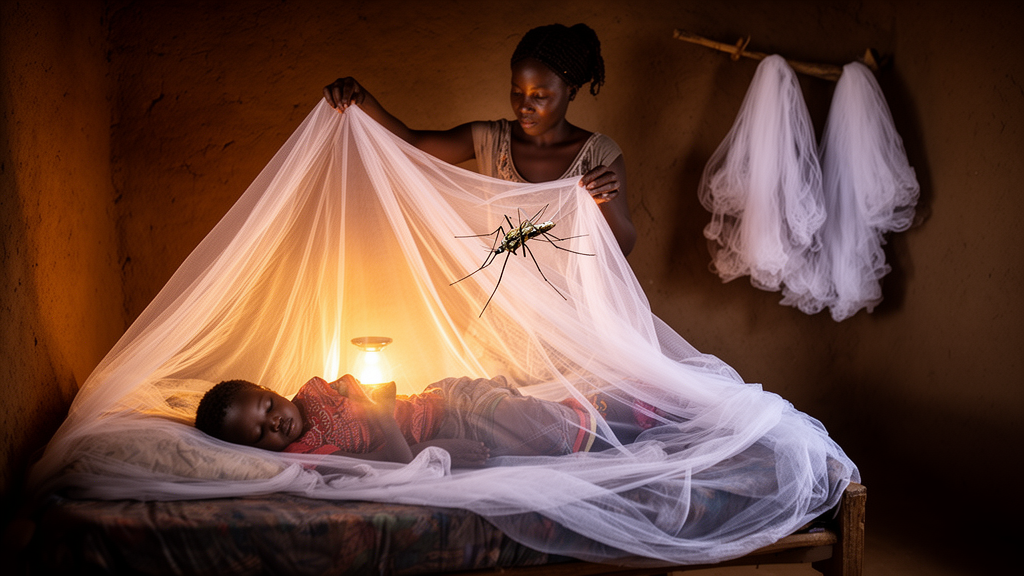
Insecticide-treated nets have been among the most impactful malaria interventions in Africa since their rapid adoption from the mid-2000s, but a new modelling study suggests that key measures of net coverage have stopped improving, even as the market for nets grows more diverse.
Researchers have built a new model, called the Multitype-ITN (MITN) model, that extends previous national-level estimates of insecticide-treated net coverage to the subnational level across 44 countries in Africa. The work is published in Nature Communications.
According to the authors, comprehensive estimates of net coverage must account for factors such as net type, net age and user behaviours. The model leverages improved data availability and applies what the researchers describe as a mathematically rigorous approach to estimating coverage.
Using the model, the team constructed longitudinal estimates of net demography by age and type from 2006 to 2024, and used the results to identify potential sources of inefficiency in how nets are distributed.
The findings show a significant increase in the uptake of next-generation insecticide-treated nets, reflecting an increasingly diverse market of net types available across the continent.
However, the longitudinal trends point in a less encouraging direction for overall coverage. The study reports stagnation in key metrics including nets per capita, access and use, alongside a downwards trend in utilisation, defined as the number of users per net.
At the same time, the observed use rates, meaning the proportion of people with access to a net who also use it, remained stationary over the study period. The authors also note early signs that interventions are failing to meet the demands of increasing populations.
The researchers frame the work as a response to a growing need to revise previous modelling efforts of net coverage so that they better reflect the current epidemiological reality, in the face of insecticide resistance and ever-increasing resource constraints. By producing estimates at the subnational level and tracking net age and type over nearly two decades, the model is intended to provide insights into where and why distribution efforts may be falling short of demand.
Subject of Research: Spatiotemporal modelling of insecticide-treated bednet coverage, age and type across Africa from 2006 to 2024
Article Title: Spatiotemporal analysis of insecticide-treated bednet coverage, age and type in Africa from 2006-2024
Article References: Tan, E., van den Berg, M., Saddler, A., Vargas, C., Weiss, D. J., Bertozzi-Villa, A., Bhatt, S., Symons, T. L., & Gething, P. W. (2026). Spatiotemporal analysis of insecticide-treated bednet coverage, age and type in Africa from 2006-2024. Nature Communications. https://doi.org/10.1038/s41467-026-78456-2
Image Credits: AI Generated
DOI: 10.1038/s41467-026-78456-2
Keywords: malaria, insecticide-treated nets, bednets, Africa, spatiotemporal modelling, public health, next-generation ITNs, net coverage, disease control, vector control, Spatiotemporal, analysis
Cite Scienmag News
Ophelia Keating. (October 28, 2026). Africa’s insecticide-treated bednet coverage has stalled, 19-year analysis finds. Scienmag. https://scienmag.com/africas-insecticide-treated-bednet-coverage-has-stalled-19-year-analysis-finds/
Ophelia Keating. "Africa’s insecticide-treated bednet coverage has stalled, 19-year analysis finds." Scienmag, 28 October 2026, https://scienmag.com/africas-insecticide-treated-bednet-coverage-has-stalled-19-year-analysis-finds/. Accessed 28 October 2026.
Ophelia Keating. "Africa’s insecticide-treated bednet coverage has stalled, 19-year analysis finds." Scienmag. October 28, 2026. https://scienmag.com/africas-insecticide-treated-bednet-coverage-has-stalled-19-year-analysis-finds/









