

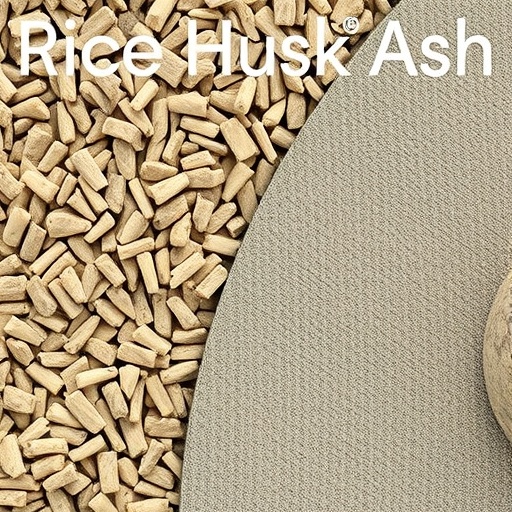
Rice husk ash (RHA) has emerged as a compelling alternative to traditional cement materials in recent years, garnering significant interest in both academic and industrial circles. As the global demand for sustainable building materials rises, researchers are turning to innovative sources like RHA that can minimize environmental impact while enhancing the mechanical properties of concrete. RHA is a byproduct derived from the agricultural industry, particularly from rice processing, representing an abundant and inexpensive resource. The incorporation of RHA into cement composites not only addresses waste management issues but also enhances the overall performance of construction materials.
The benefits of using rice husk ash cannot be overstated. It is rich in silica, a crucial component that contributes to the pozzolanic activity required for effective cement hydration. The fine particles of RHA provide a high surface area that can react with calcium hydroxide, a byproduct of cement hydration, to form additional cementitious compounds. This reaction results in improved strength, durability, and resistance to aggressive environmental conditions. Traditional cement production, in contrast, is a significant source of carbon emissions; thus, blending materials like RHA can foster more sustainable construction practices.
Nanomaterials have also gained attention for their potential to revolutionize the field of construction. When blended with ordinary Portland cement, these materials can significantly modify the microstructure of geopolymer cement composites. The fascination with nanomaterials stem from their unique physical and chemical properties, which can enhance the mechanical strength and enhance the resilience of the final product. Researchers are currently exploring various nanomaterials such as nano-silica, carbon nanotubes, and titanium dioxide to determine their synergistic effects when combined with RHA in cement matrices.
The amalgamation of RHA and nanomaterials sets the stage for innovation in composite materials, enabling engineers to tailor blends that not only perform exceptionally well under compressive loads but can also withstand harsh environmental conditions. Such advancements might prove vital for regions prone to aggressive weather patterns or for structures requiring longevity in marine environments. The transportation and construction sectors, which account for vast energy consumption and resource usage, stand to benefit immensely if these materials can be effectively employed in real-world applications.
Moreover, the sustainability implications of utilizing RHA and nanomaterial blends extend beyond structural integrity. Reduced dependence on conventional cement leads to decreased energy usage and carbon emissions, aligning with global goals for sustainable development. The production process of conventional cement is not only carbon-intensive but also demands vast quantities of raw materials and water. By adopting RHA-based composites in construction, the industry can pivot towards eco-friendlier methodologies that preserve natural resources while still meeting the infrastructural needs of an ever-growing global population.
However, the journey towards widespread adoption of RHA and nanomaterial composites is fraught with challenges. One major concern is the variability in the properties of RHA, which can be influenced by factors such as the type of rice, burning temperatures, and methods of processing. Such variations can affect the performance of cement composites significantly. Researchers are actively investigating ways to standardize the characteristics of RHA, ensuring consistency and reliability in its application for construction.
To improve the understanding of the interactions between RHA, nanomaterials, and conventional cement, detailed studies into their microstructural properties are necessary. It is essential to explore how the morphology and size distribution of RHA and nanomaterials influence the overall performance of the cement composites. Advanced imaging techniques and analytical methods play a crucial role here, revealing the nuances of particle interactions and the development of creating durable bonding phases.
The collaboration between academia and industry is crucial for accelerating the transition from laboratory-scale innovations to commercial applications. As researchers unveil the potential of RHA-blended cement composites, industry stakeholders must engage by conducting field trials that validate the findings through real-world performance assessments. This connection between research and application not only strengthens the empirical base but also fuels investment in novel material solutions.
Furthermore, public awareness of environmental issues linked to construction practices fosters an environment conducive to the acceptance of RHA and nanomaterial composites. As builders and consumers increasingly prefer sustainable options, there is mounting pressure on manufacturers to innovate. Demonstrating the benefits of RHA and nanomaterial composites effectively to policymakers, contractors, and the public could stimulate wider implementation and a shift in building material standards.
In the broader context, the integration of materials like RHA represents a significant opportunity to build resilient infrastructure that can withstand future challenges. Climate change, urbanization, and resource scarcity are pressing issues that demand innovative solutions in construction. RHA and nanomaterials, accordingly, represent not only a scientific advancement but also a response to these existential concerns about resource and environmental sustainability.
In conclusion, the future of cement composites leans toward utilizing waste and innovative materials like rice husk ash and nanomaterials. The ongoing research demonstrates a promising path towards developing materials that optimize performance while aligning with sustainability goals. Addressing the challenges inherent in using these materials will be crucial as the construction industry moves towards greener alternatives. With continued research and collaboration between scientists and industry professionals, the transformation of the built environment into a sustainable, eco-friendly space may indeed become a reality.
Through years of persistence in research and development, it is becoming evident that building materials have the potential to undergo a monumental transformation. The exploration and utilization of low-impact alternatives, like RHA and nanomaterial blends, can pave the way for sustainable construction practices, addressing both immediate and long-term challenges in a world that increasingly depends on resilience and innovation in its building processes.
Subject of Research: Rice husk ash and nanomaterial-blended cement composites
Article Title: Rice husk ash and nanomaterial-blended cement composites: a review
Article References:
Samarajeewa, P., Buddika, S., Yapa, H. et al. Rice husk ash and nanomaterial-blended cement composites: a review.
Environ Sci Pollut Res (2026). https://doi.org/10.1007/s11356-025-37361-9
Image Credits: AI Generated
DOI: https://doi.org/10.1007/s11356-025-37361-9
Keywords: Rice husk ash, nanomaterials, cement composites, sustainability, pozzolanic activity, construction, eco-friendly materials, durability, waste management.


