

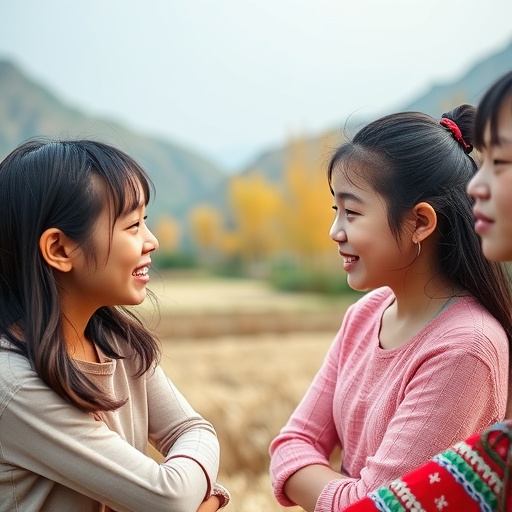
In a remarkable exploration of social dynamics and psychological well-being among adolescents, recent research has uncovered significant insights into the relationships with significant others and their impact on positive youth development in rural China. The study focuses on the experiences of adolescents, particularly those categorized as “left-behind” due to parental migration for work. Such a phenomenon has raised concerns regarding the mental and emotional health of young individuals in these communities, and this research brings forth critical findings that could influence both policy and practice in youth development.
The ongoing issue surrounding left-behind children is a pressing social challenge, especially in developing regions of China where economic opportunities exist predominantly in urban areas. These young individuals often experience feelings of abandonment and isolation, directly impacting their developmental trajectories. By evaluating the connections these adolescents maintain with significant others—be they family members, peers, or community figures—the study provides a nuanced understanding of how these relationships influence their overall development.
Moreover, the research utilizes a moderated mediation model, which intricately analyzes how various factors interplay in shaping positive outcomes for youth. This conceptual framework allows researchers to not only identify direct relationships but also to explore how the presence or absence of key emotional support can act as a buffer against potential adverse effects. The nuanced findings reveal that adolescents with strong ties to significant others exhibited more robust indicators of positive development, regardless of whether they were left-behind or not.
One compelling aspect of the study is the identification of different attributes associated with positive youth development, including emotional intelligence, resilience, and self-esteem. These attributes are crucial as they define how adolescents navigate their challenges and relationships. The research emphasizes that fostering these traits through strong social connections can significantly augment youth empowerment and autonomy, thus contributing to a healthier developmental environment.
Interestingly, the study also highlights how the quality, rather than merely the quantity, of relationships plays a pivotal role in the developmental outcomes for these adolescents. Positive interactions founded on trust, understanding, and emotional support yielded better psychological outcomes than mere social engagement alone. This finding underlines the importance of nurturing relationships that are authentic and meaningful in fostering resilience among youths.
In contrasting the experiences of left-behind adolescents with those who were not left behind, the research reveals critical differences in emotional well-being and social interactions. While both groups face their unique challenges, those without left-behind experiences were found to have a comparatively stronger sense of belonging and support. This observation suggests that interventions aimed at enhancing the quality of relationships for left-behind adolescents could be instrumental in mitigating the negative impacts of their circumstances.
This research brings to light the undeniable power of connection in shaping adolescent experiences and development. It raises pertinent questions regarding community structures, family dynamics, and the role of educational institutions in fostering environments that support relational well-being. Policymakers are urged to consider these findings in designing programs that nurture positive interpersonal relationships, providing platforms for social engagement geared toward boosting youth morale and resilience.
Further, the implications of this study extend beyond rural China, resonating with similar socio-economic contexts worldwide. The phenomenon of left-behind children is not unique to China but can be observed in various cultures, making the insights gleaned from this research broadly applicable. A global perspective on youth development, emphasizing the fundamental need for positive relationships, may significantly influence methods and approaches in different nations.
As we reflect on the importance of cultivating healthy relationships among adolescents, it’s vital for communities, families, and educational systems to prioritize strategies that connect youth with mentors and peers. Investing in social infrastructure that allows for meaningful interactions can help create a solid foundation for resilience and positive development. In scenarios where economic migration leads to family separation, alternative relational support systems must be developed to address the emotional and psychological ramifications.
This study serves as a clarion call for renewed attention to the emotional and social realities faced by adolescents, particularly those who may be left behind due to broader economic trends. The contribution to the literature surrounding youth development is invaluable in highlighting the interdependence of social relationships and personal growth. Future research directions could benefit from exploring specific interventions that enhance relationship quality and their protective effects on mental health among left-behind adolescents.
As we consider the future, it is essential to emphasize that the well-being of adolescents is intricately linked to the social fabric of their communities. When adolescents are equipped with strong, positive relationships, they are more likely to thrive amidst challenges, paving the way for healthier adult lives and future generations. This research not only sheds light on current adolescent experiences but also lays the groundwork for transformative changes that can empower young people for years to come.
The findings reveal a critical need for stakeholders—educators, policymakers, families, and community leaders—to be proactive in fostering environments where youth can establish and maintain healthy relationships. By focusing on building strong connections among young people, we can hope to create a future where every adolescent has the opportunity to flourish, regardless of their circumstances. Thus, the message is clear: nurturing relationship quality is not just a psychological necessity, but a societal imperative.
As we conclude this exploration of significant relationships and youth development, the focus must remain on actionable strategies that enhance the social well-being of adolescents. Ensuring that every young person has access to significant figures in their lives can profoundly affect their development and future prospects. This comprehensive understanding of the nuanced interplay between relationships and youth development serves as a foundation for future endeavors aimed at fostering healthier, happier adolescent communities.
In summation, the importance of understanding the social fabrics that support adolescent development cannot be overstated. By prioritizing relational quality and recognizing the unique challenges faced by left-behind youth, stakeholders can work toward creating a more equitable and supportive environment for all adolescents. The pathway to positive youth development is illuminated by strong social ties, and it is our collective responsibility to nurture and sustain these connections for the betterment of future generations.
Subject of Research: Relationships with Significant Others and Attributes of Positive Youth Development among Adolescents
Article Title: Relationships with Significant Others and Attributes of Positive Youth Development among Adolescents in Rural China with and without Left-behind Experience: A Moderated Mediation Model.
Article References:
Cui, B., Peng, H., Cui, K. et al. Relationships with Significant Others and Attributes of Positive Youth Development among Adolescents in Rural China with and without Left-behind Experience: A Moderated Mediation Model. Applied Research Quality Life (2025). https://doi.org/10.1007/s11482-025-10527-w
Image Credits: AI Generated
DOI: https://doi.org/10.1007/s11482-025-10527-w
Keywords: Adolescents, Left-behind youth, Relationships, Positive youth development, Rural China, Psychological well-being, Social support, Emotional intelligence, Resilience.


