

Monday, October 26, 2026
Science
No Result
View All Result
  • Login
  • HOME
  • SCIENCE NEWS
  • CONTACT US
  • HOME
  • SCIENCE NEWS
  • CONTACT US
No Result
View All Result
Scienmag
No Result
View All Result
Home Science News Technology and Engineering

Adaptive Probability Maps Sharpen AI Human Pose Estimates Under Occlusion

October 26, 2026
in Technology and Engineering
Denise Maddox
By Denise Maddox Scienmag Editorial Profile - Mechanical Engineering
Reading Time: 3 mins read
0
Adaptive Probability Maps Sharpen AI Human Pose Estimates Under Occlusion

Adaptive Probability Maps Sharpen AI Human Pose Estimates Under Occlusion

65
SHARES
587
VIEWS
Share on FacebookShare on Twitter
ADVERTISEMENT

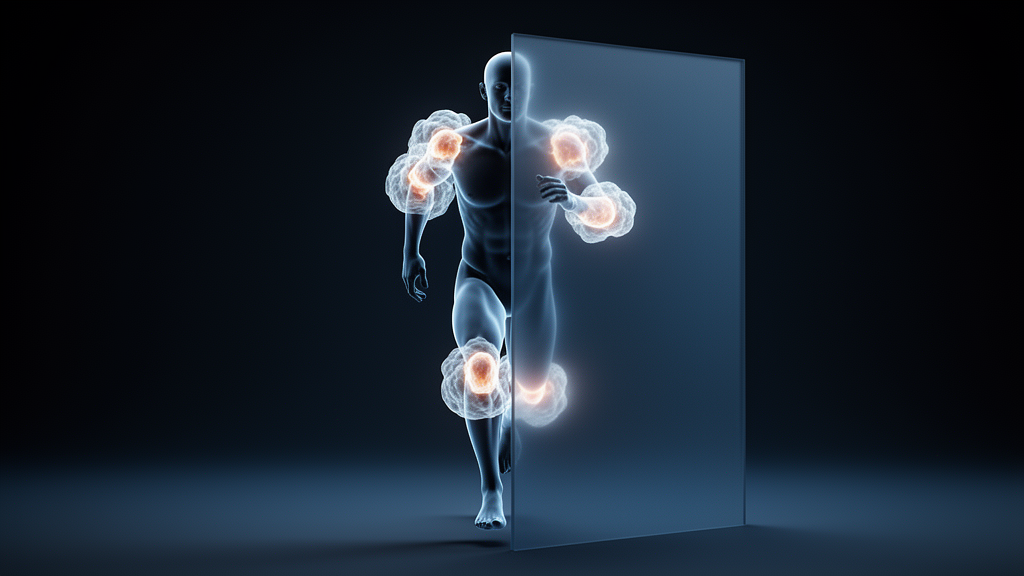
Researchers have unveiled an upgraded framework for two-dimensional human pose estimation that targets two persistent weaknesses in existing systems: the inability of standard heatmap-based models to express uncertainty about keypoint locations, and their limited handling of keypoints that fall outside the camera frame. The new method, described in Neural Processing Letters, builds on the earlier ProbPose architecture and adds a Vision Transformer backbone designed to fuse visual information across multiple scales.

According to the authors, conventional heatmap-based deterministic representations are insufficient for modeling the uncertainty of keypoint predictions and cannot effectively handle out-of-image keypoints. Their probabilistic approach instead represents keypoint locations as probability distributions, allowing the model to carry uncertainty through its predictions rather than collapsing them into a single deterministic output.

At the core of the new system is the Multi-Scale Context Fusion Vision Transformer, or MSCF-ViT, which serves as the network’s backbone. Through cross-scale interactions, the architecture combines fine-grained local detail with global structural information about the body’s configuration. The researchers report that single-scale feature modeling fails to capture both levels of information, resulting in limited performance under occlusion and truncation scenarios.

A second innovation, the Adaptive Probability Map module, dynamically adjusts the spatial probability distributions it produces according to keypoint types and occlusion conditions, enhancing the framework’s uncertainty modeling capability. The team also introduced an Adaptive OKS Loss, a training objective that adjusts expected-risk weights according to keypoint conditions, aligning the optimization process more closely with the standard evaluation metric used in the field.

The empirical results, reported as comparisons against the baseline ProbPose-s model, show consistent but uneven gains. On the widely used COCO2017 benchmark, the method improves mean average precision by 0.8 percentage points, and on CropCOCO, which tests truncated images, by 0.4 points. The largest improvement, 3.6 percentage points, appears on OCHuman, a dataset characterized by severe occlusion, indicating that the framework’s uncertainty modeling pays off most where joints are hardest to see.

Robustness was also tested under degraded imaging conditions. Across the 75 corruption scenarios in the COCO-C benchmark, the new model’s average mean average precision exceeded the baseline by 1.1 percentage points. The largest gains concentrating on the heavily occluded OCHuman dataset suggest that the adaptive probability components are most consequential in exactly the conditions that challenge deterministic approaches.

The work arrives as pose estimation remains an active area of computer vision research, with existing methods still facing the two challenges the authors identify. By treating keypoint prediction as an explicitly probabilistic task, adapting that treatment to each joint’s visibility conditions, and fusing features across scales, the framework offers a technical route to addressing both uncertainty modeling and the performance limits of single-scale architectures under occlusion and truncation.

The article is published open access in Neural Processing Letters, with the early-release version citable under a permanent DOI and subject to further editorial updates before the final Version of Record replaces it.

Subject of Research: Enhanced Probabilistic 2D Human Pose Estimation via Adaptive Probability Map and Multi-scale Context Fusion

Article Title: Enhanced Probabilistic 2D Human Pose Estimation via Adaptive Probability Map and Multi-scale Context Fusion

Article References: Zhu, J., Xu, Z., Feng, L., Li, H., Dai, J., & Xu, J. (2026). Enhanced Probabilistic 2D Human Pose Estimation via Adaptive Probability Map and Multi-scale Context Fusion. Neural Processing Letters. https://doi.org/10.1007/s11063-026-11890-x

Image Credits: AI Generated

DOI: 10.1007/s11063-026-11890-x

Keywords: Enhanced, Probabilistic, Human, Pose, Estimation, Adaptive, Probability, Multi-scale, Context, Fusion, scientific research

Cite Scienmag News

Denise Maddox. (October 26, 2026). Adaptive Probability Maps Sharpen AI Human Pose Estimates Under Occlusion. Scienmag. https://scienmag.com/adaptive-probability-maps-sharpen-ai-human-pose-estimates-under-occlusion/

Denise Maddox. "Adaptive Probability Maps Sharpen AI Human Pose Estimates Under Occlusion." Scienmag, 26 October 2026, https://scienmag.com/adaptive-probability-maps-sharpen-ai-human-pose-estimates-under-occlusion/. Accessed 26 October 2026.

Denise Maddox. "Adaptive Probability Maps Sharpen AI Human Pose Estimates Under Occlusion." Scienmag. October 26, 2026. https://scienmag.com/adaptive-probability-maps-sharpen-ai-human-pose-estimates-under-occlusion/


Tags: adaptiveadaptive probability mapadvanced pose estimation techniquescontextEnhancedestimationFusionhumanhuman pose estimationmulti-scalemulti-scale context fusionmulti-scale feature fusionneural network architecture for human poseocclusion and truncation robustnessout-of-image keypoint handlingPoseProbabilisticprobabilistic heatmapsprobabilistic keypoint localizationprobabilityScientific Researchuncertainty modeling in pose estimationVision Transformer for pose estimation
Share26Tweet16
Previous Post

New Alzheimer’s Microsimulation Model Translates Slowed Cognitive Decline into Years of Independence

Next Post

Dance and Music Hold Real Potential for Health in Later Life, Editorial Argues

Related Posts

AI Framework Spots Unsafe Miner Behavior in Real Time with Dual Attention Pose Network
Technology and Engineering

AI Framework Spots Unsafe Miner Behavior in Real Time with Dual Attention Pose Network

October 26, 2026
Phase-aware pose modeling sharpens throw-distance prediction from broadcast video
Technology and Engineering

Phase-aware pose modeling sharpens throw-distance prediction from broadcast video

October 26, 2026
New Workflow Sizes Aircraft Flap Structures in Minutes to Guide Early Wing Design
Technology and Engineering

New Workflow Sizes Aircraft Flap Structures in Minutes to Guide Early Wing Design

October 26, 2026
AI is rewriting social engineering, from phishing defenses to autonomous machine deception
Science News

AI is rewriting social engineering, from phishing defenses to autonomous machine deception

October 26, 2026
Informal Economy Undermines Disaster Readiness, Global Governance Study Finds
Technology and Engineering

Informal Economy Undermines Disaster Readiness, Global Governance Study Finds

October 26, 2026
Two Kinases Keep the Fly Circadian Clock on Time When Temperatures Shift
Technology and Engineering

Two Kinases Keep the Fly Circadian Clock on Time When Temperatures Shift

October 26, 2026
Next Post
Dance and Music Hold Real Potential for Health in Later Life, Editorial Argues

Dance and Music Hold Real Potential for Health in Later Life, Editorial Argues

  • Mothers who receive childcare support from maternal grandparents show more optimized

    Mothers who receive childcare support from maternal grandparents show more parental warmth, finds NTU Singapore study

    27656 shares
    Share 11059 Tweet 6912
  • University of Seville Breaks 120-Year-Old Mystery, Revises a Key Einstein Concept

    1061 shares
    Share 424 Tweet 265
  • Bee body mass, pathogens and local climate influence heat tolerance

    682 shares
    Share 273 Tweet 171
  • Researchers record first-ever images and data of a shark experiencing a boat strike

    546 shares
    Share 218 Tweet 137
  • Groundbreaking Clinical Trial Reveals Lubiprostone Enhances Kidney Function

    531 shares
    Share 212 Tweet 133
Science

Embark on a thrilling journey of discovery with Scienmag.com—your ultimate source for cutting-edge breakthroughs. Immerse yourself in a world where curiosity knows no limits and tomorrow’s possibilities become today’s reality!

RECENT NEWS

  • AI Framework Spots Unsafe Miner Behavior in Real Time with Dual Attention Pose Network
  • Dance and Music Hold Real Potential for Health in Later Life, Editorial Argues
  • Adaptive Probability Maps Sharpen AI Human Pose Estimates Under Occlusion
  • New Alzheimer’s Microsimulation Model Translates Slowed Cognitive Decline into Years of Independence

Categories

  • Agriculture
  • Anthropology
  • Archaeology
  • Athmospheric
  • Biology
  • Biotechnology
  • Blog
  • Bussines
  • Cancer
  • Chemistry
  • Climate
  • Earth Science
  • Editorial Policy
  • Marine
  • Mathematics
  • Medicine
  • Pediatry
  • Policy
  • Psychology & Psychiatry
  • Science Education
  • Science News
  • Social Science
  • Space
  • Technology and Engineering

Subscribe to Blog via Email

Enter your email address to subscribe to this blog and receive notifications of new posts by email.

Join 5,151 other subscribers

© 2025 Scienmag - Science Magazine

Welcome Back!

Login to your account below

Forgotten Password?

Retrieve your password

Please enter your username or email address to reset your password.

Log In
No Result
View All Result
  • HOME
  • SCIENCE NEWS
  • CONTACT US

© 2025 Scienmag - Science Magazine

Discover more from Science

Subscribe now to keep reading and get access to the full archive.

Continue reading