


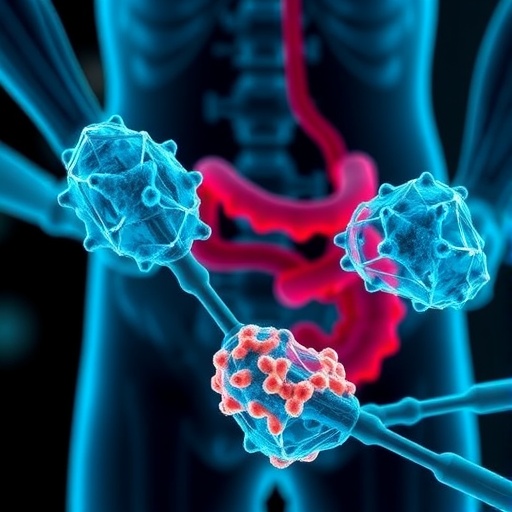
A traditional medicinal tree may be offering a modern route into one of medicine’s most difficult problems: how to calm chronic inflammation in the gut without exposing the entire body to powerful drugs. In a study published in Applied Nanoscience, researchers report that extracts from the bark of Acacia catechu, delivered either as a conventional preparation or in a nanoformulation, protected rats from colon damage caused by dextran sulfate sodium, or DSS. The treated animals showed healthier colon measurements, firmer stools and less tissue injury than untreated animals, suggesting that the plant’s antioxidant chemistry could be repurposed as a targeted therapy for inflammatory bowel disease. The findings are preliminary and come from an animal model rather than human patients, but they place a familiar medicinal plant at the intersection of phytochemistry, nanomedicine and gastrointestinal immunology.
Crohn’s disease is a long-term inflammatory bowel disorder in which the immune system becomes excessively reactive within the digestive tract. Unlike a temporary stomach infection, Crohn’s can produce recurring episodes of abdominal pain, diarrhea, fatigue, weight loss and intestinal injury. Inflammation may extend through multiple layers of the bowel wall and can eventually lead to narrowing, fistulas or other complications. Existing treatments—including corticosteroids, immunomodulators and biologic drugs—can be highly effective, but responses vary and prolonged immune suppression can bring substantial risks. Researchers have therefore been searching for therapies that combine anti-inflammatory activity with safer delivery and more selective action. Plant-derived molecules are attractive candidates because many contain polyphenols, tannins and other compounds capable of interacting with several biological pathways at once. Their weakness is that promising molecules often dissolve poorly, degrade quickly or fail to reach the diseased region of the intestine in sufficient concentrations.
Acacia catechu, sometimes known as catechu, is a medicinal plant whose bark contains a complex mixture of bioactive substances. The study focuses on the extract rather than a single purified molecule, reflecting the reality that botanical preparations can contain multiple compounds with complementary effects. The authors associate the plant’s activity with antioxidant properties, an important consideration in intestinal inflammation. During an inflammatory response, activated immune cells can generate reactive oxygen species—chemically reactive molecules that damage lipids, proteins and DNA when they overwhelm the body’s protective systems. Oxidative injury can weaken the intestinal epithelial barrier, the selectively permeable layer of cells that separates the gut’s contents from underlying tissue. Once that barrier becomes leaky, microbial products and other irritants can penetrate more readily, further stimulating immune cells and sustaining inflammation. Antioxidant defenses such as catalase and glutathione-related enzymes help neutralize these damaging molecules, making their activity useful as a biochemical indicator of tissue protection.
To test the extract, the researchers used rats exposed to DSS, a chemical widely employed to produce experimental colitis. DSS injures the intestinal lining and disrupts the mucus and epithelial barrier, triggering an inflammatory reaction that reproduces several features of human intestinal inflammation, including colon shortening, loose stool and microscopic tissue damage. It is not a complete replica of Crohn’s disease: human Crohn’s arises from a complicated interaction among genetics, immune regulation, diet, the microbiome and environmental factors, whereas DSS produces disease through a defined chemical insult. Nevertheless, the model is useful for screening candidate treatments and examining how an intervention affects the relationship between barrier damage, oxidative stress and inflammation. In this work, the investigators compared animals receiving the standard A. catechu extract with animals receiving a nanoformulation, alongside control groups. The study’s design therefore allowed them to ask not only whether the botanical preparation had protective effects, but also whether nanoscale delivery could improve its performance in the gut.
Nanocarriers are engineered particles or structures designed to transport active compounds through the body. Depending on their composition, they can protect fragile molecules from degradation, alter how quickly a compound is released and improve its apparent solubility or absorption. In gastrointestinal medicine, delivery systems may also help an agent survive the acidic environment of the stomach or reach the intestine before releasing its payload. The term “nano” does not automatically mean that a treatment is targeted, harmless or clinically superior; those properties must be demonstrated through formulation testing, toxicology and well-controlled biological studies. In the A. catechu experiment, the rationale was that packaging the plant’s active constituents into a nanoscale carrier might enhance their bioavailability—the fraction that remains available to produce a biological effect. That could be especially valuable for plant extracts, whose components may otherwise be poorly absorbed or rapidly transformed before reaching inflamed colonic tissue. The reported results support the concept, while leaving the precise molecular identity of the most important compounds and their distribution in the intestine for future work.
The researchers evaluated the animals using both visible measures of disease and laboratory assessments. One measure was the colon weight-to-length ratio, which can change when inflammation causes swelling, tissue thickening or shortening of the organ. Stool consistency provided a functional readout: DSS injury commonly produces loose or watery feces, so improvement suggests better preservation of intestinal function. The team also examined colon tissue histopathologically, meaning that tissue sections were inspected for structural changes such as epithelial disruption and inflammatory damage. These microscopic observations are essential because an animal may appear better while still harboring significant injury, or may show biochemical changes that do not translate into restored tissue architecture. Finally, the study assessed antioxidant enzyme activity and related indicators of oxidative stress. Together, the measures were intended to connect the treatment’s outward benefits with an underlying mechanism: preservation of the mucosal barrier and restoration of the balance between reactive oxygen species and the enzymes that remove them.
According to the report, both the conventional extract and the nanoformulation significantly improved several indicators compared with untreated controls. Treated rats had more favorable colon weight-to-length ratios, better stool consistency and less severe tissue damage on histological examination. The authors attribute these effects in part to the antioxidant capacity of A. catechu’s bioactive compounds, which may reduce the chain reactions that damage cell membranes and amplify inflammatory signaling. A simplified version of that process begins when reactive oxygen species attack polyunsaturated fatty acids in membranes, initiating lipid peroxidation. The resulting reactive products can impair epithelial cells and further compromise the barrier. Enzymes such as catalase break down hydrogen peroxide into less reactive products, while glutathione-dependent systems help maintain the reducing environment required to detoxify oxidants. By supporting these defenses, the extract could interrupt a feedback loop in which barrier injury promotes inflammation and inflammation produces still more oxidative stress. The nanoformulation’s apparent benefit is consistent with improved delivery, although the supplied findings do not establish which formulation was definitively superior across every outcome.
The study’s appeal lies in its convergence of old and new medicine: a plant used in traditional pharmacology is being tested with a delivery technology associated with precision therapeutics. Yet the gap between an encouraging rat experiment and a treatment for people remains substantial. DSS colitis is acute and chemically induced, while Crohn’s disease is heterogeneous, relapsing and often accompanied by changes in the gut microbiome and immune networks that are not fully captured by this model. The study also does not demonstrate efficacy in humans, define a clinically appropriate dose, identify the responsible compounds or establish long-term safety. Botanical extracts can vary with plant origin, harvesting conditions, extraction method and storage, making standardization a critical requirement. Nanoformulations introduce additional questions about particle composition, stability, accumulation, manufacturing consistency and toxicity. The article reports no funding and no competing interests, but those declarations do not substitute for independent replication. Future studies will need to compare doses, characterize the nanocarrier and its release behavior, measure inflammatory signaling and microbiome effects, and test the preparation in additional models of chronic and immune-mediated disease.
Even with those qualifications, the findings offer a vivid example of why nanomedicine continues to attract attention in inflammatory bowel disease research. A compound does not need to suppress the immune system indiscriminately to be useful; protecting the intestinal barrier and reducing oxidative injury could complement existing anti-inflammatory strategies. If researchers can determine which constituents of A. catechu are responsible for the observed effects, they may be able to create a more reproducible formulation with predictable pharmacology. If nanoscale delivery can concentrate those constituents where they are needed while limiting exposure elsewhere, it could solve one of the central problems of plant-based therapy. For now, the work should be viewed as a preclinical signal rather than a ready-made cure. It shows that a bark extract, when tested in a chemically injured rat colon and paired with a nanocarrier, can improve several connected signs of disease. The next challenge is to discover whether that signal survives the far more demanding tests of mechanism, safety and human biology.
Cite Scienmag News
Denise Maddox. (August 28, 2026). Acacia Catechu Nanocarriers Show Promise Against Dextran Sulfate-Induced Crohn’s Disease. Scienmag. https://scienmag.com/acacia-catechu-nanocarriers-show-promise-against-dextran-sulfate-induced-crohns-disease/
Denise Maddox. "Acacia Catechu Nanocarriers Show Promise Against Dextran Sulfate-Induced Crohn’s Disease." Scienmag, 28 August 2026, https://scienmag.com/acacia-catechu-nanocarriers-show-promise-against-dextran-sulfate-induced-crohns-disease/. Accessed 3 September 2026.
Denise Maddox. "Acacia Catechu Nanocarriers Show Promise Against Dextran Sulfate-Induced Crohn’s Disease." Scienmag. August 28, 2026. https://scienmag.com/acacia-catechu-nanocarriers-show-promise-against-dextran-sulfate-induced-crohns-disease/


