


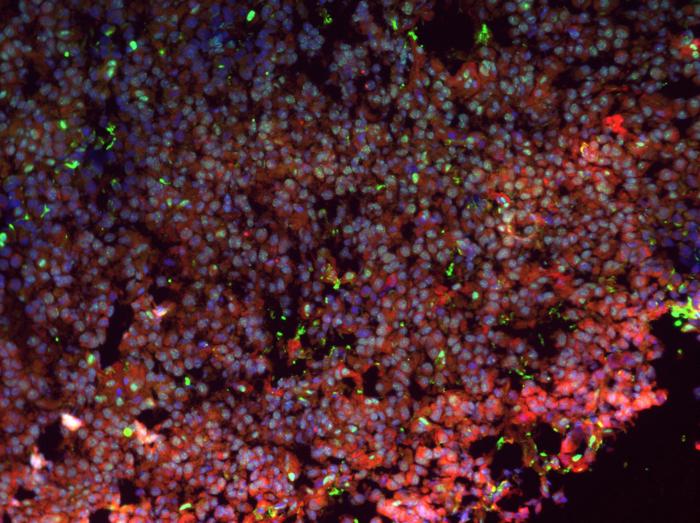
An experimental study led by Pompeu Fabra University describes the mechanism whereby insulinomas, a rare type of neuroendocrine tumour that affects pancreatic beta cells. According to the study, insulinomas are the result of the accumulation of rare mutations that lead to a homogeneous change in the epigenetic profile of pancreatic beta cells. This profile change causes beta cells to express unusually high levels of oncogenes, growth and transcription factors, and genes related to insulin production.

Credit: Pompeu Fabra University (UPF)
An experimental study led by Pompeu Fabra University describes the mechanism whereby insulinomas, a rare type of neuroendocrine tumour that affects pancreatic beta cells. According to the study, insulinomas are the result of the accumulation of rare mutations that lead to a homogeneous change in the epigenetic profile of pancreatic beta cells. This profile change causes beta cells to express unusually high levels of oncogenes, growth and transcription factors, and genes related to insulin production.
Insulinomas are rare pancreatic neuroendocrine tumours that involve the excessive growth of beta cells, which are responsible for secreting insulin. Often, they are diagnosed because they involve excessive insulin production that usually leads to hypoglycaemia. Each year, four people in one million are diagnosed with insulinomas, and in most cases, they are benign. If detected early and surgically removed, they have a good prognosis and only about in one in ten insulinomas are malignant.
In a study published today in the journal Cell Genomics, a mechanism whereby beta cells undergo a transformation towards a neoplastic phenotype is proposed for the first time. “This is the accumulation of rare mutations that converge in a change in the epigenetic profile of beta cells”, explains Mireia Ramos, co-first author of the study.
These mutations vary among the 42 insulinomas analysed, and most accumulate in regulatory regions of the genome. “The uniqueness of insulinomas is that all of them, regardless of the mutations they have, end up acquiring the same epigenetic profile”, adds Lorenzo Pasquali, director of the UPF Endocrine Regulatory Genomics Group, who led the research.
This new epigenetic profile causes tumour beta cells to lose their repression marks and, unlike healthy beta cells, have a series of active oncogenes, growth and transcription factors and genes related to insulin production, which alter their function.
The biology of beta cells
Apart from insulinomas, pancreatic beta cells are also implicated in other disabling diseases such as diabetes mellitus. Hence, “we are especially interested in understanding how these cells lose control, upset the expression of the genes that made them function normally and end up altering insulin secretion”, Pasquali comments.
Now, the group is already working to better understand the mechanism whereby excess beta cell growth occurs, which could, in the future, have therapeutic implications in the treatment of other diseases in which beta cells are altered.
This study has also involved the Scientific Institute of Hospital San Raffaele in Milan (Italy); the University of Barcelona; IDIBELL, Bellvitge Biomedical Research Institute; the University of Colorado Boulder (USA); the Parc Taulí Research and Innovation Institute, I3PT; IRB Barcelona and the Diabetes and Associated Metabolic Diseases Networking Biomedical Research Centre (CIBERDEM).
Journal
Cell Genomics
Method of Research
Experimental study
Subject of Research
People
Article Title
Implications of noncoding regulatory functions in the development of insulinomas
Article Publication Date
2-Jul-2024
COI Statement
The authors declare that they have no competing interests.
Cite Scienmag News
Nathaniel Bowman. (July 2, 2024). A study led by UPF describes how insulinomas, a rare type of pancreatic beta cell tumor, form. Scienmag. https://scienmag.com/a-study-led-by-upf-describes-how-insulinomas-a-rare-type-of-pancreatic-beta-cell-tumor-form/
Nathaniel Bowman. "A study led by UPF describes how insulinomas, a rare type of pancreatic beta cell tumor, form." Scienmag, 2 July 2024, https://scienmag.com/a-study-led-by-upf-describes-how-insulinomas-a-rare-type-of-pancreatic-beta-cell-tumor-form/. Accessed 3 September 2026.
Nathaniel Bowman. "A study led by UPF describes how insulinomas, a rare type of pancreatic beta cell tumor, form." Scienmag. July 2, 2024. https://scienmag.com/a-study-led-by-upf-describes-how-insulinomas-a-rare-type-of-pancreatic-beta-cell-tumor-form/

