


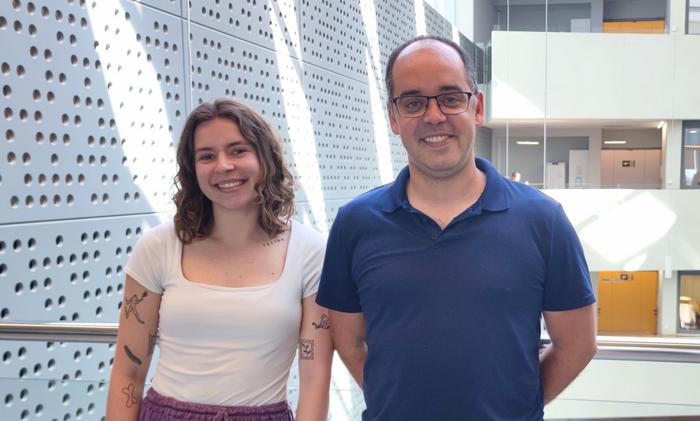
In August 2023, a team of researchers including Dr. Eduard Porta, group leader at the Josep Carreras Institute, published a thorough analysis of the effects of cancer driver alterations found across different cancer types, ranging from epigenetic dysregulation to protein-protein interactions. That study provided a deeper perspective on cancer and yielded valuable data for clinical research in the future.

Credit: Josep Carreras Leukaemia Research Institute
In August 2023, a team of researchers including Dr. Eduard Porta, group leader at the Josep Carreras Institute, published a thorough analysis of the effects of cancer driver alterations found across different cancer types, ranging from epigenetic dysregulation to protein-protein interactions. That study provided a deeper perspective on cancer and yielded valuable data for clinical research in the future.
In a recent publication at the prestigious scientific journal Cancer Cell, the Consortium focused on one of the deadliest types of cancer, high-grade gliomas, and provide the most detailed analysis of what is going on in those cells, until now. High-grade gliomas are a family of aggressive brain tumours with an overall 5-year survival below 5%.
In particular, the research team concentrated on the molecular characteristics underlying tumour progression and recurrence of two gliomas: glioblastoma and IDH-mutant grade 4 astrocytoma. They took samples from over 200 patients and extracted virtually all the information current molecular analysis allow, like DNA sequencing, DNA methylation status, RNA expression, broad proteomic profiling and metabolic state. Through computational analyses, the team then explored the molecular features of the gliomas in various biological contexts, such as in the presence of particular mutations or in light of tumour progression.
One of the strengths of the study is that 53 of the samples were longitudinal, meaning the researchers had paired samples from the same patient with his/her primary tumour and another sample taken after post-treatment recurrence. This setting offered a unique opportunity to see how tumours evolve in the real world.
Results showed that tumour evolution shifted malignant cells to decrease expression of genes related to the cell cycle and DNA repair mechanisms. Analysis of the broader tumour microenvironment also showed differences in recurrent tumours, with different contributions of cell types in charge of specialised functions, like those comprising vasculature. The research also described, with unprecedented precision, particular genetic and epigenetic events associated with recurrent disease.
Beyond that, the depth of the analysis allowed for a thorough description of how other processes may play a role in tumour progression and recurrence, like trans effects – genes acting upon distant molecular species -, protein post translational modifications – like glycosylation, able to disrupt normal protein-protein interactions – and phosphorylation – able to activate or deactivate proteins like a switch.
Interestingly, many recurrent tumours shared common molecular characteristics. These similar features provide insights for future investigation, and some may end up serving as useful clinical targets for preventing disease recurrence in glioma patients.
The amount of information made available by the Consortium will be used in the coming years as a reliable source for many other researchers. As a sneak peek, however, they pointed towards a set of 13 driver genes highly altered in gliomas, and particularly highlighted the central role of PTPN11 in IDH-mutant grade 4 astrocytomas, just to mention one.
The power of multiomics, mixing genetics, epigenetics, proteomics, metabolomics and more, is becoming increasingly relevant as it helps explain the multiple events involved in cancer progression, events too complex to be understood from just a single perspective. Hopefully, new drugs and treatments will come along too.
Journal
Cancer Cell
Method of Research
Observational study
Subject of Research
Cells
Article Title
Multi-scale signaling and tumor evolution in high-grade gliomas
Article Publication Date
8-Jul-2024
Cite Scienmag News
Nathaniel Bowman. (July 10, 2024). A new proteogenomics analysis of high-grade gliomas offers hints on tumor evolution. Scienmag. https://scienmag.com/a-new-proteogenomics-analysis-of-high-grade-gliomas-offers-hints-on-tumor-evolution/
Nathaniel Bowman. "A new proteogenomics analysis of high-grade gliomas offers hints on tumor evolution." Scienmag, 10 July 2024, https://scienmag.com/a-new-proteogenomics-analysis-of-high-grade-gliomas-offers-hints-on-tumor-evolution/. Accessed 3 September 2026.
Nathaniel Bowman. "A new proteogenomics analysis of high-grade gliomas offers hints on tumor evolution." Scienmag. July 10, 2024. https://scienmag.com/a-new-proteogenomics-analysis-of-high-grade-gliomas-offers-hints-on-tumor-evolution/

